Enhancing Reading Comprehension Building Vocabulary Worksheets for Ages 3-6
3 filtered results
-
From - To
Unlock your child's potential with our "Enhancing Reading Comprehension Building Vocabulary Worksheets for Ages 3-6." Our engaging, age-appropriate worksheets are crafted to boost young learners’ reading and comprehension skills while expanding their vocabulary. These interactive and fun activities help children recognize words, understand their meanings, and use them in context, paving the way for successful reading experiences. Perfect for parents and educators, our worksheets provide essential practice through games, stories, and exercises designed to keep kids motivated and excited about learning. Equip your little ones with the tools they need to become confident readers today!
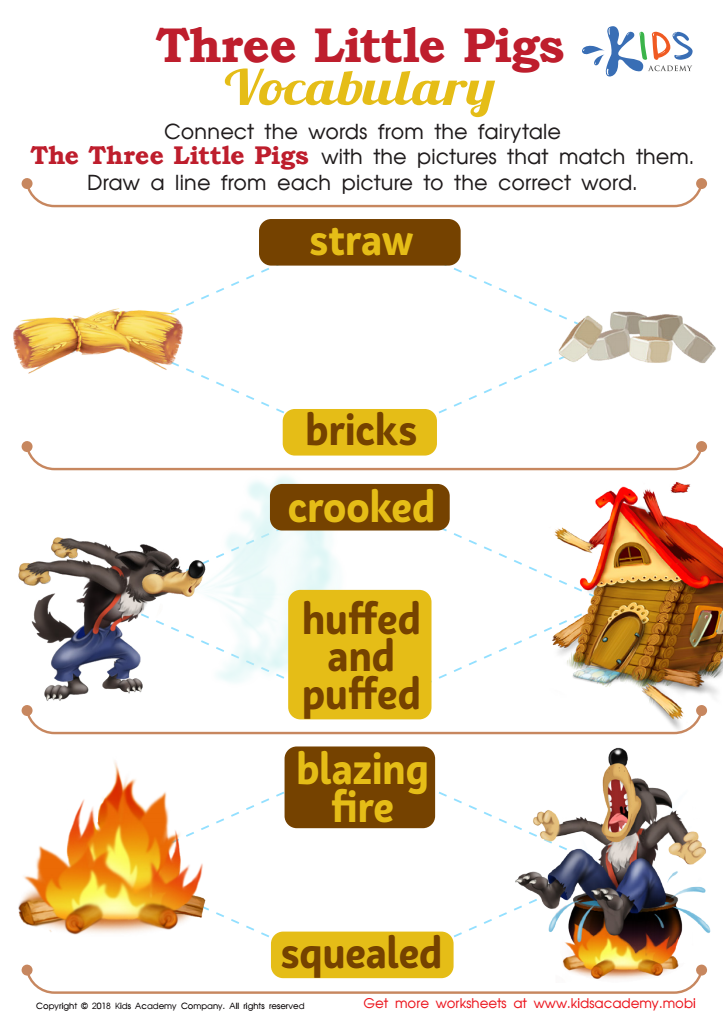
Three Little Pigs Vocabulary Worksheet
 Assign to My Students











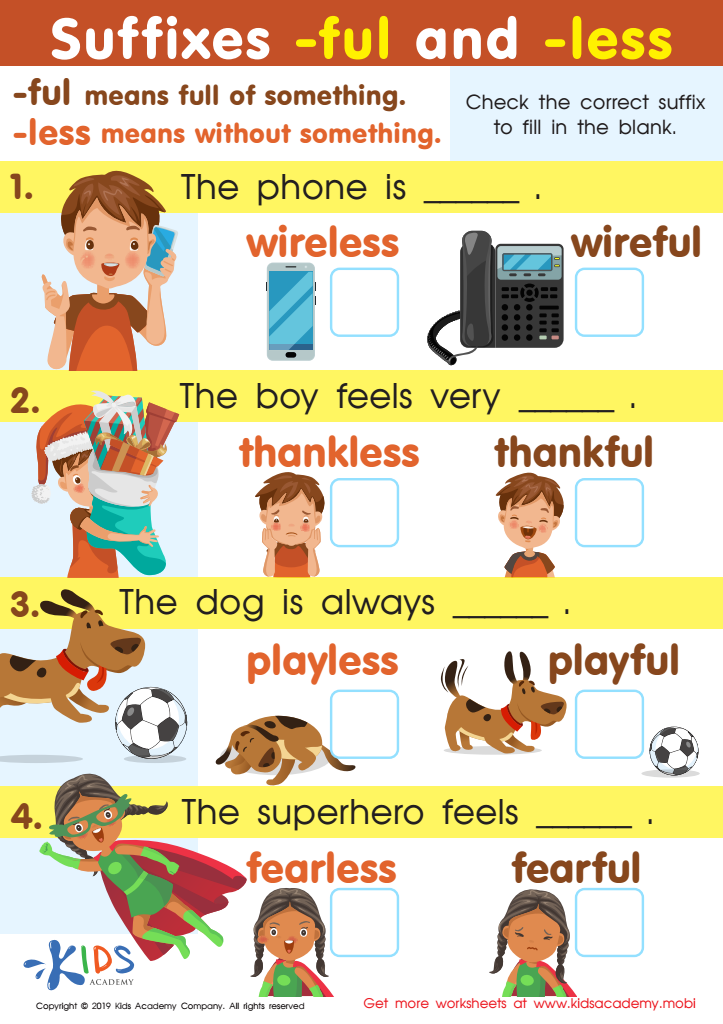
Suffixes –ful and –less Worksheet
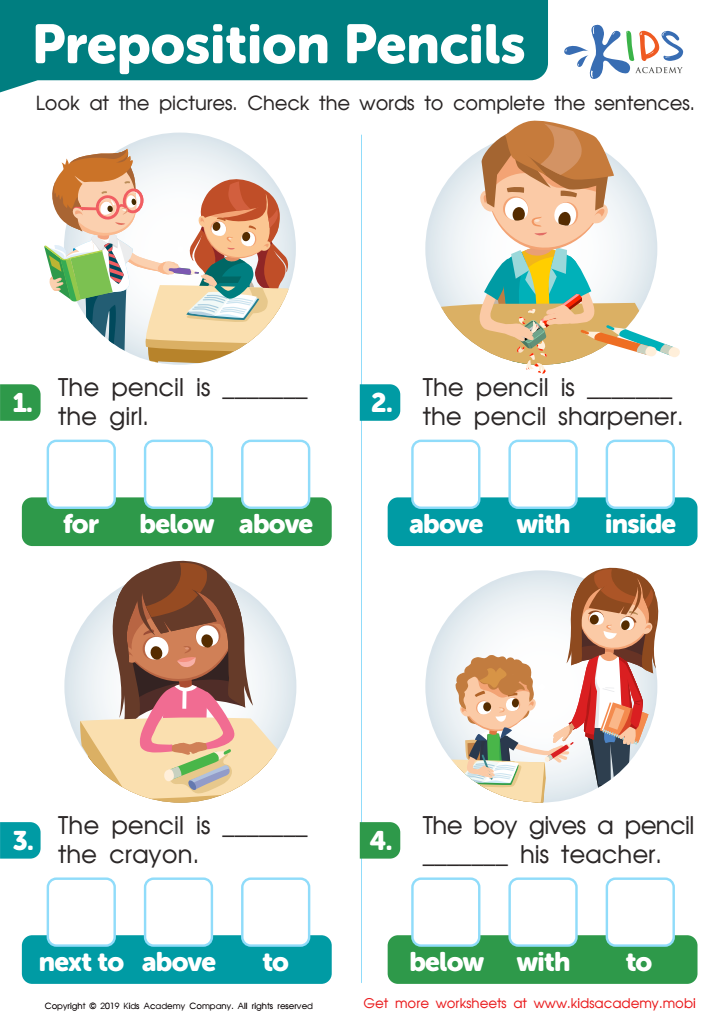
Preposition Pencils Worksheet



.jpg)




Enhancing reading comprehension and building vocabulary in children ages 3-6 is crucial for their overall development. During these formative years, young brains are like sponges, rapidly absorbing new information. Building a strong vocabulary not only improves a child's ability to communicate effectively but also sets the groundwork for reading comprehension.
Reading comprehension, from an early age, equips children with the ability to understand and process information, fostering a love for reading. When children comprehend what they read or hear, they are more likely to engage in stories, ask questions, and express thoughts, leading to better cognitive and language development.
For parents and teachers, investing time in these skills has long-term benefits. Vocabulary development is directly linked to academic success; children with a rich vocabulary read more fluently and have an easier time learning new subjects. Enhanced reading comprehension enables children to follow instructions more accurately and fosters critical thinking skills.
Incorporating playful, interactive methods such as storytelling, picture books, and educational games makes the learning process enjoyable, promoting consistent and effective vocabulary building. By prioritizing these skills, parents and teachers lay a strong foundation that supports future learning, boosts self-confidence, and fosters lifelong curiosity and academic achievement.








