
Handwriting practice Building Vocabulary Worksheets for Ages 3-6
4 filtered results
Difficulty Level
Grade
Age
-
From - To
Subject
Activity
Standards
Enhance your child's handwriting skills while boosting their vocabulary with our Handwriting Practice Building Vocabulary Worksheets, designed specifically for ages 3-6. These engaging and fun worksheets provide children with the opportunity to practice essential writing techniques alongside vocabulary-building exercises. Through colorful illustrations and age-appropriate prompts, little learners will develop fine motor skills and confident handwriting, all while discovering new words. Perfect for homeschooling or classroom use, these worksheets promote early literacy in an enjoyable manner. Watch your child's skills flourish as they connect handwriting practice to meaningful vocabulary development, laying a strong foundation for lifelong learning and communication!
Favorites
With answer key
Interactive
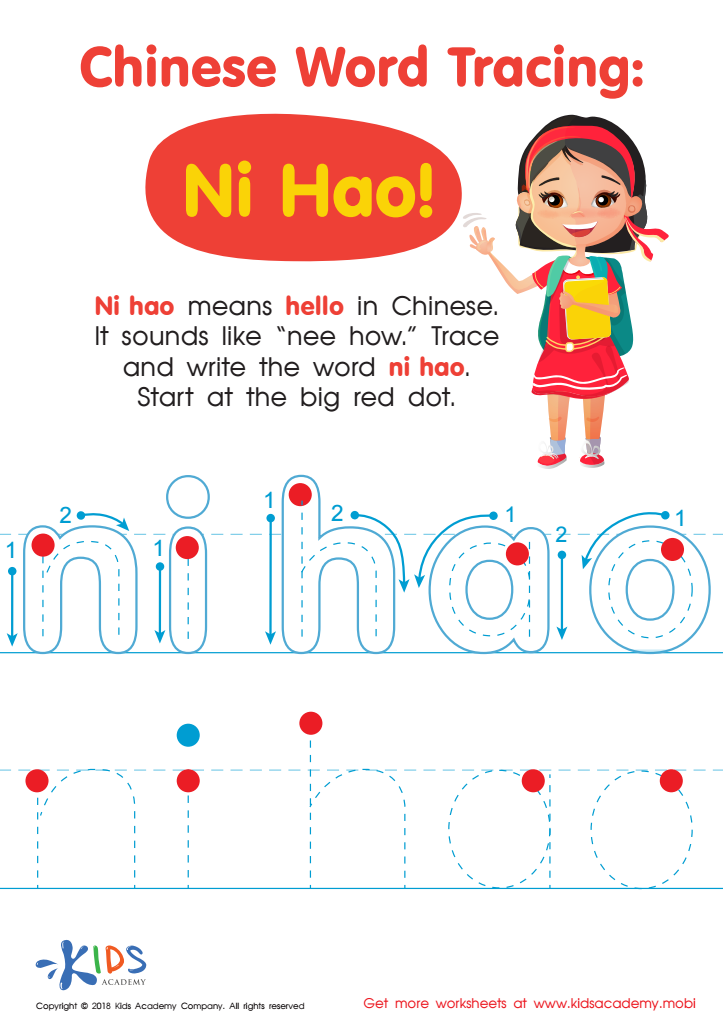
Chinese Word Tracing: Ni Hao Worksheet
Kids can learn to say "Ni hao" with this fun tracing worksheet. The free PDF helps kids write and say the Chinese greeting while also developing fine-motor, handwriting and reading skills. With red guide dots and traceable lines, kids will learn top-to-bottom and left-to-right patterning for fluent reading.
 Assign to My Students
Chinese Word Tracing: Ni Hao Worksheet
Worksheet











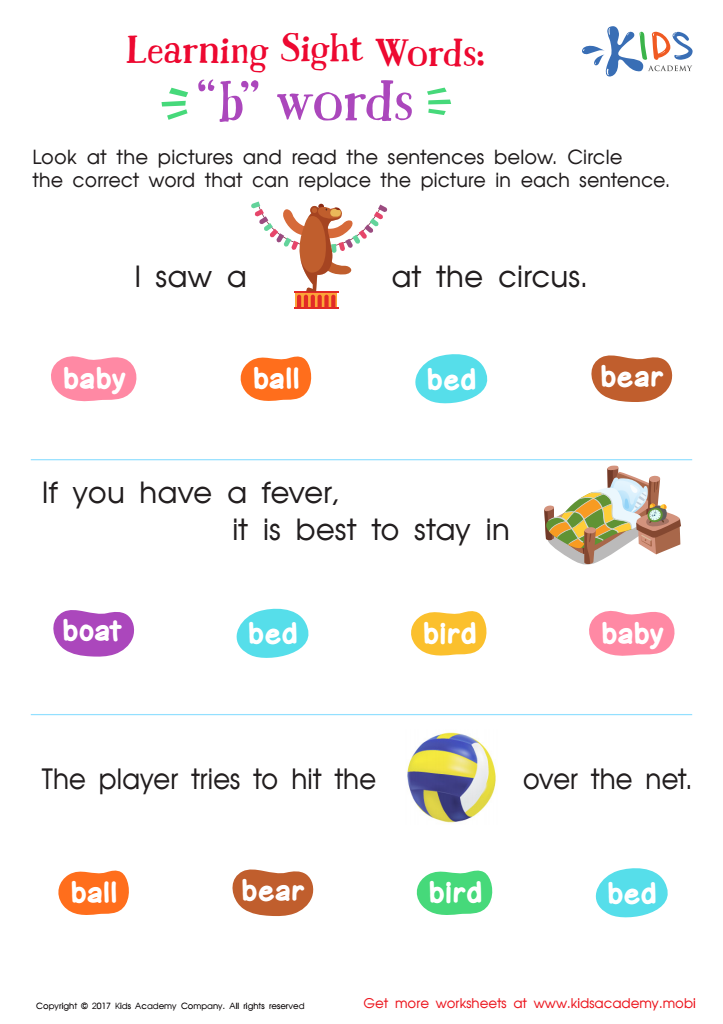
"B" Words Printable Sight Words Worksheet
Kids will learn sight words quickly with this fun worksheet! "B" Words offers guided practice with simple sentences and pictures. Build your child's reading confidence with this helpful worksheet and watch them become a master!
"B" Words Printable Sight Words Worksheet
Worksheet
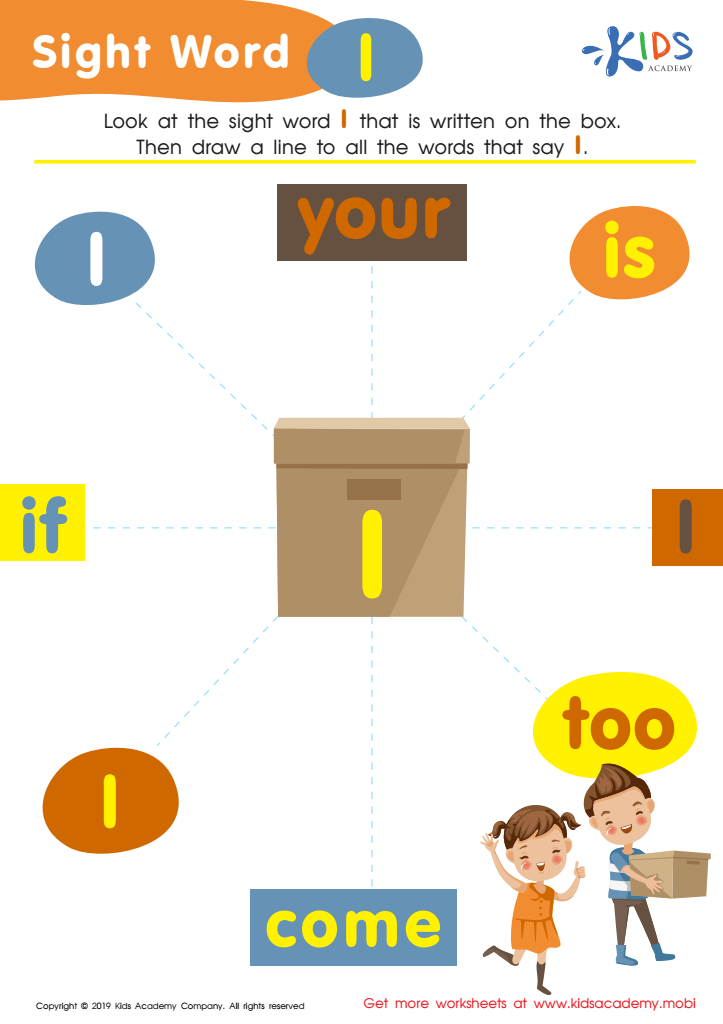
Sight Word I Worksheet
Recognizing the sight word 'I' is harder than it looks! When kids are learning to read, they understand 'I' by its sound, not as a word. This free worksheet gives them practice with 'I', letting them work on their fine motor skills too. They'll join 'I' to shapes containing the same letter. It's a great way to give kids confidence in their reading skills!
Sight Word I Worksheet
Worksheet
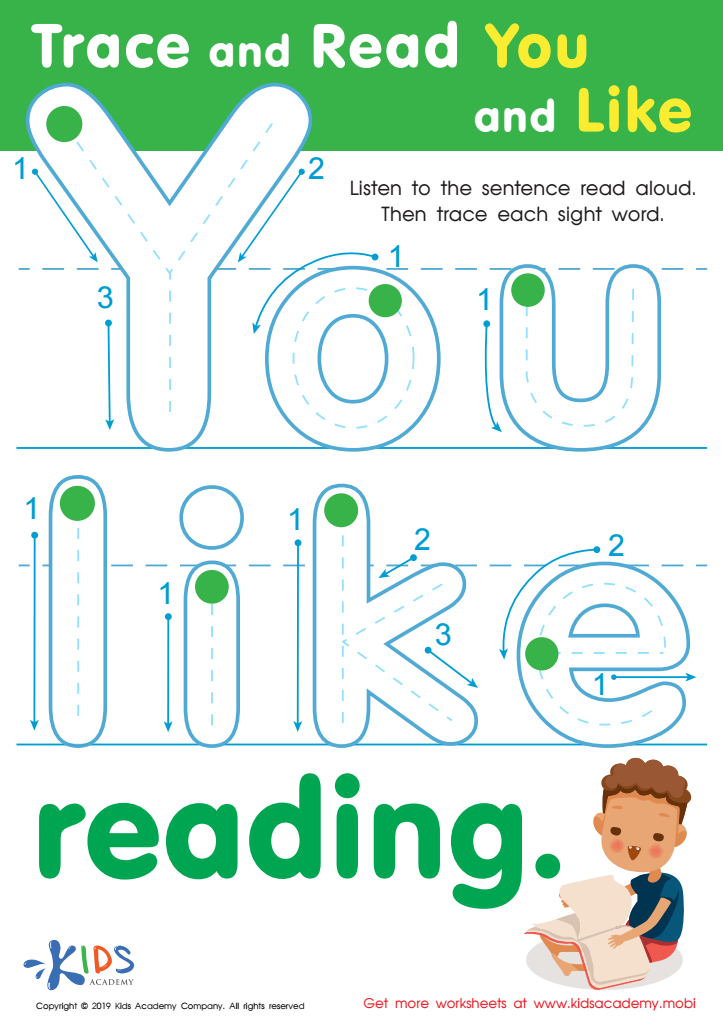
Trace Read You Like Worksheet
Sight words help children become confident and fluent readers. This free worksheet encourages success with basic 'you' and 'like' words. Writing them with traceable lines and green dots shows motion and builds sight word vocabulary. Help your child master the basics and boost their reading progress!
Trace Read You Like Worksheet
Worksheet
Join Kids Academy for Free
Who is primarily going to use this learning content?



.jpg)


.jpg)

Handwriting practice and vocabulary building are essential components of early childhood education, particularly for children aged 3 to 6. During these formative years, children are developing critical cognitive, motor, and language skills that lay the foundation for future learning.
Firstly, practicing handwriting helps improve fine motor skills, which are crucial for various everyday tasks. As children learn to hold a pencil correctly and form letters, they enhance their dexterity and coordination. This skill not only benefits handwriting but also influences their ability to perform activities like buttoning shirts and using scissors.
Secondly, building vocabulary at such a young age is vital for language development. A robust vocabulary equips children with the tools to express themselves clearly and effectively. It enhances their reading comprehension, fosters communication skills, and contributes to greater academic success. When children are introduced to new words in various contexts, they are better able to understand and engage with the world around them.
Combining handwriting practice with vocabulary building allows for a multi-sensory approach to learning. As children learn new words and write them out, they reinforce their understanding and retention. Both skills, intertwined, prepare young learners for a successful educational journey ahead. It is essential for parents and teachers to prioritize these practices.








