
Sound Association Building Vocabulary Worksheets for Ages 3-6
4 filtered results
Difficulty Level
Grade
Age
-
From - To
Subject
Activity
Standards
Enhance your child’s vocabulary with our engaging "Sound Association Building Vocabulary Worksheets" designed specifically for ages 3-6. These interactive worksheets aim to develop crucial listening skills by helping young learners connect sounds with words and images. Our fun and colorful activities foster a love for language through rhymes and sound games, making learning enjoyable. Each worksheet encourages children to think critically and expand their vocabulary while promoting auditory discrimination. As they progress, little ones will gain confidence in their language abilities, setting a strong foundation for future reading success. Start your child's vocabulary journey today with our captivating resources!
Favorites
With answer key
Interactive
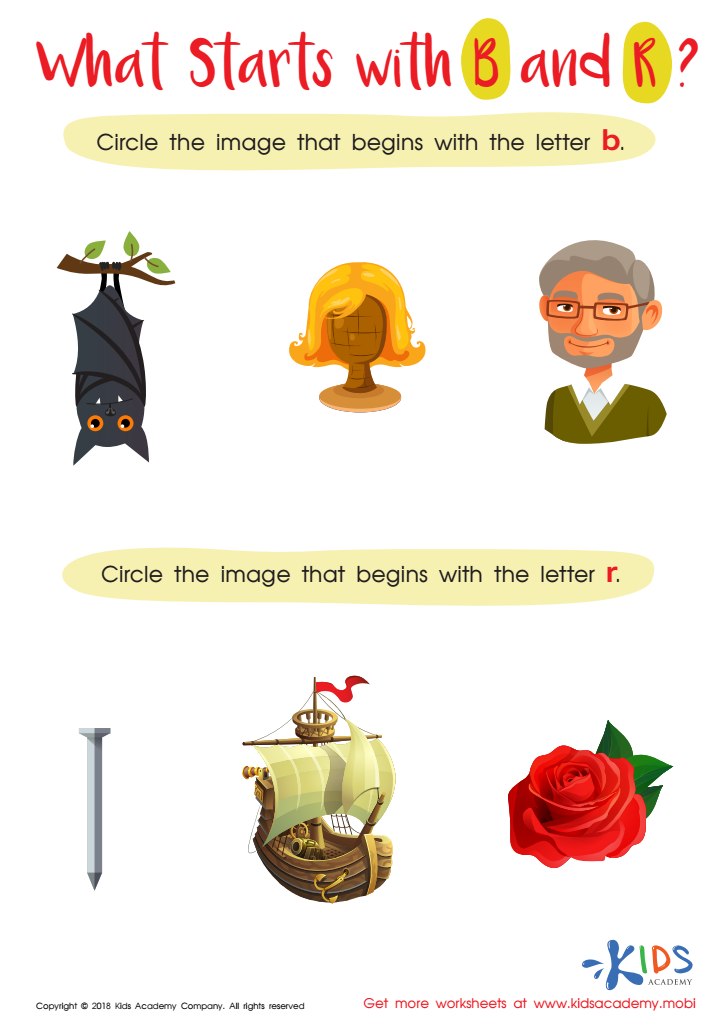
What Starts with B and R? Worksheet
Download this worksheet to help young readers practice visual and motor skills! They'll enjoy matching pictures with "B" and "R" letters while tracing the images. Bright and colorful, this engaging activity will help kids differentiate between words and have fun doing it.
 Assign to My Students
What Starts with B and R? Worksheet
Worksheet











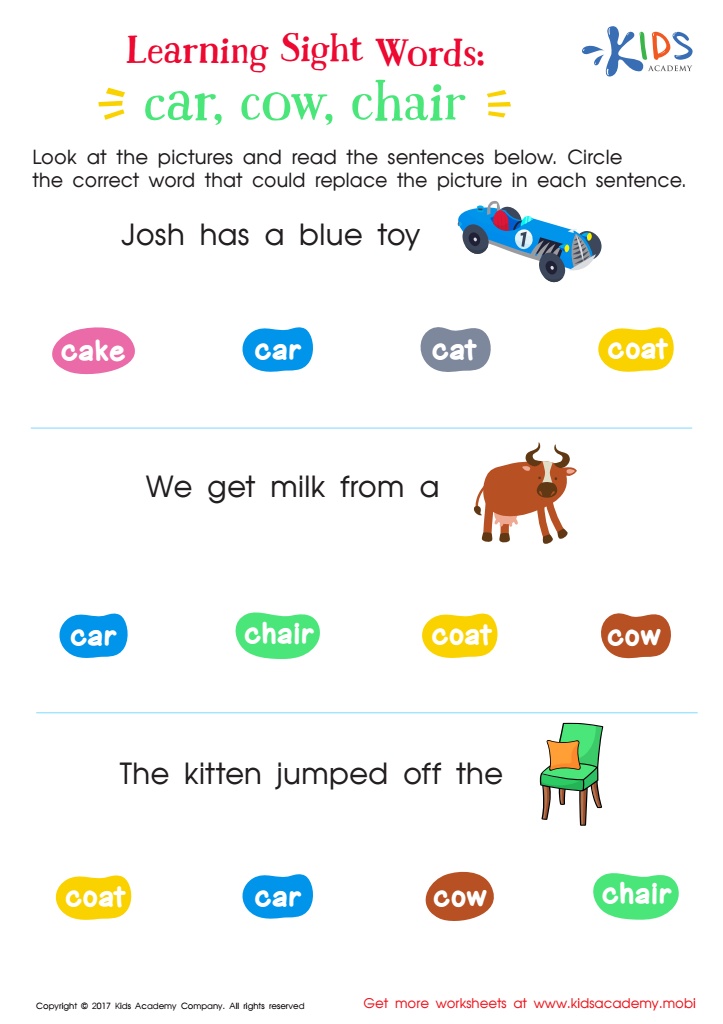
Car, Cow, Chair Worksheet Sight Words Worksheet
Reading can be difficult, so these assignment sheets can help kids stay on track. This one with the words 'Car', 'Cow' and 'Chair' will help your child choose the right words to complete a sentence, strengthen their literacy and give them more confidence in reading.
Car, Cow, Chair Worksheet Sight Words Worksheet
Worksheet
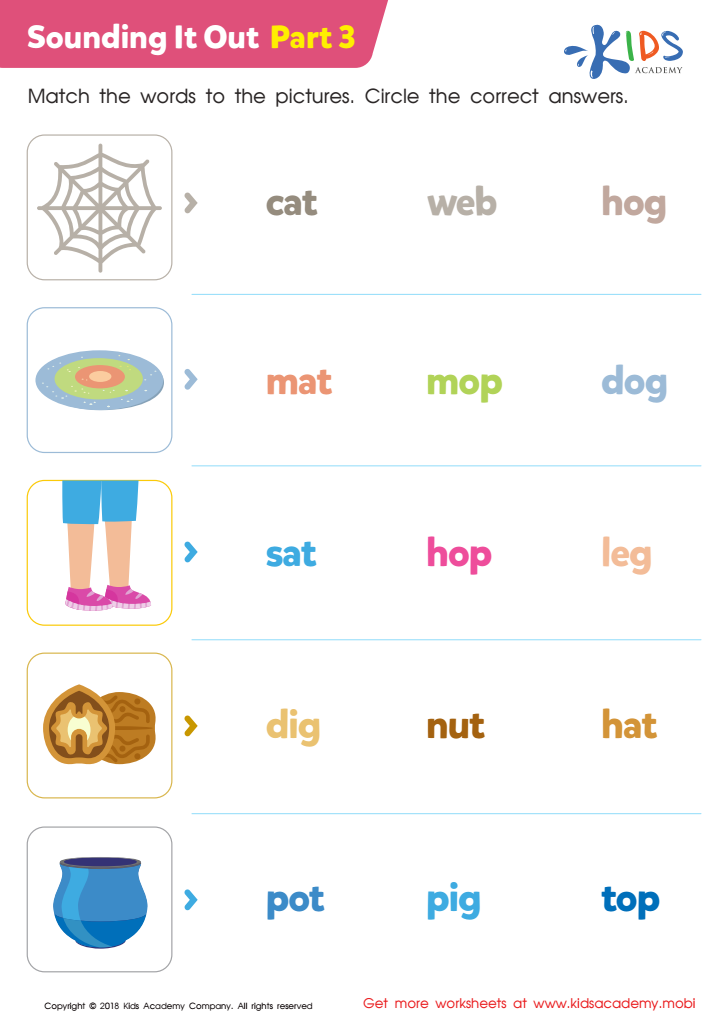
Sounding it Out: Part 3 Worksheet
Once Parts 1 and 2 are complete, this printable phonics worksheet will help kids take their reading skills to the next level! As they gain confidence, give them hints less often and direct their attention to three words in a row. Ask them to read and circle the correct word to complete!
Sounding it Out: Part 3 Worksheet
Worksheet
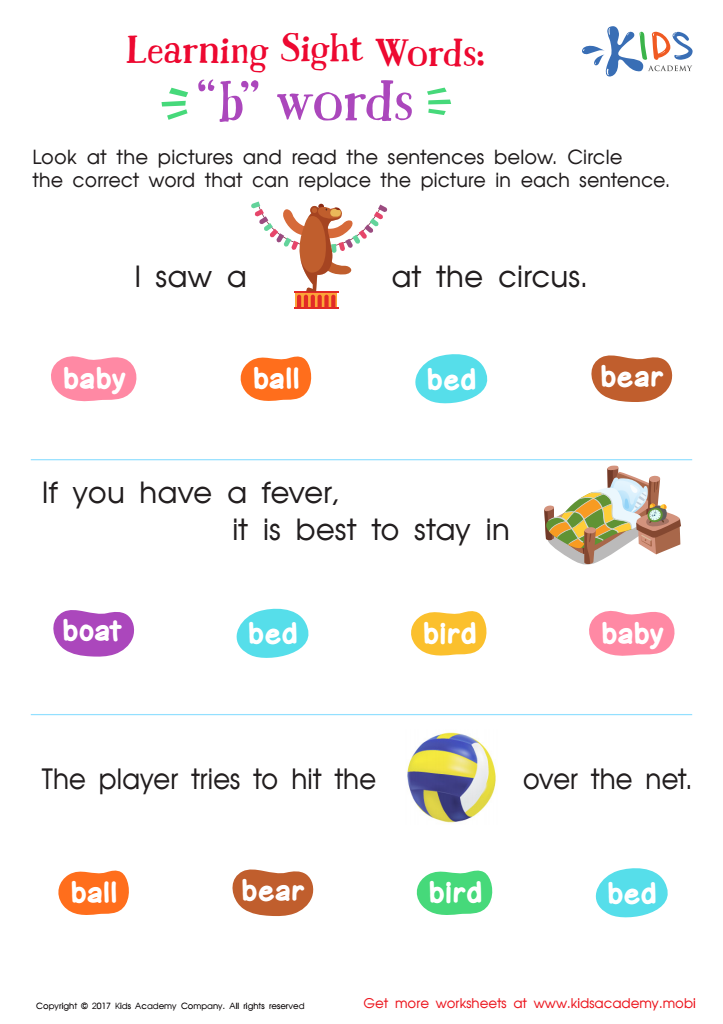
"B" Words Printable Sight Words Worksheet
Kids will learn sight words quickly with this fun worksheet! "B" Words offers guided practice with simple sentences and pictures. Build your child's reading confidence with this helpful worksheet and watch them become a master!
"B" Words Printable Sight Words Worksheet
Worksheet
Join Kids Academy for Free
Who is primarily going to use this learning content?







.jpg)
Parents and teachers should prioritize building sound associations in vocabulary for children aged 3-6 because this foundational skill significantly impacts early literacy development. During these formative years, children are particularly receptive to learning new words and concepts. Engaging in activities that connect sounds with words helps children recognize phonetic patterns, which are essential for effective reading and writing later on.
By focusing on sound associations, adults can enhance children's phonemic awareness—the ability to hear, identify, and manipulate sounds in language. This skill is critical for helping them understand letter-sound correspondence, which underlies reading success. Furthermore, a rich vocabulary enables children to express themselves clearly and comprehend their surroundings better, fostering cognitive development and social interactions.
Incorporating fun, play-based activities like rhymes, songs, and word games makes the learning process enjoyable and engaging, motivating children to participate actively. This positive reinforcement builds their confidence and instills a love for language exploration. Ultimately, investing in sound association building not only equips children with vital literacy skills but also lays the groundwork for successful lifelong learning and communication. Engaging with them in this way helps nurture a generation of confident, literate individuals ready to tackle more complex literacy challenges in the future.








