Cognitive Development Reading Fiction Worksheets for Ages 3-6
3 filtered results
-
From - To
Introduce your child to the world of imagination with our "Cognitive Development Reading Fiction Worksheets for Ages 3-6." These engaging, fun, and educational worksheets are designed to nurture young minds, enhancing their cognitive abilities while fostering a love for reading. Each carefully curated worksheet focuses on essential skills like comprehension, critical thinking, and creativity through captivating stories and delightful characters. Ideal for both at-home and classroom learning, these worksheets help children aged 3-6 to develop vocabulary, understand narrative structure, and refine their ability to grasp complex concepts. Start your child's cognitive development journey with our expertly crafted fiction reading worksheets today!
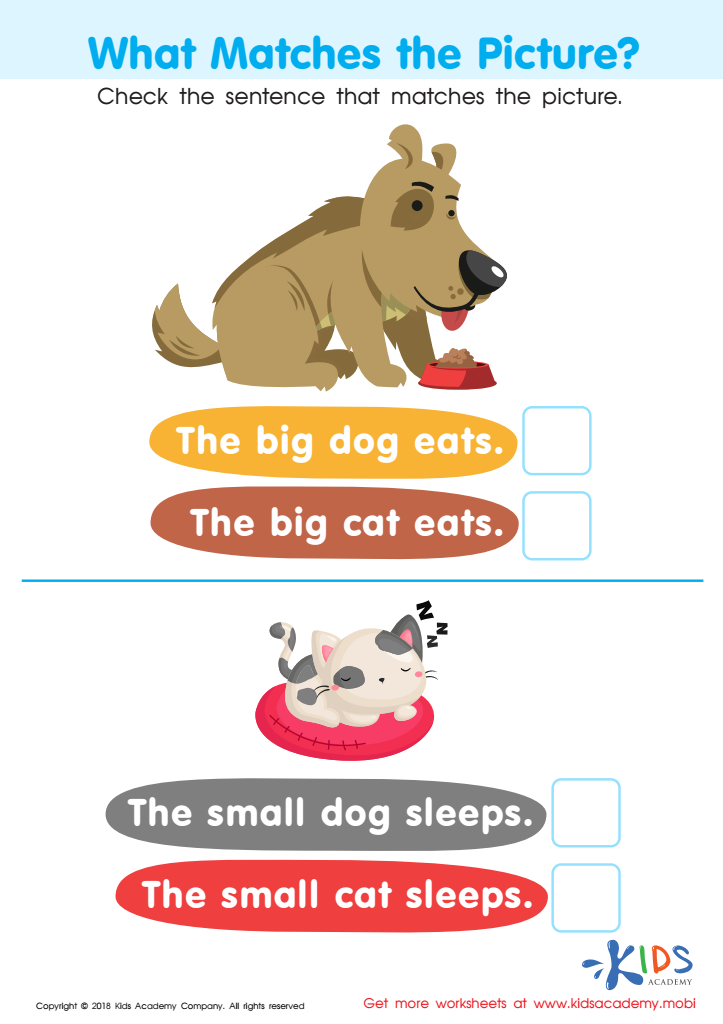
What Matches the Picture? Worksheet
 Assign to My Students
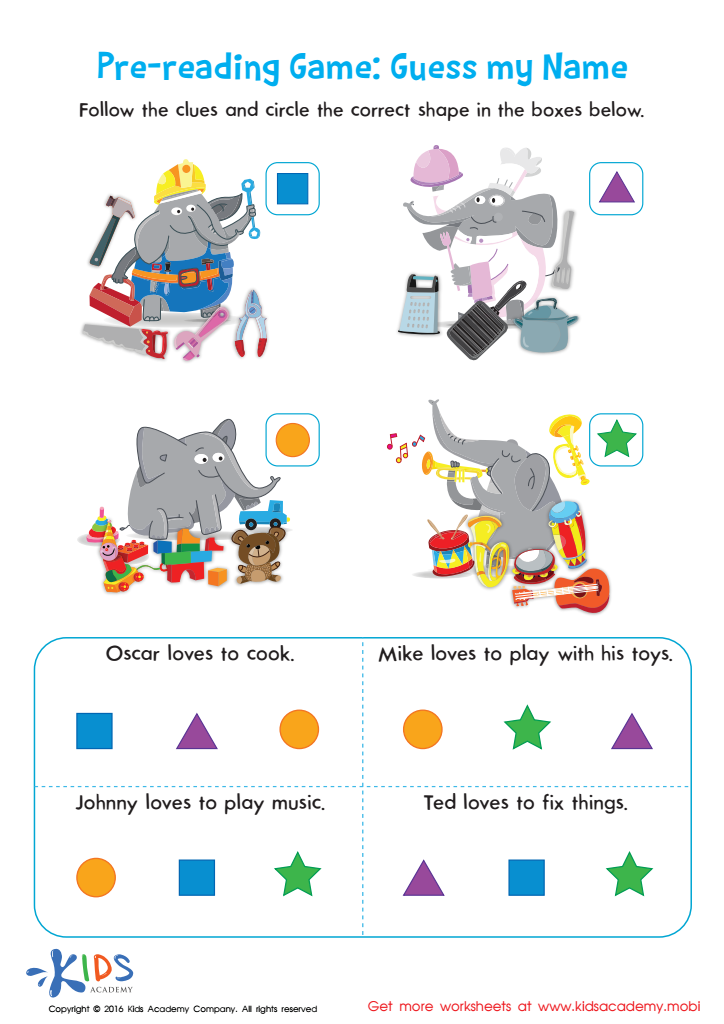
Pre Reading Worksheet Guess My Name
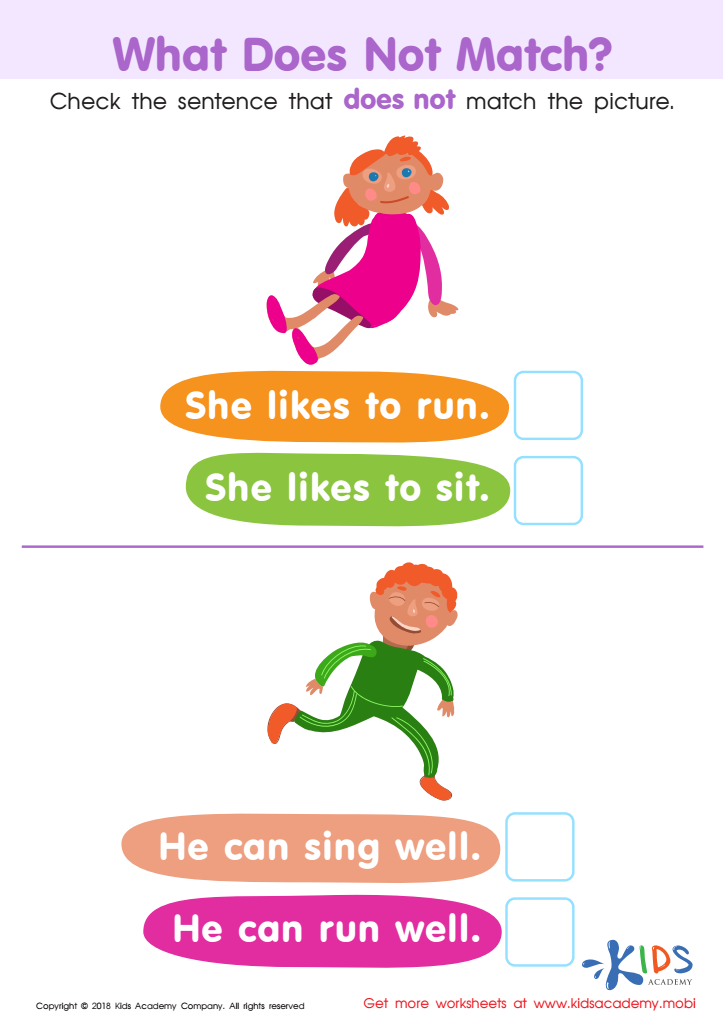
What Does Not Match? Worksheet


.jpg)





Cognitive development during ages 3-6 is a critical period for children, and reading fiction plays a pivotal role in this process. When parents and teachers incorporate fictional stories into a child’s daily routine, they significantly contribute to various cognitive skills that are essential for future learning.
Firstly, reading fiction enhances language development. Through stories, children are exposed to new vocabulary, sentence structures, and language patterns, which expands their linguistic abilities and improves communication skills.
Moreover, fiction fosters imagination and creativity. As children visualize the story's events, characters, and settings, they exercise their creativity. This imaginative play is crucial for problem-solving and critical thinking.
Reading fiction also bolsters memory and concentration. Following a storyline requires kids to remember details and understand sequences, sharpening their memory retention and attentiveness.
Additionally, fiction introduces children to diverse perspectives and emotions, promoting empathy and social understanding. Engaging with characters’ experiences helps children deal with their emotions and understand others' feelings.
Finally, storytime creates a prime opportunity for bonding, offering a warm, secure environment that enhances a child’s sense of love and security. This emotional safety is vital for healthy cognitive growth.
In summary, incorporating reading fiction into the lives of children ages 3-6 equips them with fundamental cognitive tools, making it a key focus for parents and educators.








