
Problem-Solving Skills Reading Fiction Worksheets for Ages 3-6
4 filtered results
Difficulty Level
Grade
Age
-
From - To
Subject
Activity
Standards
Enhance problem-solving skills in young learners with our engaging Reading Fiction Worksheets, designed specifically for ages 3-6. These interactive resources foster critical thinking and creative solutions by encouraging children to analyze stories, identify challenges, and explore diverse outcomes. Through captivating narratives and vibrant illustrations, children will learn to think analytically as they answer thought-provoking questions and complete fun activities. Our worksheets nurture imagination, improve comprehension, and inspire a love for reading while developing essential cognitive skills. Perfect for early childhood educators and parents, these materials ensure foundational learning is both enjoyable and effective. Adventure into the world of fiction today!
Favorites
With answer key
Interactive
At a Pizza Party Worksheet
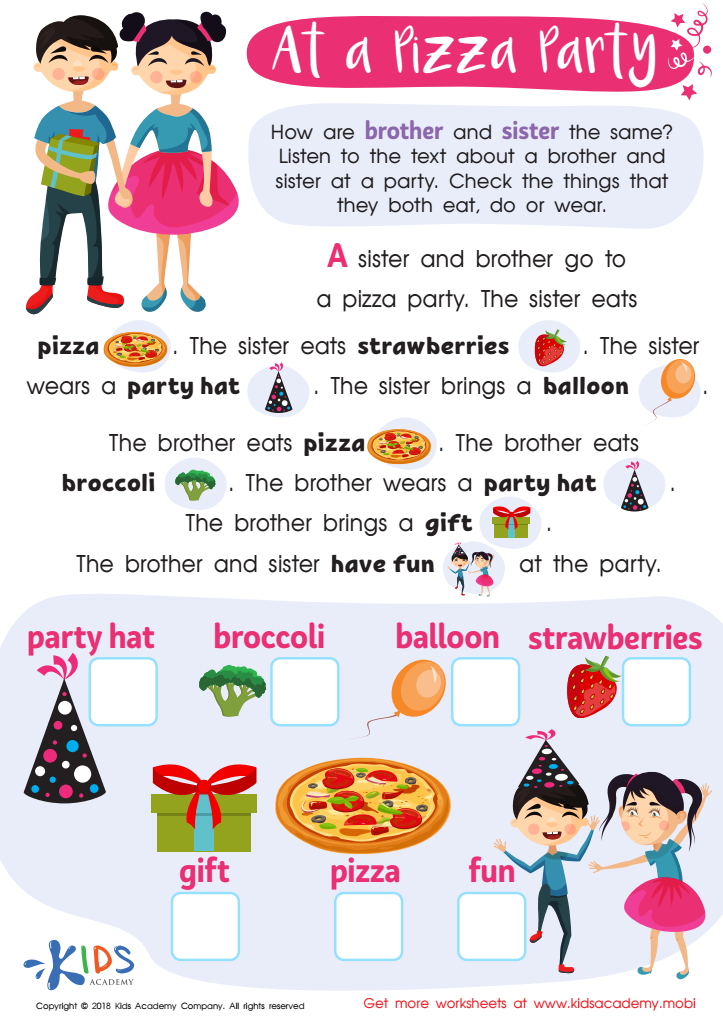
Parties are the best! Eating, playing, singing, dancing and gift-exchange - what's your child's fave part? In this worksheet, a brother and sister are eager to enjoy their party. Read the text to them and help them check what they do, eat, and wear. 80 words.
 Assign to My Students
At a Pizza Party Worksheet
Worksheet
“The Princess and the Pea” or “Cinderella” Worksheet
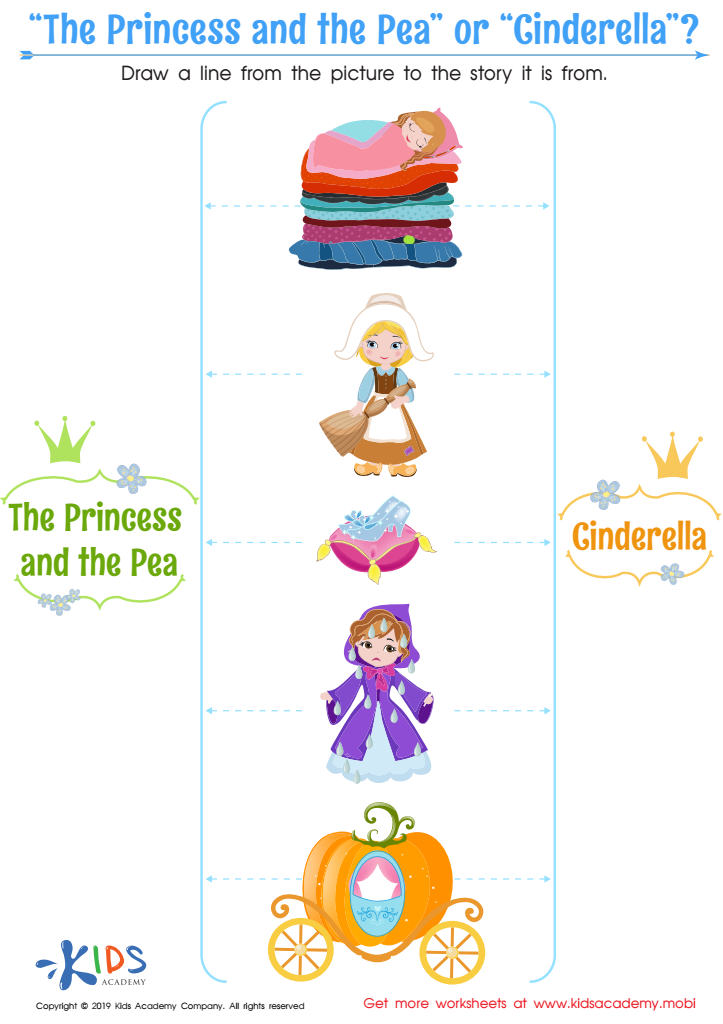
Help your child identify the characters and objects from both the Princess and the Pea and Cinderella. Ask them to draw a line from the pictures to the story it's from on the tracing sheet. Encourage them to tell you the similarities between the two stories. Enjoy the tale with your daughter and watch her be fascinated by these two classic children's stories.
“The Princess and the Pea” or “Cinderella” Worksheet
Worksheet
Fairy Tales Maze Worksheet
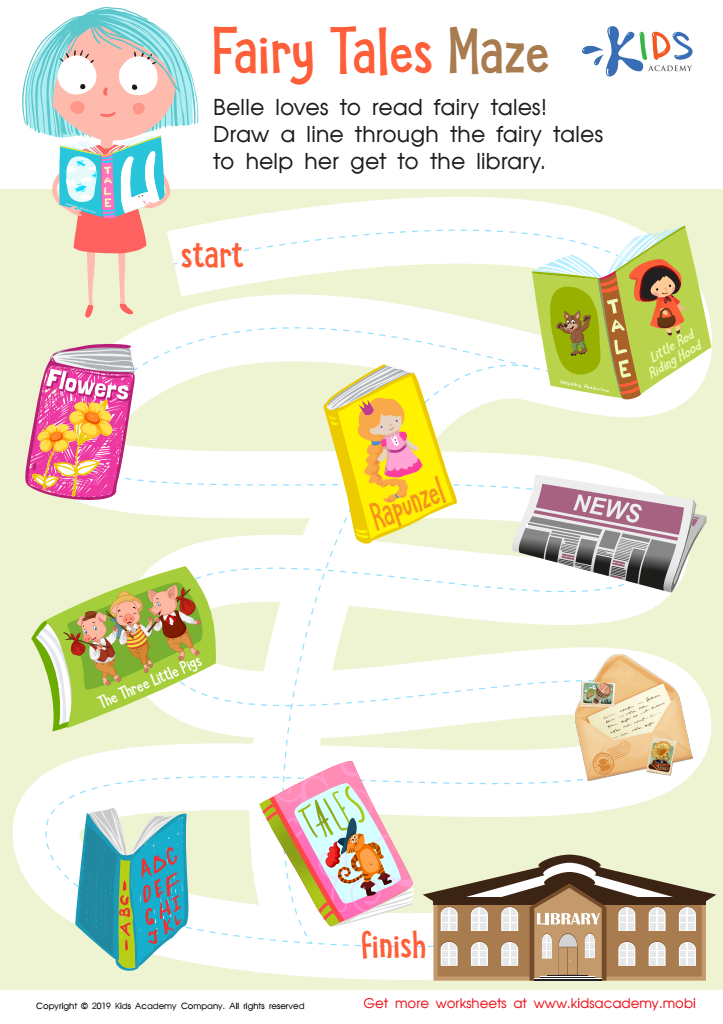
Kids love mazes and fairy tales, so this free worksheet is a great way to help teach young readers about familiar topics. They'll join Bella and use the traceable lines to travel through different reading genres, and find their way to the library for a nice reward!
Fairy Tales Maze Worksheet
Worksheet
Take a Look - Part 1 Worksheet
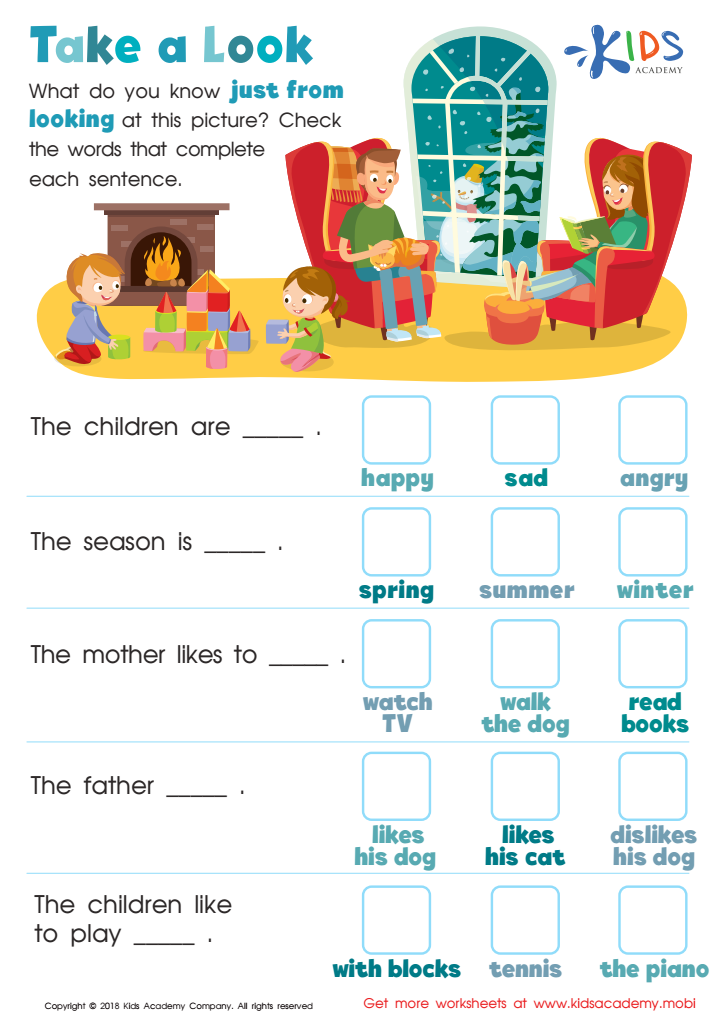
Young learners gain understanding when using picture clues when reading. Looking at illustrations can help students learn the meaning of key vocabulary when reading fiction or informational text. Ask your students to look at the worksheet and observe what they can learn from the picture. It's a great comprehension strategy for early readers.
Take a Look - Part 1 Worksheet
Worksheet
Join Kids Academy for Free
Who is primarily going to use this learning content?






.jpg)
Parents and teachers should prioritize problem-solving skills in young children, especially through reading fiction, because these skills are foundational to early development. At ages 3-6, children are naturally curious and imaginative. Engaging them in fictional stories fosters creativity and critical thinking; as they encounter various characters and challenges, they learn to navigate and solve conflicts.
Fictional narratives often present problems that require resolution, allowing children to think about outcomes and develop strategies. For instance, characters may face obstacles that teach perseverance or collaboration—essential skills for life. Additionally, discussing storylines encourages children to articulate their thoughts, reason through situations, and analyze character decisions.
Moreover, reading fiction together strengthens the parent-child or teacher-student bond, promoting richer conversations and interactions. These discussions not only enhance comprehension and vocabulary but also instill a sense of empathy, as children learn to view the world through different perspectives.
Lastly, instilling problem-solving skills early helps children approach real-life situations with confidence and resilience, creating a strong foundation for ongoing learning and social interaction. By caring about these skills now, adults equip children with the tools to navigate challenges throughout their lives.








