Noun identification Grammar Worksheets for Ages 3-6
6 filtered results
-
From - To
Discover our engaging "Noun Identification Grammar Worksheets for Ages 3-6" at Kids Academy! Perfect for young learners, these printable worksheets provide a fun and interactive way for children to understand and identify nouns. Carefully designed by early education experts, each activity encourages language development through colorful illustrations and relatable examples. Our worksheets cater to preschool and kindergarten students, making learning a delightful experience while building essential grammar skills. Use them to reinforce classroom learning or as a helpful addition to your homeschool curriculum. Foster early literacy and a love of learning with Kids Academy's noun identification resources!
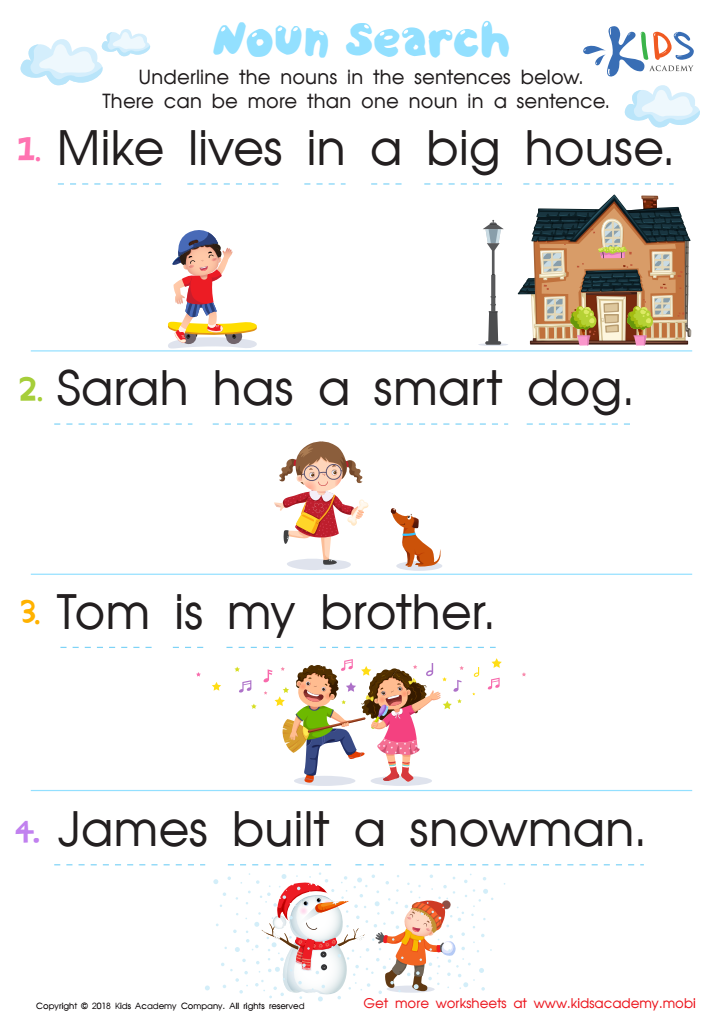
Noun Search Worksheet
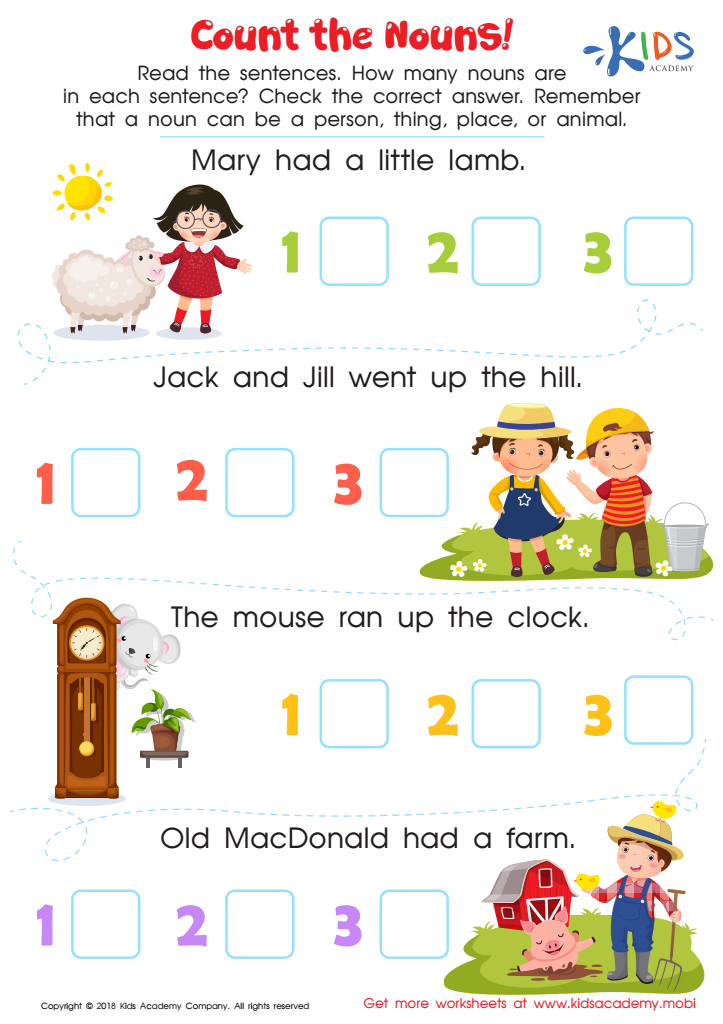
Count the Nouns Worksheet
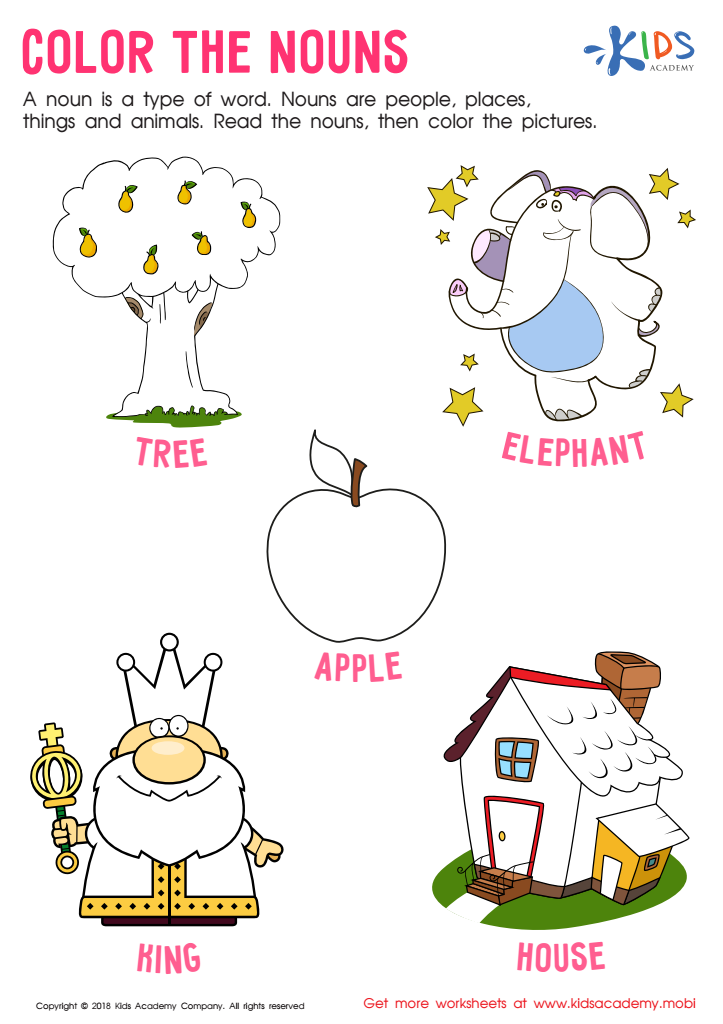
Color the Nouns Worksheet
 Assign to My Students
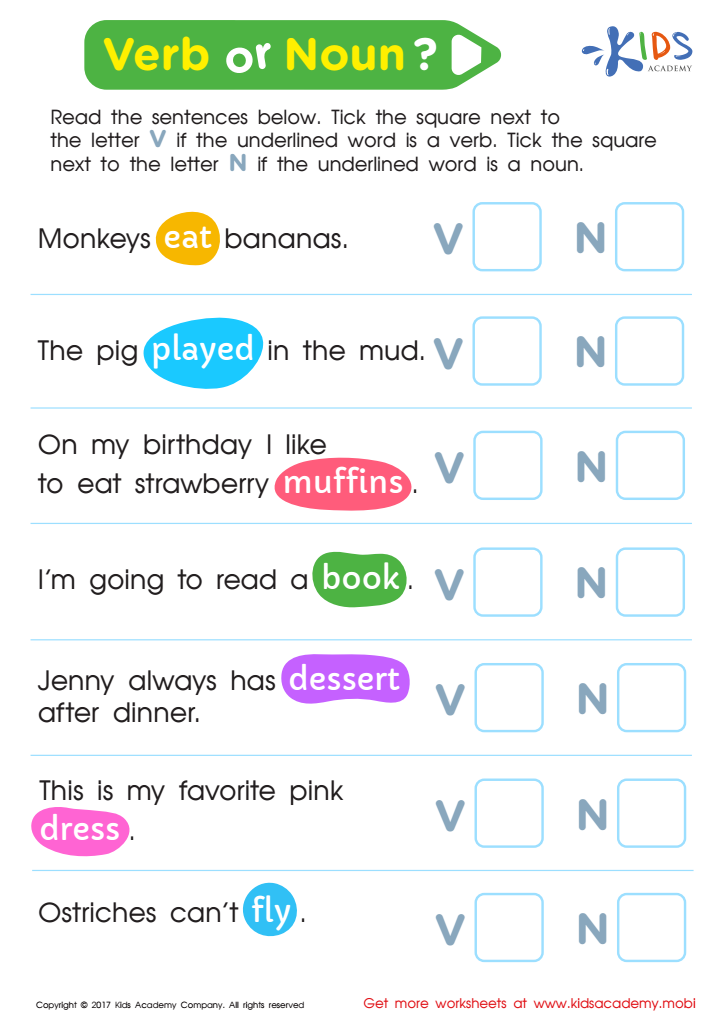
Verb or Noun Worksheet
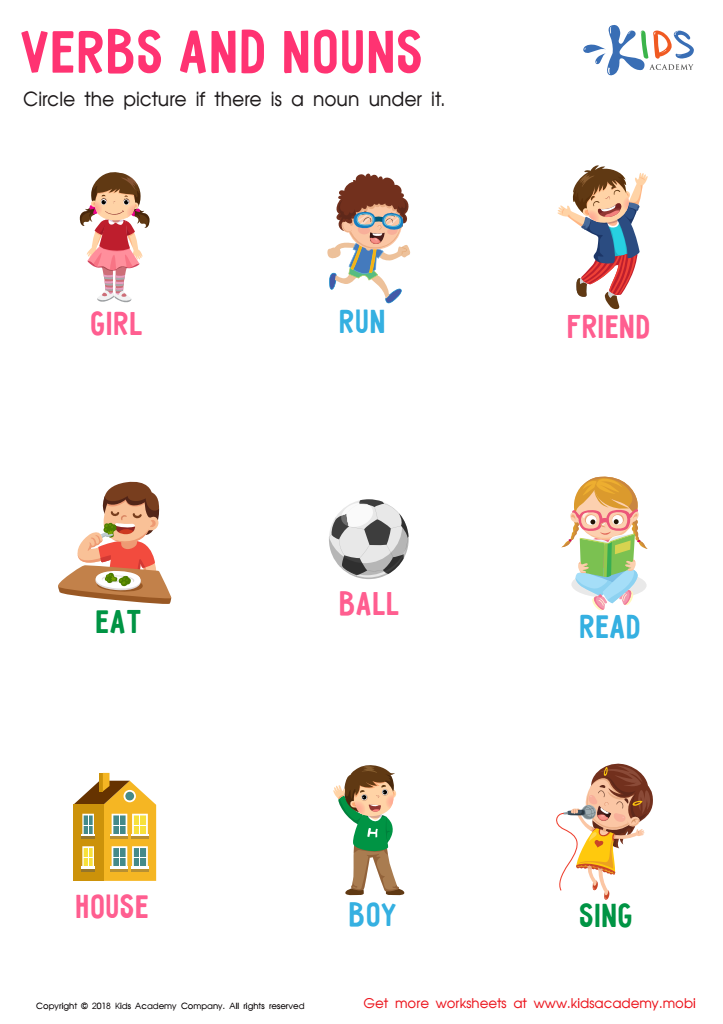
Verbs and Nouns Worksheet
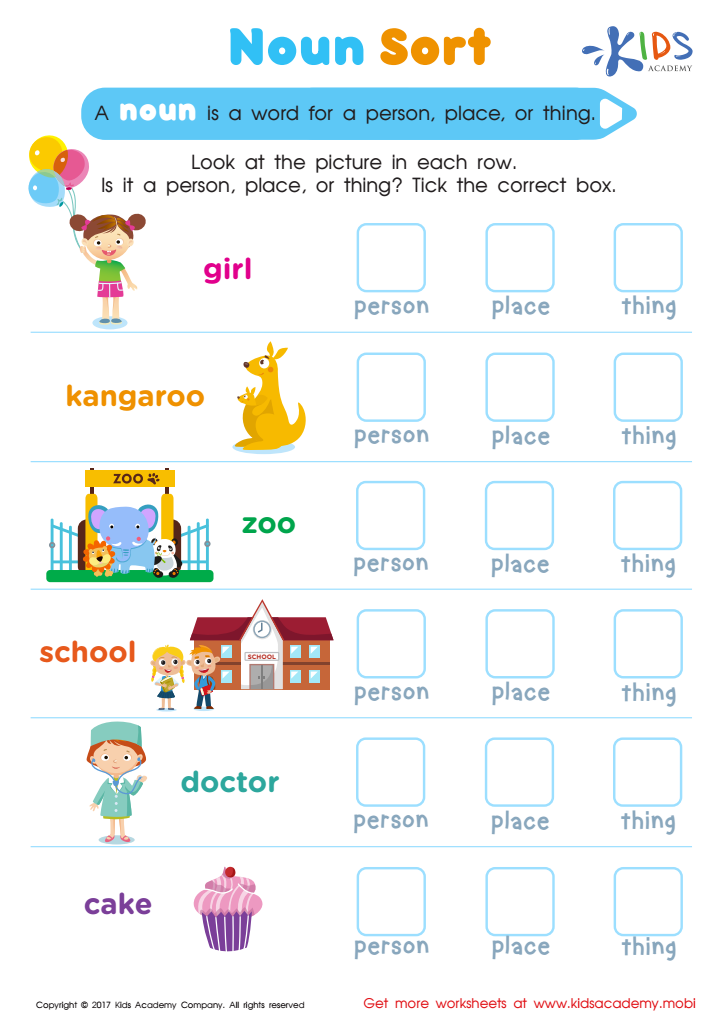
Noun Sort Printable




.jpg)


Noun identification is a fundamental aspect of grammar that parents and teachers should prioritize for children aged 3-6. During these formative years, children are rapidly developing their language and cognitive skills. Learning to identify nouns lays the groundwork for a broader understanding of language, contributing significantly to communication abilities, reading comprehension, and academic success.
Understanding nouns—which are words for people, places, things, and ideas—helps children grasp the basic elements of sentences. This knowledge aids sentence structure comprehension, enabling children to progressively construct more complex and coherent sentences. A strong grasp of nouns also expands a child's vocabulary, fostering better articulation of thoughts and emotions.
Additionally, early noun identification supports literacy development. As children learn to recognize and categorize different types of words, their reading skills improve. They become more adept at decoding texts and understanding content. This early grammatical foundation empowers children to write more creatively and accurately, setting them up for future school achievements.
Moreover, introducing grammar concepts like nouns at an early age makes the learning process more intuitive. Parents and teachers who emphasize noun identification help children build confidence in their language skills, ultimately supporting their overall educational growth and communication efficacy.