Verb identification Grammar Worksheets for Ages 3-6
3 filtered results
-
From - To
Explore our engaging Verb Identification Grammar Worksheets designed for children ages 3-6! These interactive printables help young learners recognize and understand verbs, enhancing their vocabulary and sentence construction skills. Each worksheet is colorful and age-appropriate, featuring fun activities that encourage children to identify action words in various contexts. Perfect for early education, these resources aim to build a strong foundation in language through playful learning. Empower your little ones with the essential skill of verb recognition, making grammar a delightful adventure. Download now and watch your child’s confidence in language soar! Ideal for homeschoolers and classroom use.
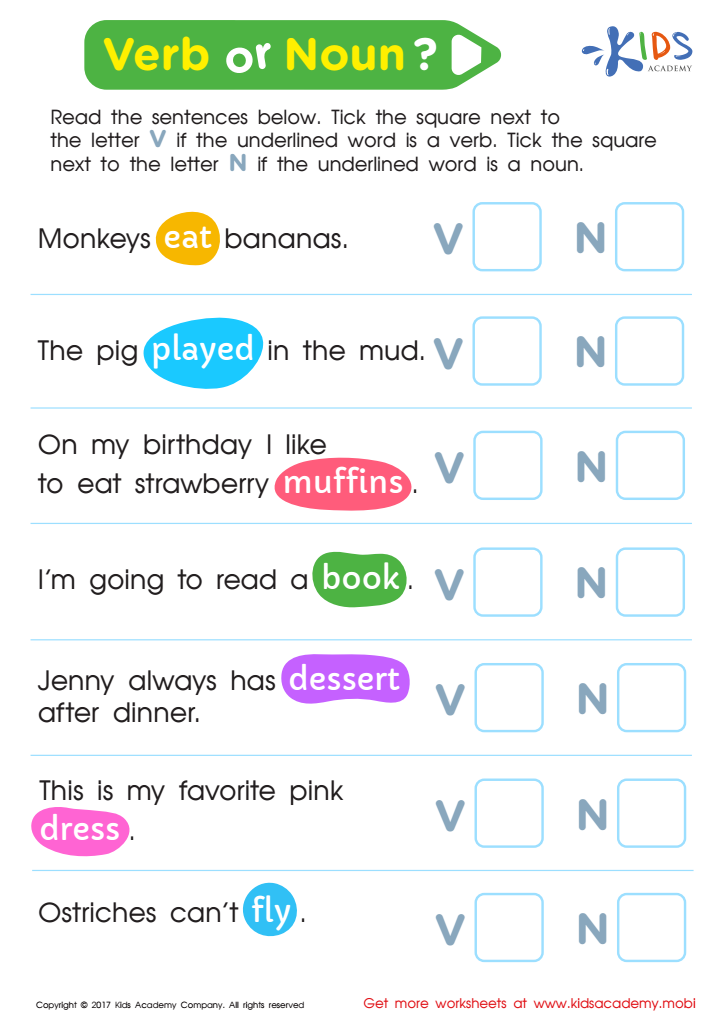
Verb or Noun Worksheet
 Assign to My Students
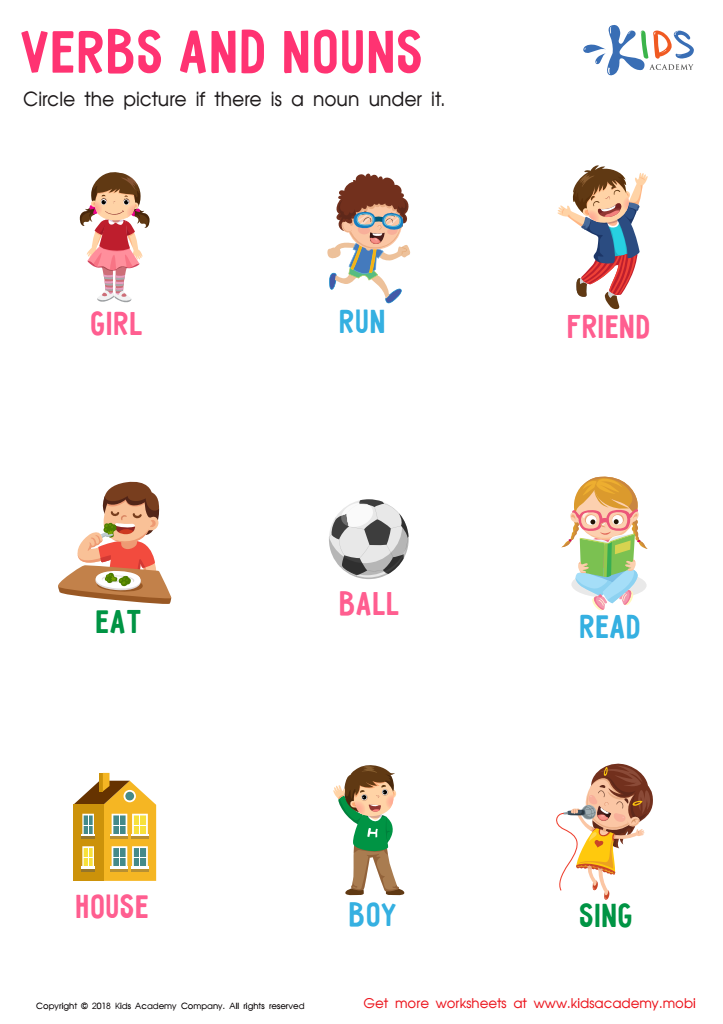
Verbs and Nouns Worksheet
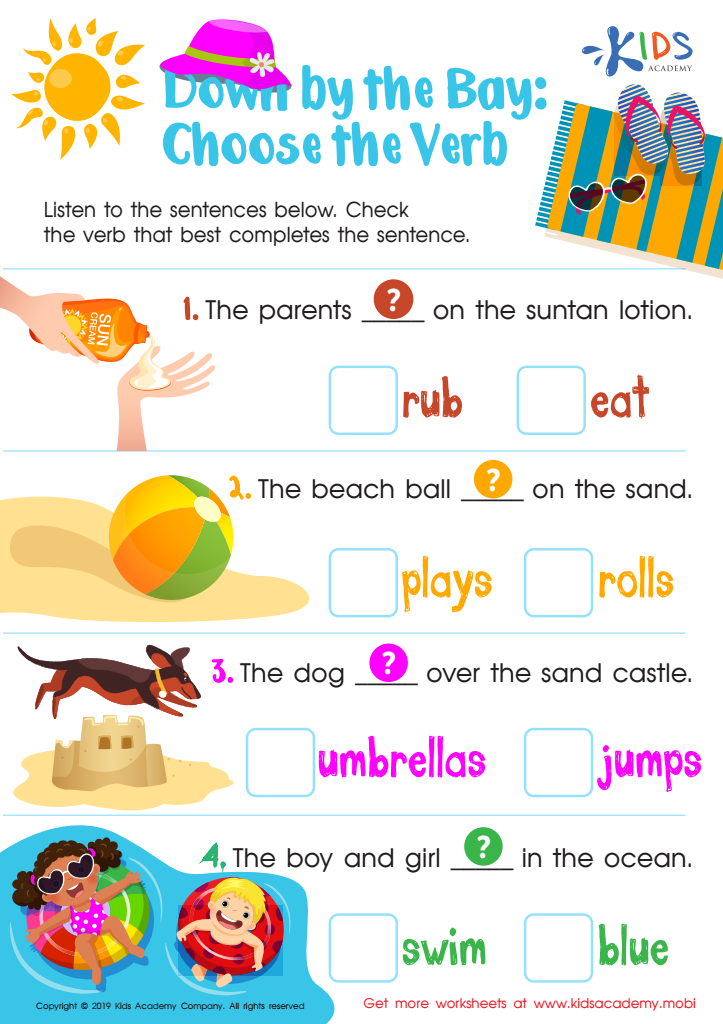
Down by the Bay: Choose the Verb Worksheet


.jpg)


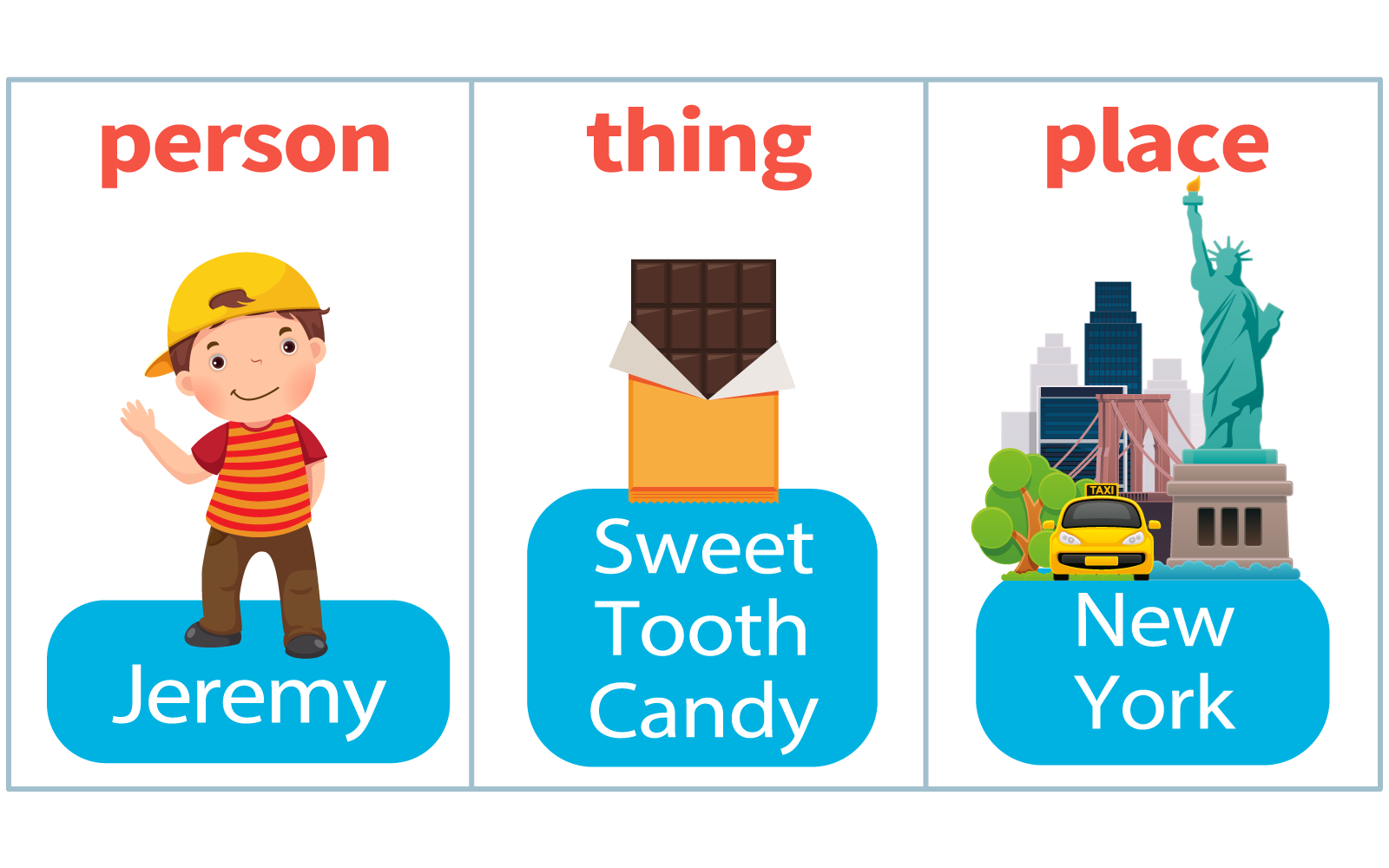


Understanding verb identification is crucial for the language development of children aged 3-6. During this stage, kids are forming their foundational communication skills, and verbs play a vital role in expressing actions, states, and occurrences. When parents and teachers emphasize verb identification, they empower children to construct meaningful sentences, promote creativity in storytelling, and enhance their overall linguistic skills.
Additionally, recognizing verbs helps young learners connect language to real-world experiences. By engaging children in interactive activities that highlight verbs—such as action games, storytelling, and role-playing—adults can create an engaging learning environment that fosters curiosity and interest in language. This approach not only enhances vocabulary but also aids in cognitive development, as children learn to categorize words and understand their functions within a sentence.
Moreover, strengthening verb identification skills at an early age prepares children for reading and writing tasks they will encounter in elementary school. It helps them become confident communicators and equips them with the tools needed for successful literacy development. In summary, investing time in teaching verb identification can significantly benefit a child's language abilities, paving the way for effective communication and academic success as they grow older.








