Motor skills development ABC Letters Worksheets for Ages 3-8
3 filtered results
-
From - To
Enhance your child's motor skills with our engaging ABC Letters Worksheets designed for ages 3-8! These worksheets provide a fun and educational way for young learners to practice essential writing techniques while familiarizing themselves with the alphabet. Aimed at developing fine motor skills, each activity incorporates tracing, coloring, and drawing exercises that encourage hand-eye coordination and dexterity. Perfect for home or classroom use, these worksheets not only support literacy development but also foster creativity and concentration. Download today to give your child a head start on their journey to writing mastery while making learning an enjoyable experience!

Letter H Tracing Page










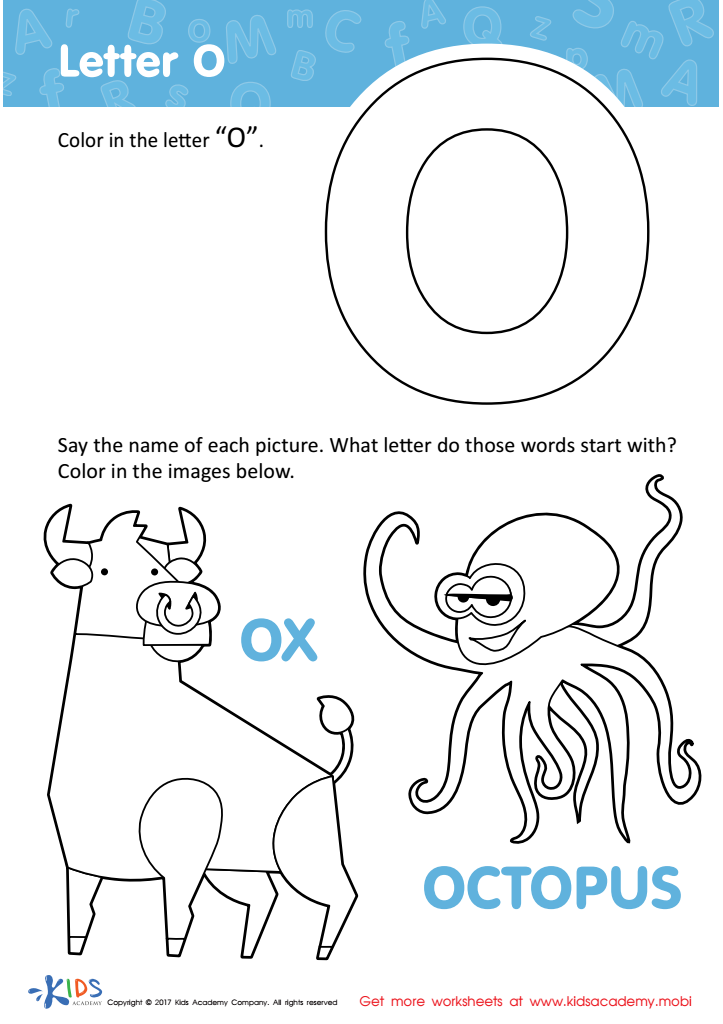
Letter O Coloring Sheet
 Assign to My Students
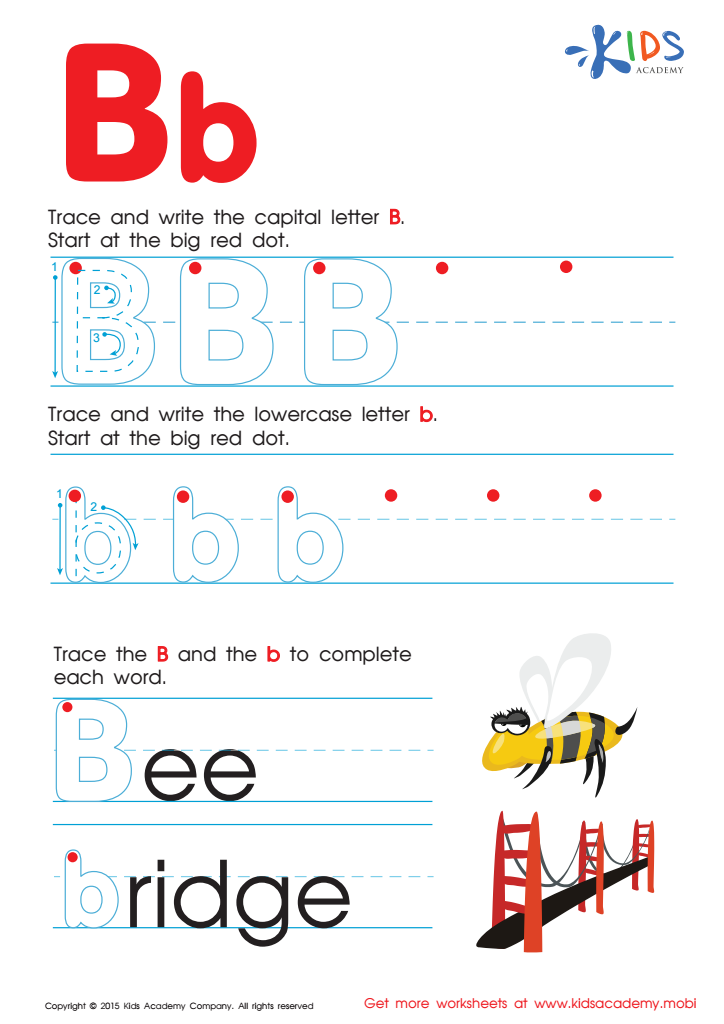
Letter B Tracing Page







Motor skills development is crucial for children aged 3-8 because it lays the foundation for their overall growth and learning processes. Fine motor skills, necessary for tasks such as writing and manipulating small objects, are essential for academic success and daily activities. When children learn to recognize and write ABC letters, they enhance their hand-eye coordination and dexterity, which boosts their confidence in other areas of learning.
Moreover, strong motor skills contribute to cognitive development. Engaging in activities such as letter tracing, sorting, or crafting not only solidifies letter recognition but also promotes problem-solving abilities and imaginative thinking. These skills are vital during the early years, as they correlate with later academic achievements in literacy and numeracy.
Parents and teachers play a significant role in facilitating this development. Engaging children through play-based activities, such as sand and water play or arts and crafts, makes learning fun and interactive. Furthermore, children with well-developed motor skills are often more willing to participate in social activities, thereby improving communication and collaboration skills.
By focusing on motor skills development, parents and teachers set the stage for a lifetime love of learning and equip children with the essential tools for success.







