Filters

7 filtered results

Clear all filters
Favorites
With answer key
Interactive

7 filtered results

Difficulty Level

Grade


Unlock the world of cursive writing with our engaging Alphabet Recognition Cursive Alphabet Worksheets, designed for ages 3-8. These printable worksheets from Kids Academy help young learners master the art of recognizing and writing cursive letters through fun and interactive activities. Ideal for early grade students, the exercises promote fine motor skills, enhance letter formation, and build a strong foundation for future cursive writing skills. Each worksheet offers cheerful illustrations and easy-to-follow instructions, ensuring children remain captivated and motivated. Discover a delightful journey into cursive handwriting and watch your child's confidence soar!

Check out this FREE Trial Lesson on Cursive Alphabet for age 3-8!

H

Favorites
With answer key
Interactive
  • 3-8
  • Alphabet Recognition
  • Cursive Alphabet
Cursive ABCs: Lowercase d

Cursive ABCs: Lowercase d

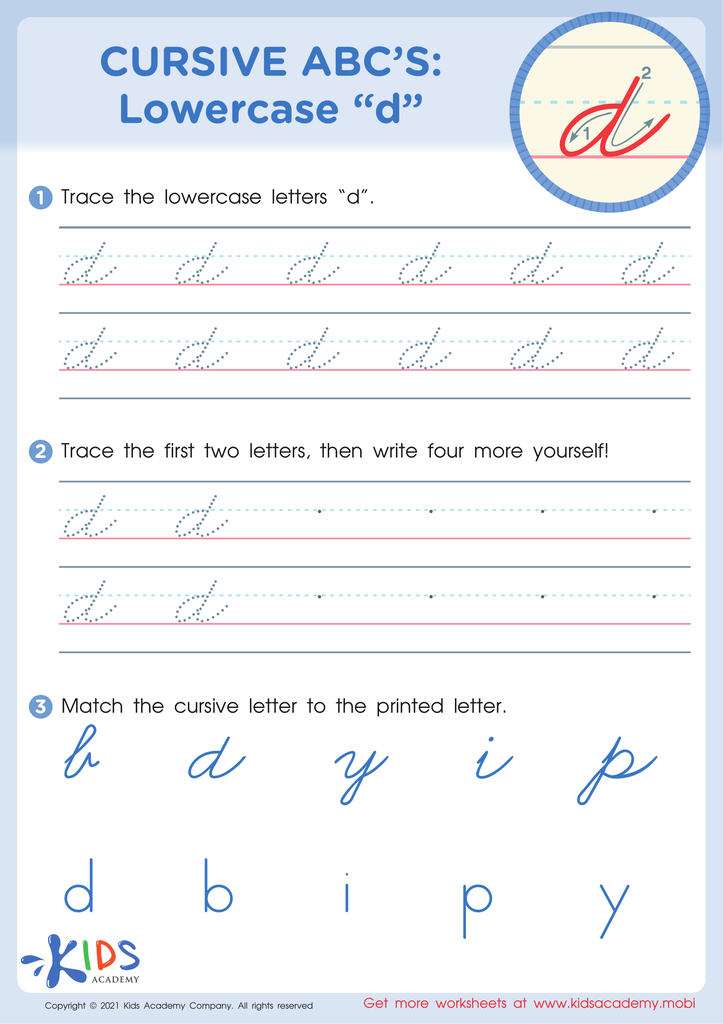
To make learning fun, introduce colorful worksheets! These help young learners perfect their cursive lowercase 'd'. By the end, they'll be better at writing and identifying the letter. It's an easy and enjoyable exercise for kids!
Cursive ABCs: Lowercase d
Worksheet
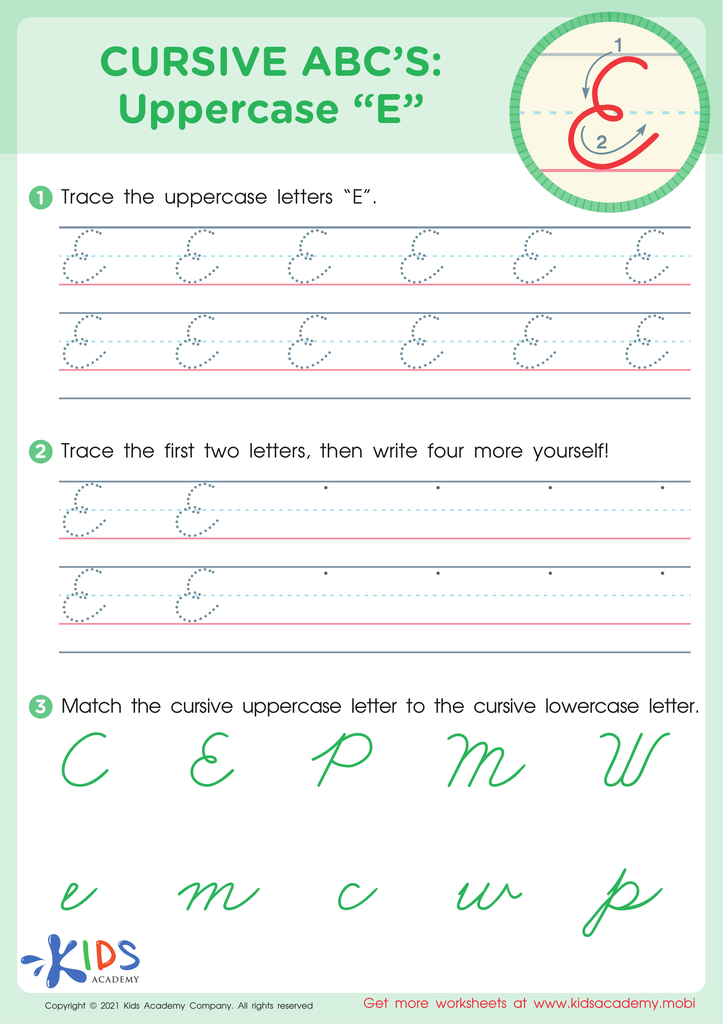
Cursive ABCs: Uppercase E

Cursive ABCs: Uppercase E

Ask your child if they can identify the letter 'E' and give examples. Each letter is unique, so provide coaching. Have them trace cursive 'E' to become familiar and boost confidence. Then, ask them to write it on their own.
Cursive ABCs: Uppercase E
Worksheet
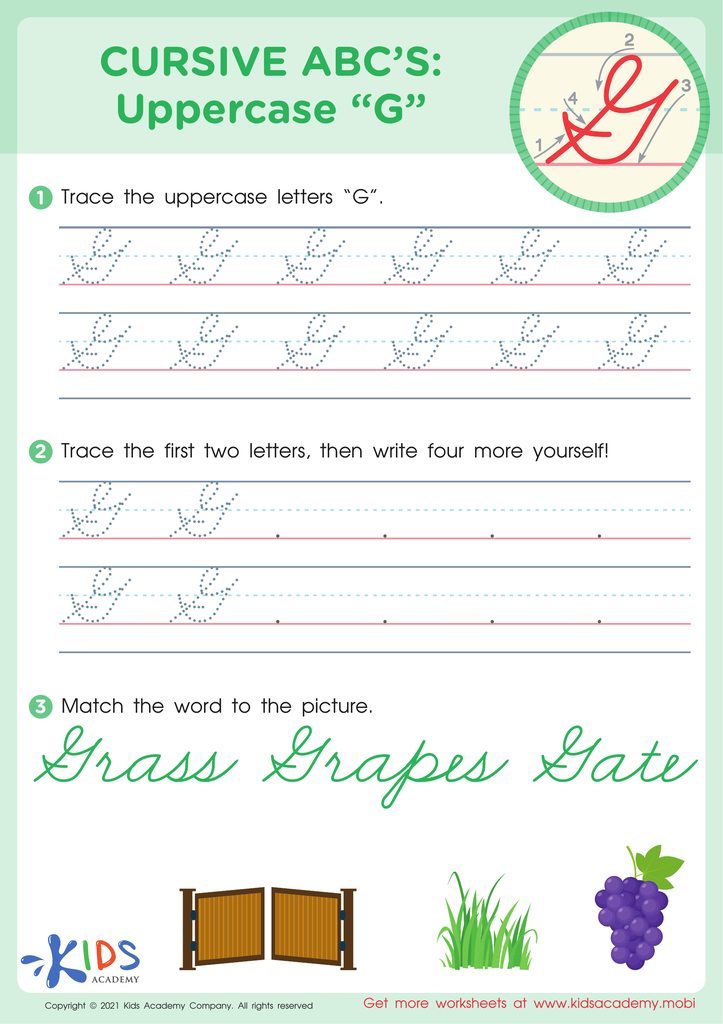
Cursive ABCs: Uppercase G

Cursive ABCs: Uppercase G

Remind your kids of words beginning with 'G' like 'girl' and 'goat'. Ask them to give examples too. Use this tracing worksheet to help your kids practice writing the cursive uppercase 'G'. It'll help them perfect their motor skills and get better at cursive letters.
Cursive ABCs: Uppercase G
Worksheet
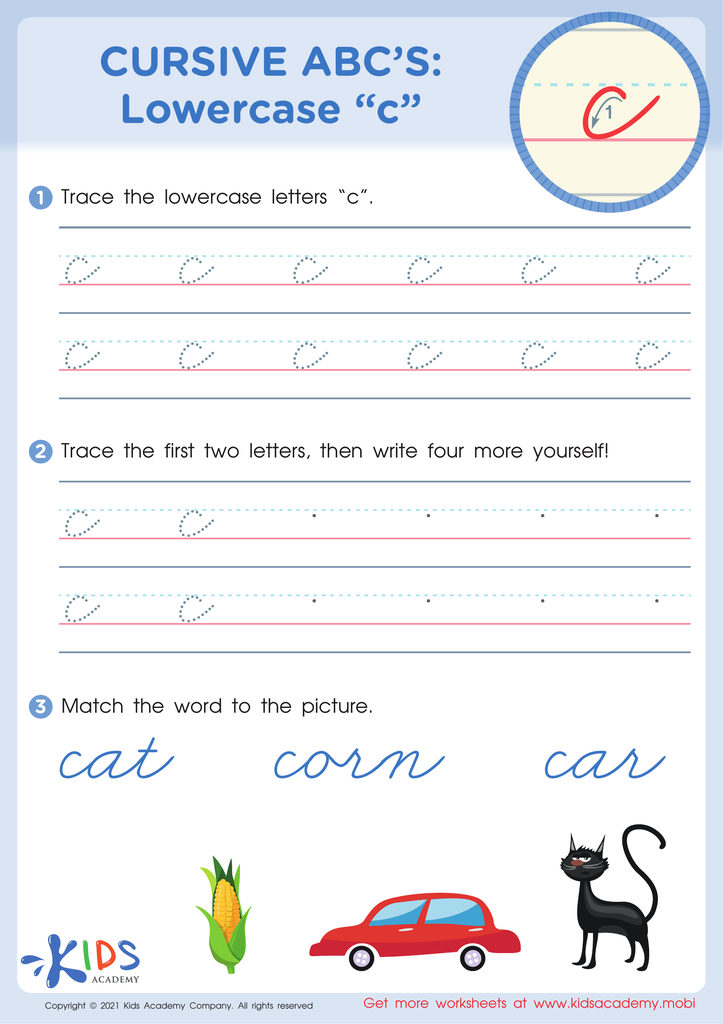
Cursive ABCs: Lowercase c

Cursive ABCs: Lowercase c

Once your child has successfully printed their letters, help them learn to recognize and write the alphabet in cursive. Struggling? This worksheet is perfect to assist them. Writing is an essential skill for kids to learn, so do all you can to help them. Use these tracing worksheets and guide them as they write the lowercase letter 'c' in cursive.
Cursive ABCs: Lowercase c
Worksheet
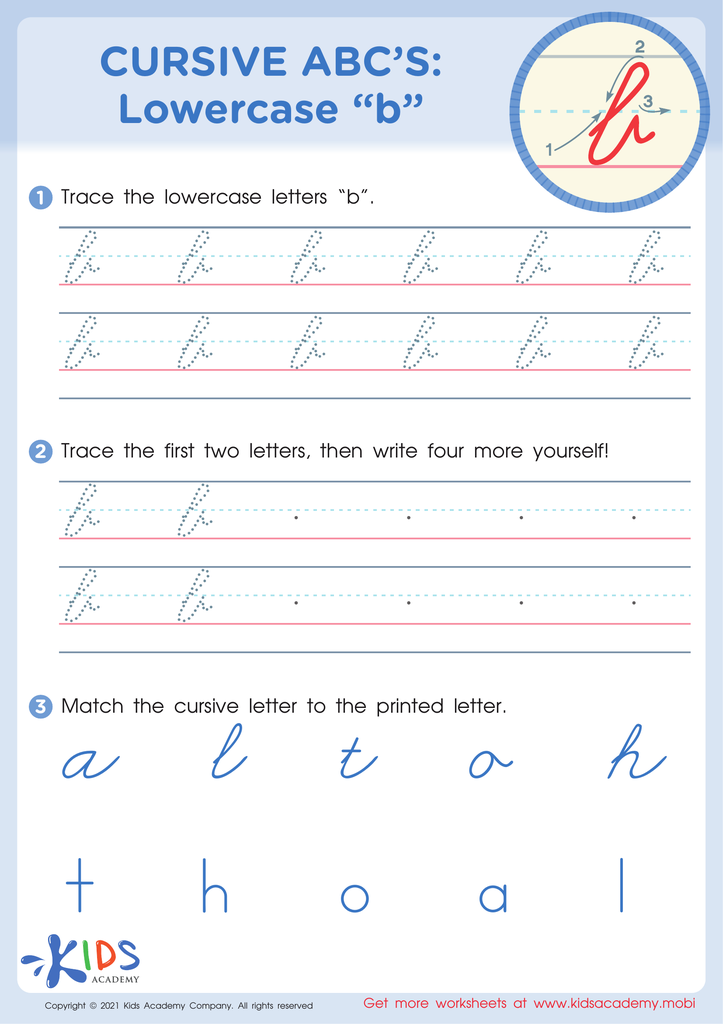
Cursive ABCs: Lowercase b

Cursive ABCs: Lowercase b

Trace two lines of lowercase b's with your kids. Guide them through the loops and swirls to help them learn cursive handwriting. Then let them practice writing the letter b themselves in the last two lines. With this exercise, your kids should become better at writing and recognizing the lowercase cursive b.
Cursive ABCs: Lowercase b
Worksheet
Cursive ABCs: Uppercase A

Cursive ABCs: Uppercase A

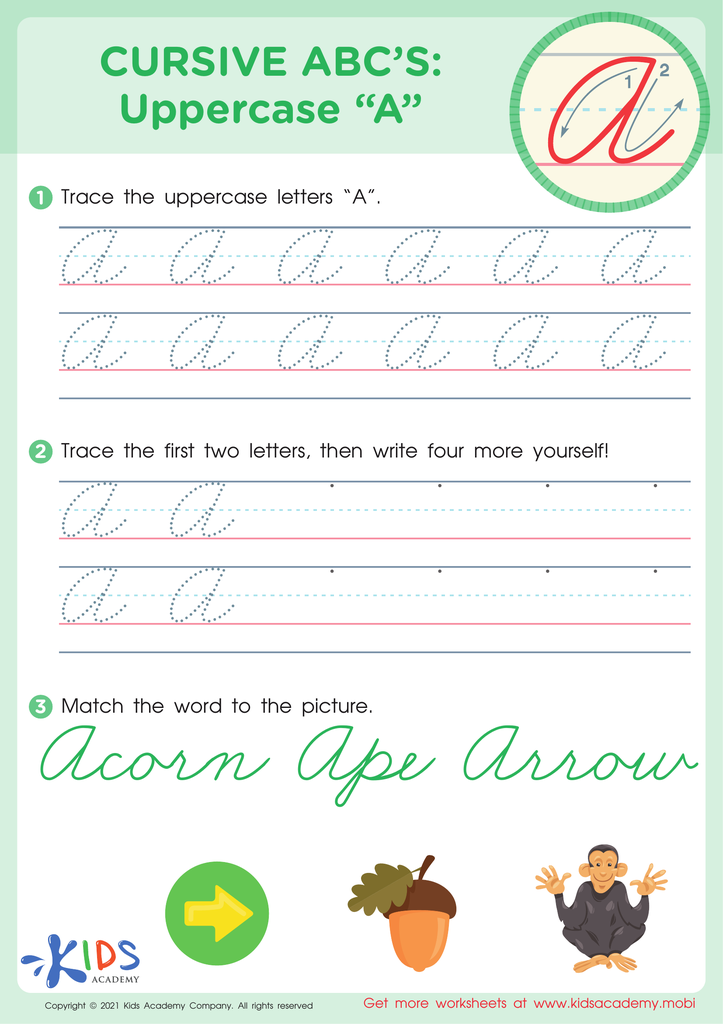
Help your kids develop their writing skills with our great tracing sheets. Improve their motor skills, as well as their vocabulary, by guiding them through tracing the dotted lines for the uppercase letters of the alphabet. When they are ready, let them practice writing the letters on their own for improved confidence.
Cursive ABCs: Uppercase A
Worksheet
Cursive ABCs: Uppercase H

Cursive ABCs: Uppercase H

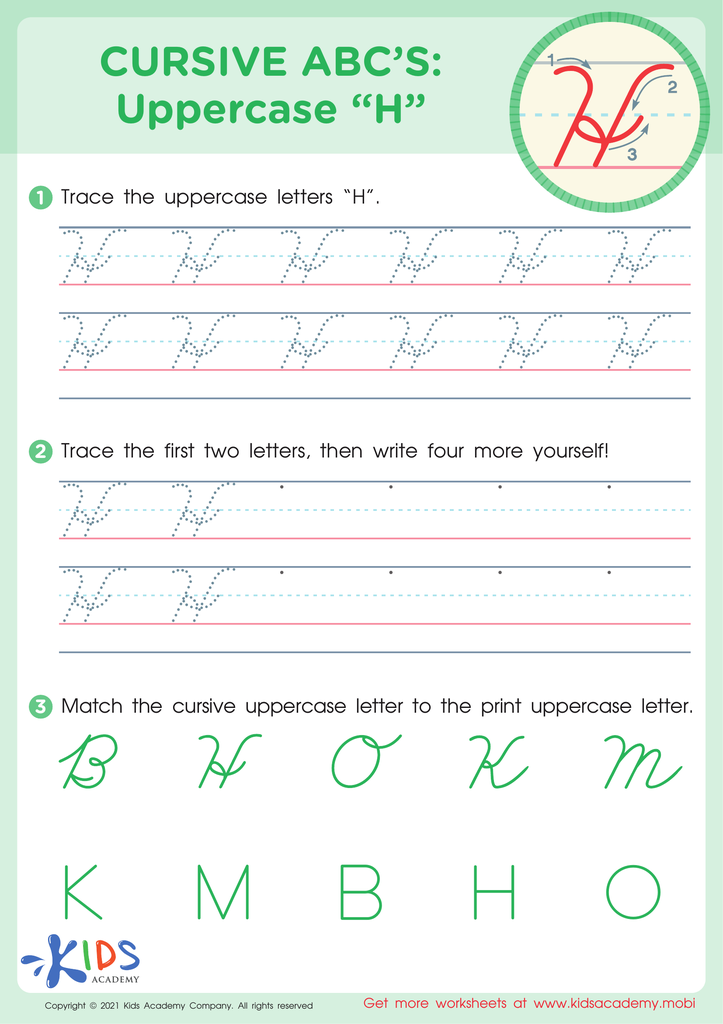
Have your child recite the alphabet and give you words beginning with H. This tracing sheet is perfect to help them improve their handwriting. Guide their hands as they trace the uppercase H, then have them practise writing it alone. At the bottom is an exercise to check their letter recognition.
Cursive ABCs: Uppercase H
Worksheet


Alphabet recognition, including cursive alphabet, plays a foundational role in a child's literacy and cognitive development during the ages of 3-8. For parents and teachers, prioritizing alphabet recognition in both print and cursive forms holds several key benefits:

  1. Foundational Literacy Skills: Recognizing letters is the first step toward reading and writing. Early familiarity with the alphabet leads to improved reading skills, as children can quickly recognize words and build fluency.

  2. Cognitive Development: Learning both print and cursive alphabets stimulates cognitive skills. Cursive, in particular, aids in fine motor development—even enhancing hand-eye coordination—through the practice of loops and curves.

  3. Increases Brain Activity: Research shows that learning cursive activates different brain areas than print writing, supporting improved memory retention and information processing.

  4. Enhances Comprehension: Knowing cursive helps children understand older texts and historical documents, broadening their comprehension and contextual understanding.

  5. Personal Expression: Writing in cursive provides a unique form of self-expression and individuality, often seen in the formation of one’s personal signature.

  6. Task Persistence: Both letters and cursive exercises teach patience and persistence, as students often struggle initially but develop resilience through practice.

Understanding alphabet recognition in all forms primes children for academic success, enhances cognitive abilities, and fosters important personal and mental skills, making it crucial for early education stakeholders.