Cursive handwriting practice Cursive Alphabet Worksheets for Ages 3-8
4 filtered results
-
From - To
Welcome to our Cursive Handwriting Practice page! Designed for children ages 3-8, our engaging cursive alphabet worksheets help young learners develop their fine motor skills while mastering the art of cursive writing. Each worksheet features fun and interactive activities that encourage proper letter formation and fluid writing. As kids trace and practice each letter, they'll build confidence and improve their handwriting abilities—all while enjoying the process. Perfect for home or classroom use, these worksheets promote essential literacy skills in a creative way. Start your child’s cursive journey today and watch their writing flourish!
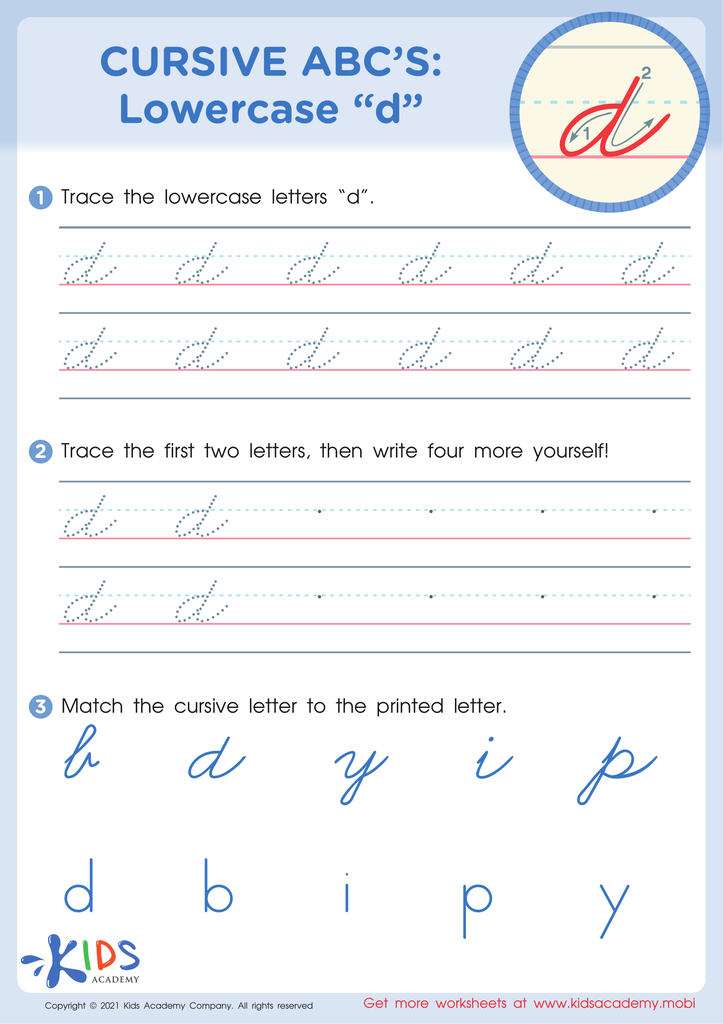
Cursive ABCs: Lowercase d
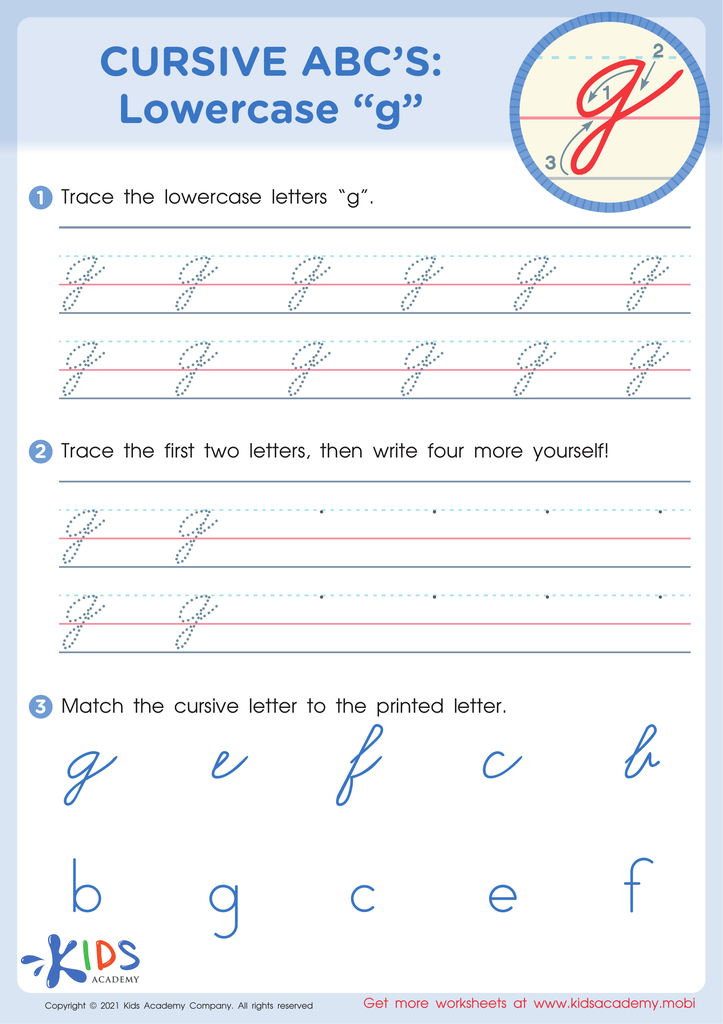
Cursive ABCs: Lowercase g
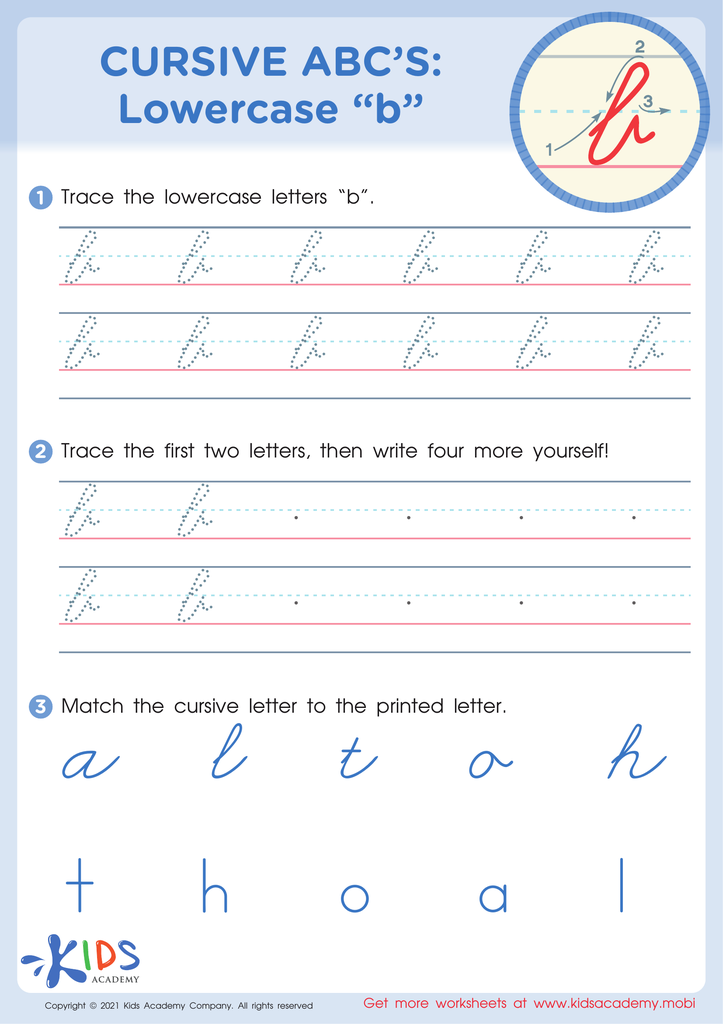
Cursive ABCs: Lowercase b
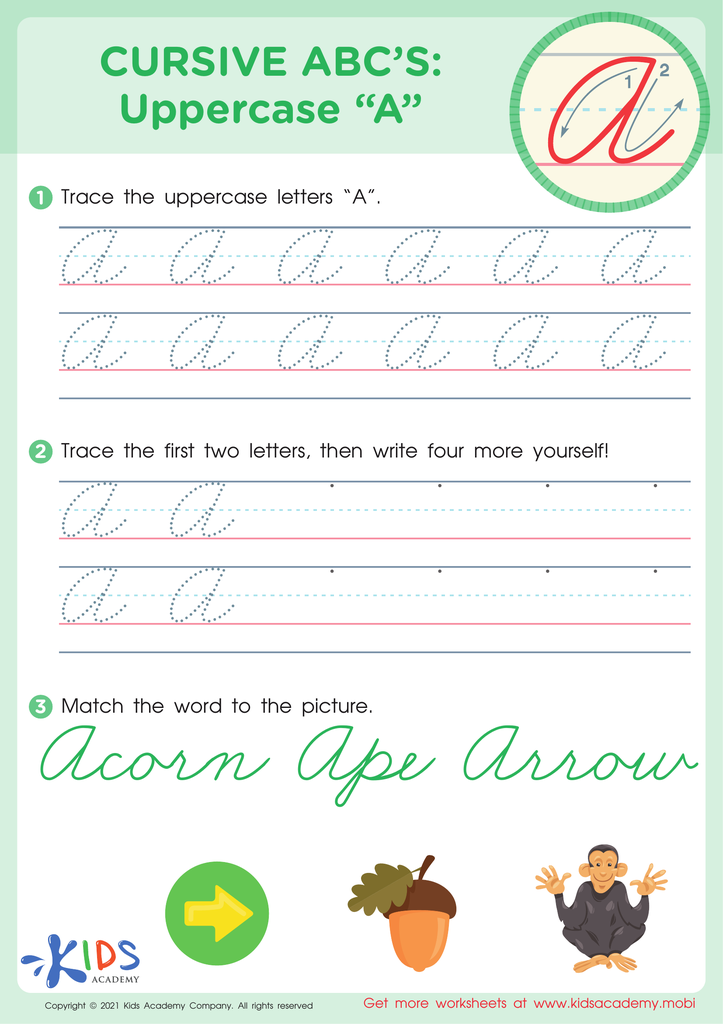
Cursive ABCs: Uppercase A





Cursive handwriting practice is crucial for children aged 3-8 for several reasons that benefit their cognitive and fine motor development. First, learning cursive encourages the development of fine motor skills, which are essential for various tasks beyond writing, such as drawing and using tools. The fluid motion required in cursive writing helps strengthen hand-eye coordination and dexterity.
Moreover, cursive writing can enhance cognitive functioning. The continuous flow of cursive letters fosters a deeper engagement with writing tasks, aiding in language development and literacy. Children learn to connect letters more seamlessly, which can improve their reading skills as they become more familiar with letter formations.
Cursive also offers a personal touch to written communication, making it a valuable form of expression. In an increasingly digital world, retaining cursive writing skills can help foster individuality in a child's writing style.
Additionally, early mastery of cursive can boost a child's confidence as they develop neat and legible handwriting early on. Overall, incorporating cursive handwriting practice in early education lays a strong foundation for a child's communication skills, creativity, and self-esteem, making it beneficial for both parents and teachers to prioritize.







