Alphabet Recognition Letter C Worksheets for Ages 3-8
3 filtered results
Difficulty Level
Grade
Age
-
From - To
Subject
Activity
Standards
Explore our engaging Alphabet Recognition Letter C Worksheets designed specifically for children aged 3-8. These interactive resources help young learners identify and familiarize themselves with the letter C through fun and educational activities. Each worksheet features colorful illustrations and creative exercises that encourage kids to practice letter formation, sound recognition, and vowel integration. These expertly crafted worksheets not only make learning enjoyable but also reinforce essential literacy skills, setting a solid foundation for reading and writing. Perfect for parents and educators alike, our Letter C worksheets are a delightful way to sharpen your child's alphabet recognition in a fun and stimulating environment!
Favorites
With answer key
Interactive
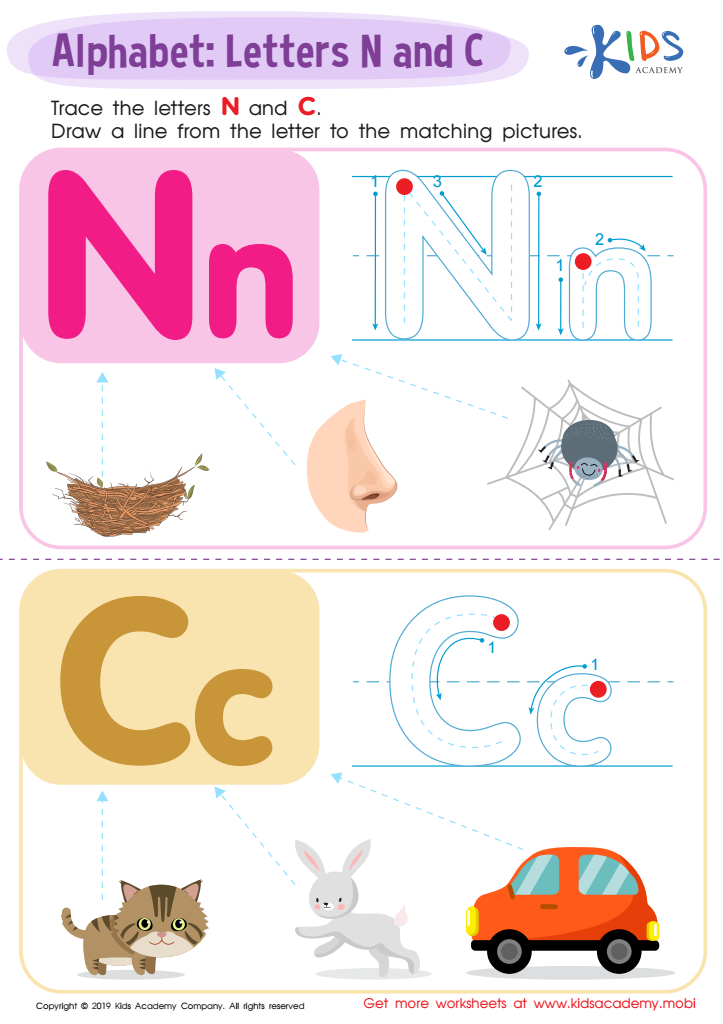
Letter N and C Tracing Worksheet
Kids can trace the letters N and C, then draw a line to the words starting with each letter. This worksheet helps them practice letter writing, distinguish capital and lowercase letters, and match pictures with the right letter. It also teaches essential skills for learning letters efficiently.
Letter N and C Tracing Worksheet
Worksheet
Letter C Tracing Page
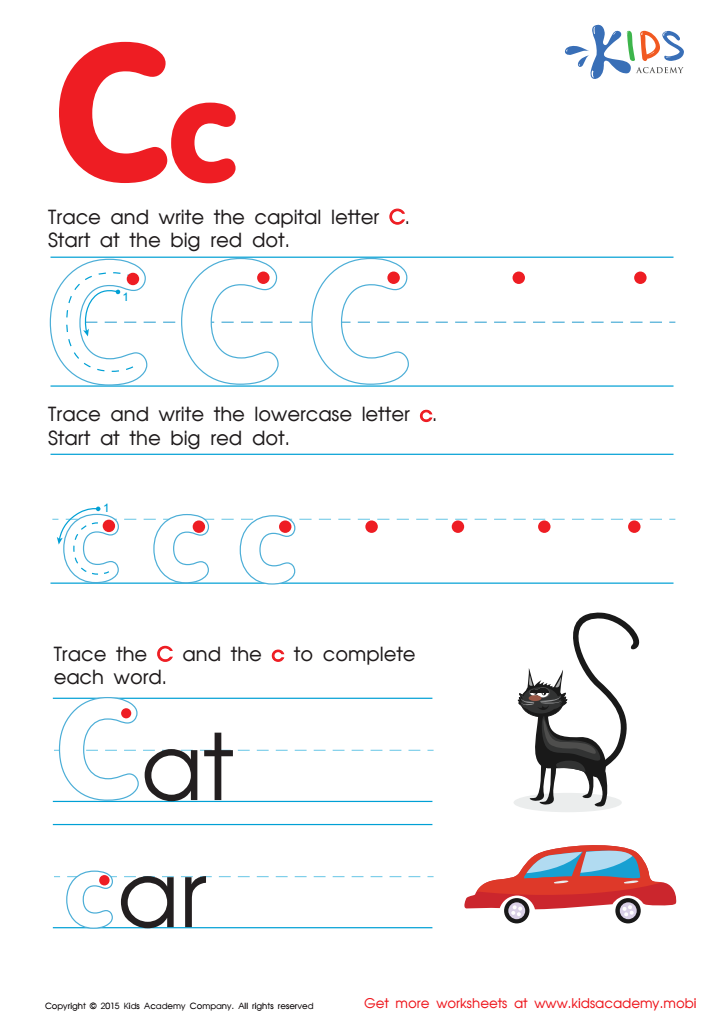
Trace and write the letter 'C'! Put the pencil at the red dot then follow the lines – the capital letter first then the lowercase one. Cats love it and so will you! Get more free printables to practice tracing and writing.
Letter C Tracing Page
Worksheet
Letter C Coloring Sheet
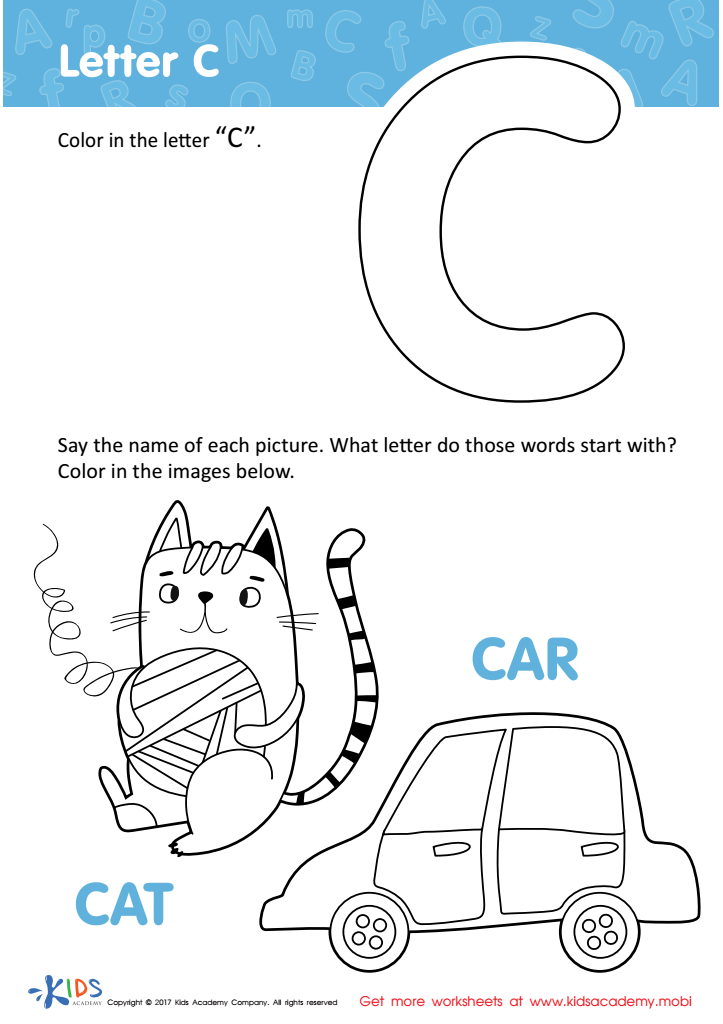
Introduce kids to the letter 'C' with this fun coloring page! Exposing little ones to letters, words, and sounds helps them learn long before they can read. Start with simple words like 'cat' and 'car' - these are great first sight words for young children.
Download (PDF)
 Assign to My Students
Assign to My Students
Letter C Coloring Sheet
Worksheet
Join Kids Academy for Free
Who is primarily going to use this learning content?






Alphabet recognition is a foundational skill for young learners, and focusing on letters like "C" can significantly impact a child's literacy development. For children aged 3-8, recognizing the letter "C" lays the groundwork for reading and writing. As one of the first letters they encounter, understanding its shape, sound, and association with words enhances phonemic awareness, crucial for early literacy.
Parents and teachers should care about letter recognition because it promotes confidence in language skills. When children learn to identify "C," they can connect it to familiar words, such as "cat," "car," and "cup," making learning engaging and relatable. This connection also fosters vocabulary growth and prepares them for spelling and writing tasks.
Additionally, early exposure to the letter "C" strengthens cognitive skills through fun activities, such as tracing the letter, using manipulatives, or engaging in art projects. Encouraging inquiry-based learning around letters cultivates curiosity and a love for learning.
Overall, promoting letter recognition, including "C," offers children the essential tools they need for successful communication and academics, setting the stage for lifelong learning and confidence in future literacy endeavors. By prioritizing these skills, parents and teachers contribute significantly to a child’s overall educational journey.