
Vowel Recognition Letter Recognition Worksheets for Ages 3-8
5 filtered results
Difficulty Level
Grade
Age
-
From - To
Subject
Activity
Standards
Our Vowel Recognition Letter Recognition Worksheets for Ages 3-8 are expertly designed to help young learners master essential pre-reading skills. Perfect for children aged 3 to 8, these engaging and educational worksheets focus on identifying vowels and recognizing letters. Each worksheet incorporates fun, colorful activities and exercises that captivate attention, encourage participation, and reinforce learning. By integrating phonics and visual cues, our resources ensure a solid foundation in language development. Ideal for parents, teachers, and homeschooling, these worksheets are a vital tool to support early literacy and pave the way for future reading success. Explore our collection today!
Favorites
With answer key
Interactive
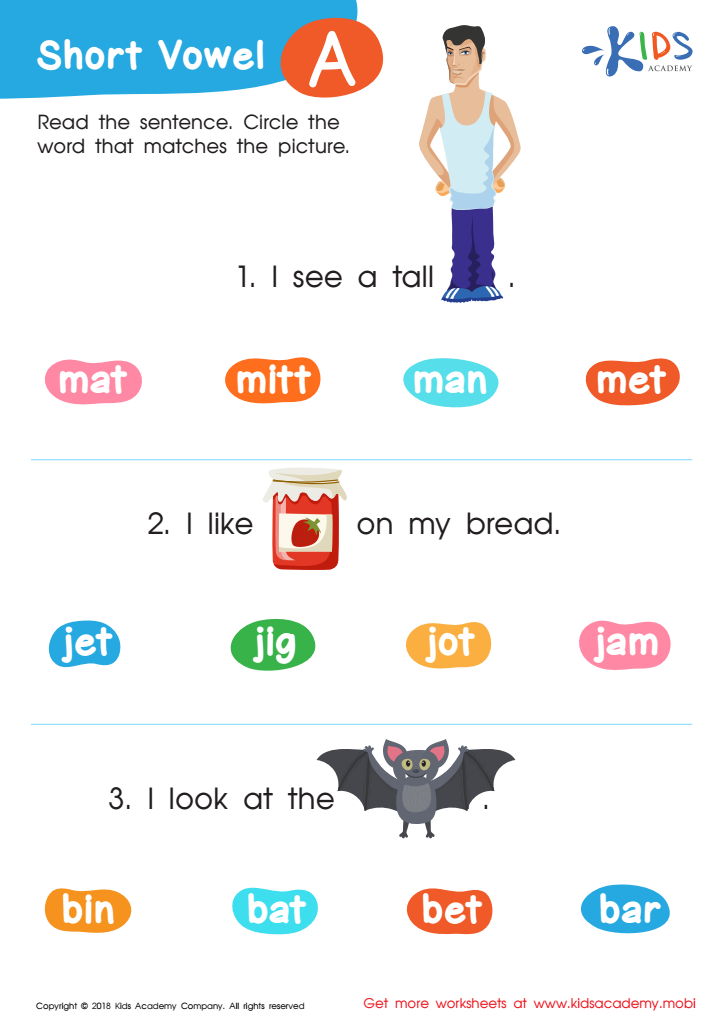
Short Vowel /a/ Worksheet
This free PDF helps new readers use sight words and pictures to read basic sentences. Then, they use accompanying word choices to find the correct word with the short a vowel sound. A key early reading skill, discriminating between short vowel sounds can be tricky in monosyllabic words, so use this PDF to help your reader reinforce it.
 Assign to My Students
Short Vowel /a/ Worksheet
Worksheet
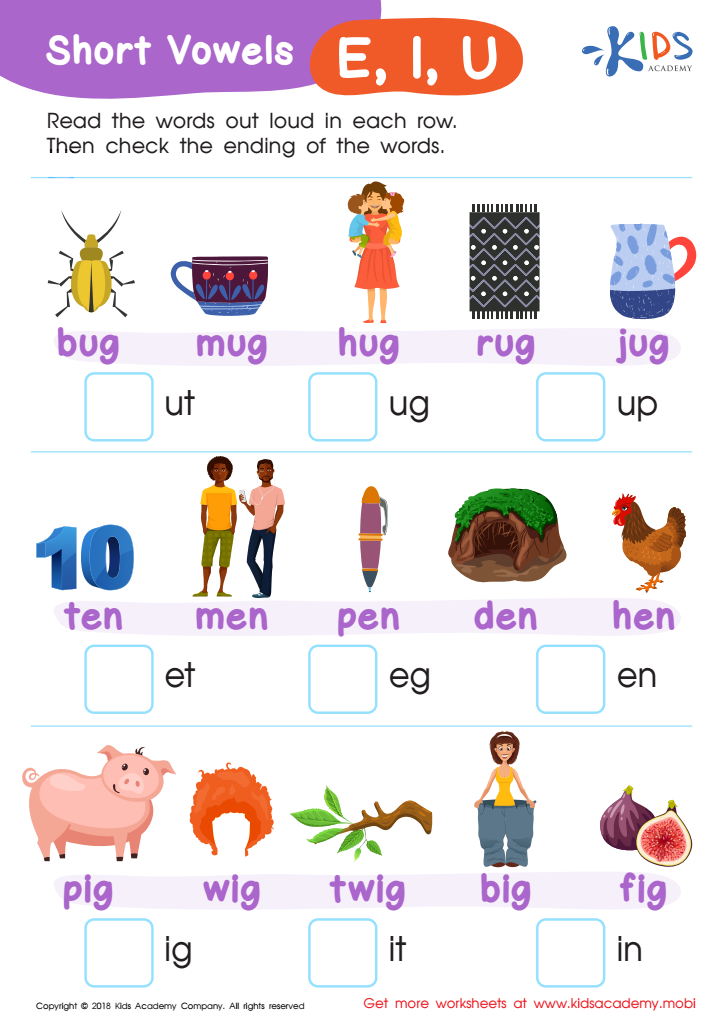
Short Vowels /e/, /i/, and /u/ Worksheet
Your emergent reader can have fun while practicing their short vowel sounds with this free, brightly colored worksheet. They'll identify one-syllable words by their pictures, then match the correct ending for each. They'll gain an understanding of how short vowel sounds vary in closed syllables with different endings, without even realizing it!
Short Vowels /e/, /i/, and /u/ Worksheet
Worksheet
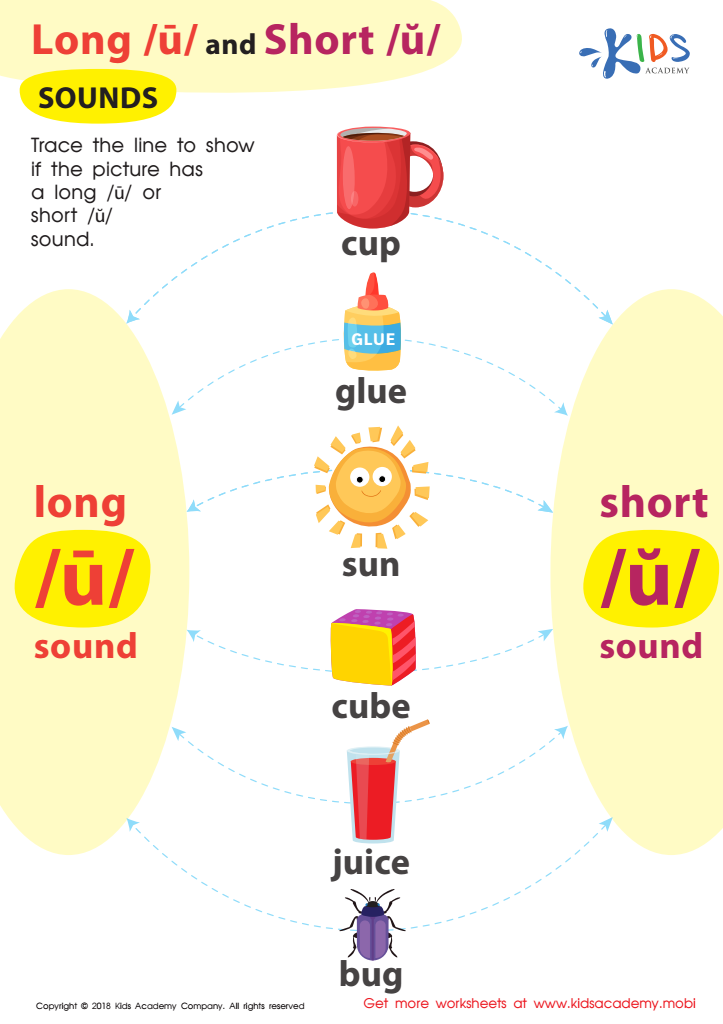
Reading: Long U and Short U Sounds Worksheet
Learning about long and short vowel sounds can be tricky, especially with the letter U. Extra practice with this worksheet is recommended for mastering this sound. Children read words with the different vowel sounds and categorize them. Great for instruction, practice and reteaching in reading classes.
Reading: Long U and Short U Sounds Worksheet
Worksheet
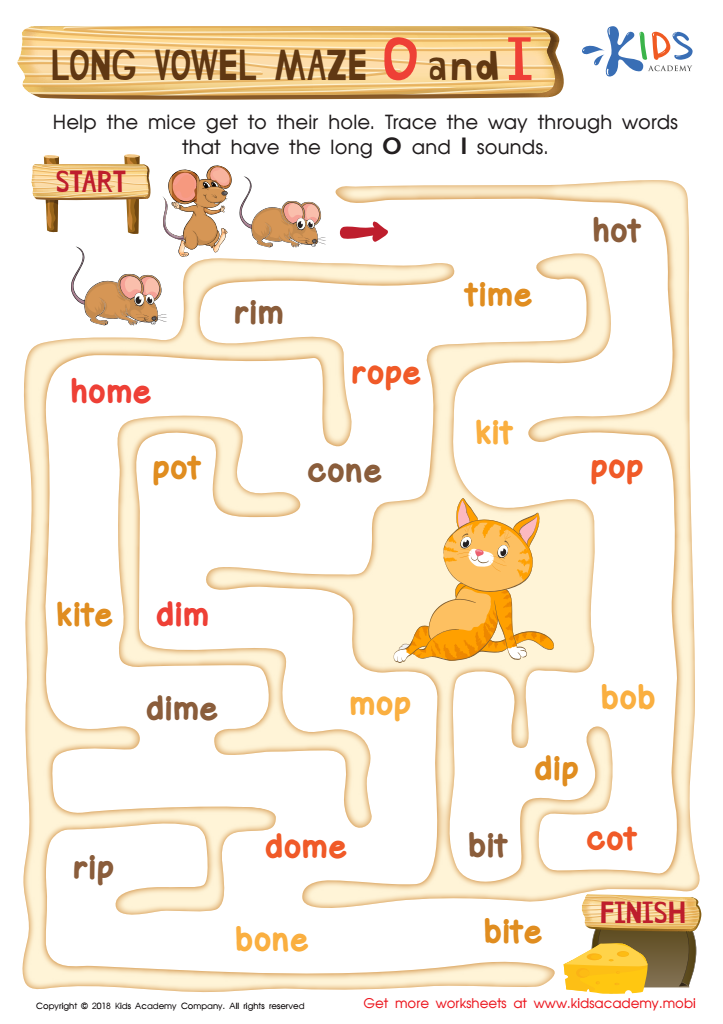
Long Vowel Maze /o/ and /i/ Worksheet
Help your new readers have fun and build their sight word vocabulary! Guide the mice to their prize cheese by having them trace the route on the worksheet, using words with the long o and long i sounds. But watch out for the kitty!
Long Vowel Maze /o/ and /i/ Worksheet
Worksheet
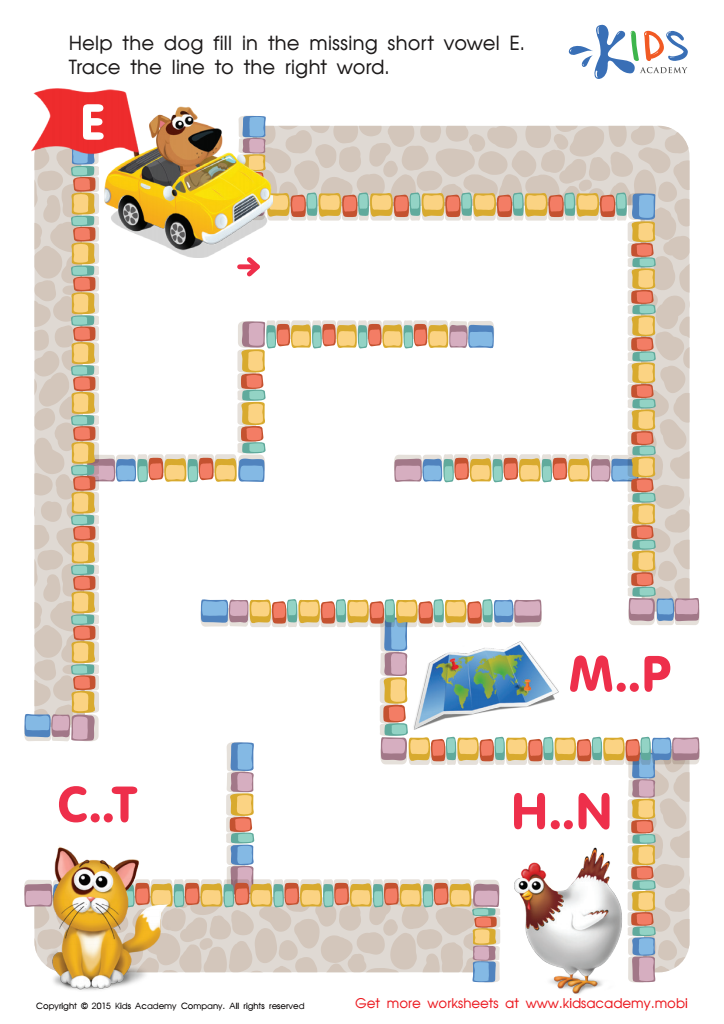
Short Vowel Sound E Worksheet
This free printable phonics worksheet helps kids learn the short vowel sound E. Kids need to help the dog complete the word “hen” by finding their way through a maze. It teaches kids to see the connection between letters and sounds and also strengthens their writing and spelling skills. Fun and educational, this phonics worksheet is great for kids. Want more? Check out here.
Short Vowel Sound E Worksheet
Worksheet
Join Kids Academy for Free
Who is primarily going to use this learning content?








Vowel and letter recognition are fundamental building blocks for early literacy development, especially for children ages 3-8. Understanding vowels and letters is paramount because it forms the foundation for reading and writing skills, which are critical for academic success and lifelong learning.
Firstly, vowels play a crucial role in word formation and phonemic awareness, which is the ability to hear, identify, and manipulate phonemes. Recognizing vowel sounds helps children decode words when reading and construct words correctly in writing. This skill enhances their ability to read fluently and accurately.
Moreover, letter recognition is directly linked to a child’s ability to sound out words (phonics). When children know the names and sounds of letters, they can begin to recognize sight words and gain confidence in their reading abilities. This recognition supports vocabulary development and comprehension, which are essential for understanding texts across different subjects.
Early mastery of these skills sets a robust foundation for more complex literacy skills and fosters a love for reading. It also supports cognitive development, as children learn to apply logical reasoning to understand text. By prioritizing vowel and letter recognition, parents and teachers can provide children with the tools they need to succeed academically and become enthusiastic and proficient readers.







