Fine Motor Skills Letter X Worksheets for Ages 3-8
4 filtered results
-
From - To
Enhance your child's fine motor skills with our engaging Letter X worksheets, designed for ages 3-8! These educational sheets provide fun and interactive activities to help young learners develop crucial hand strength, coordination, and dexterity. Our worksheets feature tracing, coloring, and drawing exercises tailored to keep kids excited about learning the alphabet while fine-tuning their pencil grip and control. Perfect for home practice or classroom use, these worksheets make learning the letter X enjoyable and effective. Download now to give your child a head start on essential writing skills through creative and stimulating tasks!
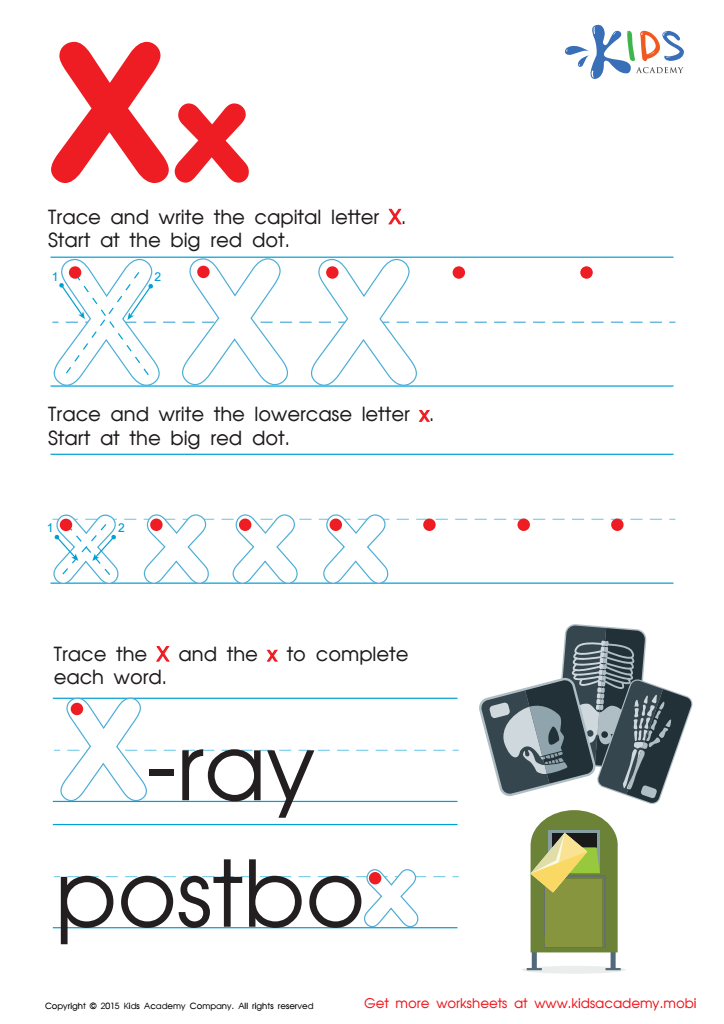
Letter X Tracing Page
 Assign to My Students
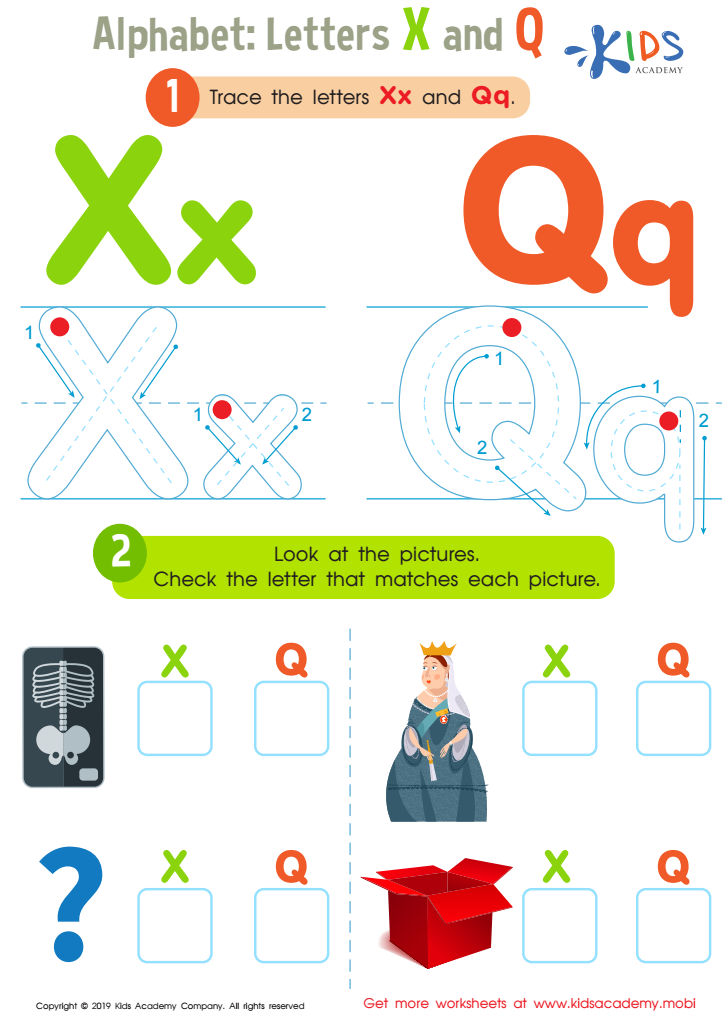
Letters X and Q Tracing Worksheet
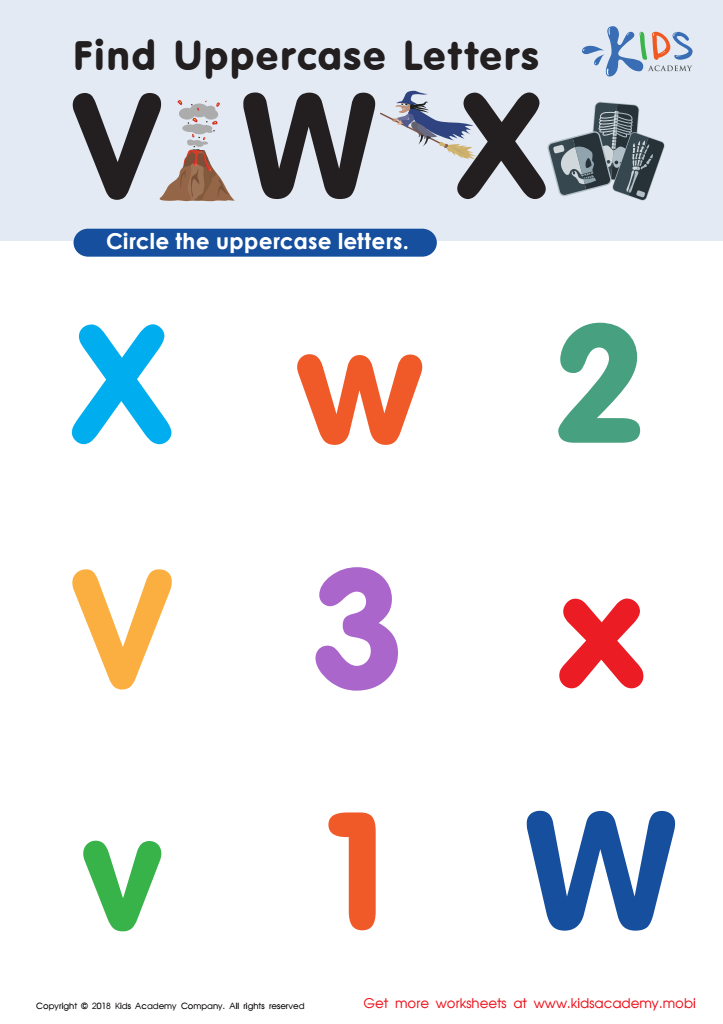
Find Uppercase Letters V, W, X Worksheet
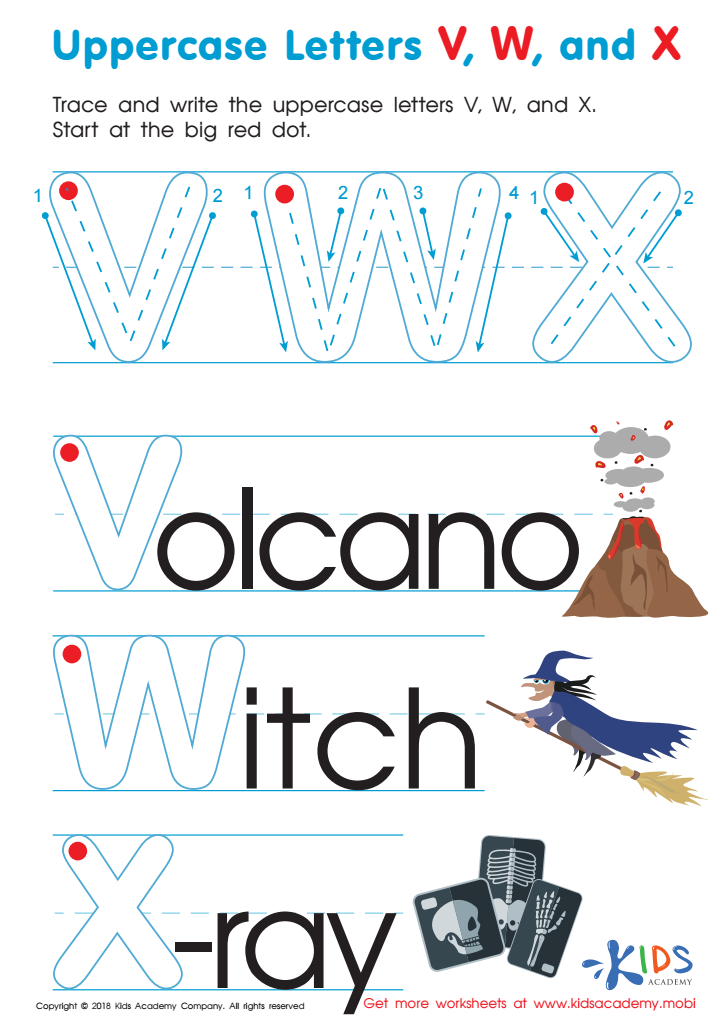
Uppercase Letters V, W, and X Worksheet




Parents and teachers have a crucial role in supporting the development of fine motor skills in young children, especially ages 3-8 where this aspect of growth is most pertinent. Fine motor skills refer to the coordination of small muscles, particularly in the hands and fingers, with perceptual abilities. Focusing on a specific task like mastering the letter X provides several developmental advantages.
First, such activities enhance hand-eye coordination. The crisscross pattern of an X encourages children to control the movement of their hands while watching what they are doing, which is transferable to other learning areas like reading and writing. Second, practicing the formation of an X boosts muscle strength and dexterity. Engaging in tasks that require precision stabilizes hand muscles, preparing children for future academic activities, including typing on a keyboard or playing a musical instrument.
Furthermore, mastering fine motor tasks increases children's independence and confidence. When children see they can accomplish drawing or writing a complex letter, it fosters a sense of achievement and encourages them to tackle more challenging tasks.
Lastly, such precise activities also promote cognitive development. The brain’s regions responsible for motor skills are closely linked with those that govern cognitive processes. Paying attention to forming the letter X translates to better focus and attention skills overall.
Therefore, both parents and teachers should ensure such fundamental exercises are an integral part of early learning to aid holistic physical, cognitive, and emotional development.