Spelling practice Long And Short Vowel Worksheets for Ages 3-8
5 filtered results
Difficulty Level
Grade
Age
-
From - To
Subject
Activity
Standards
Improve your child's spelling skills with our specially designed Long and Short Vowel Worksheets for ages 3-8. These engaging and interactive worksheets by Kids Academy focus on differentiating and mastering vowel sounds, a key component for reading and writing proficiency. Each worksheet combines fun activities with educational content to help children recognize and use short and long vowels through practice exercises and games. Perfect for homeschooling or extra practice, these worksheets cater to varied learning needs and make learning to spell an enjoyable experience. Empower your child’s early literacy journey with our comprehensive resources today!
Favorites
With answer key
Interactive
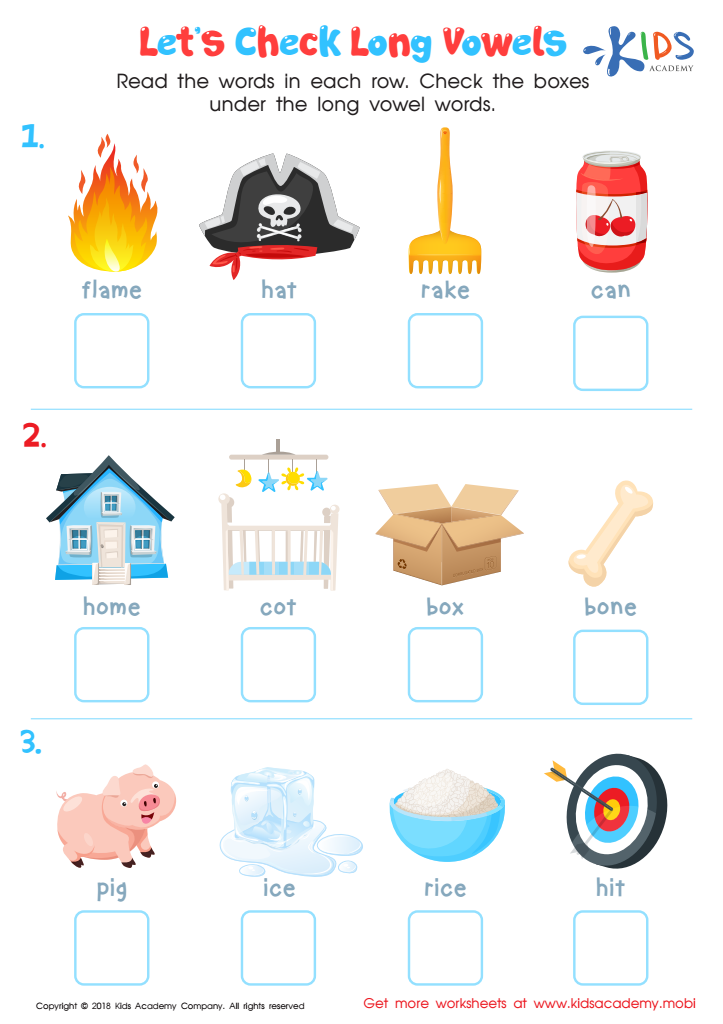
Let's Check Long Vowels: Assessment Worksheet
This worksheet helps your child identify objects and learn long vowel sounds. Ask them to say the names of the four objects in each row. Then, help them check the boxes to confirm they know the long vowel sounds. This will help them develop their reading skills.
 Assign to My Students
Let's Check Long Vowels: Assessment Worksheet
Worksheet
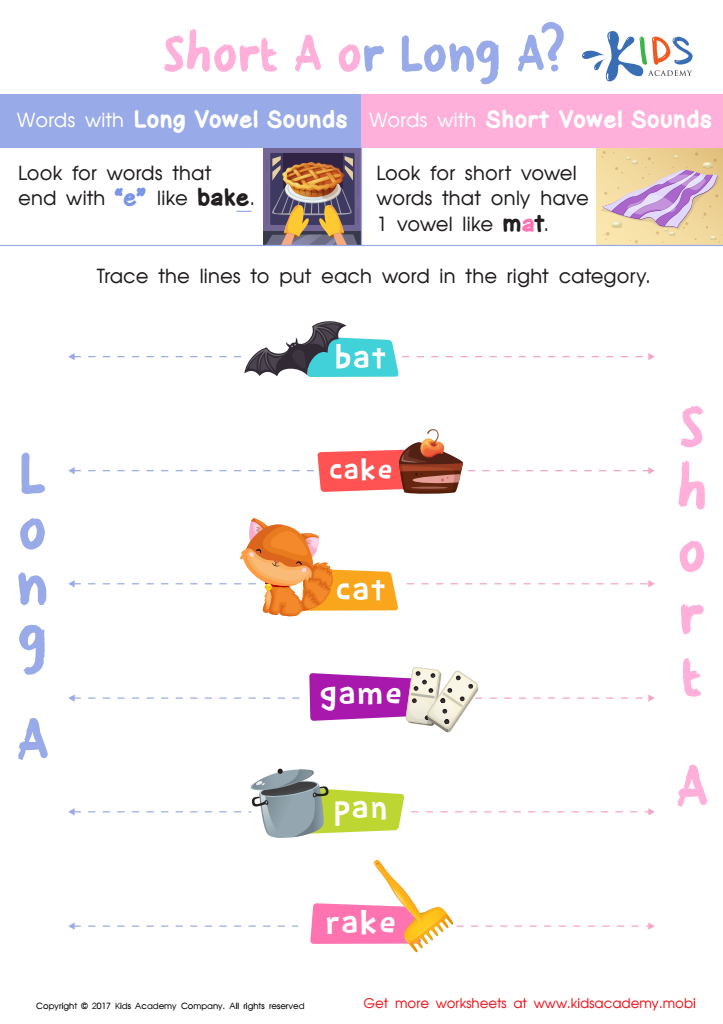
Short /a/ or Long /a/? Worksheet
Phonetics and its sounds can be tricky for kids. They can read and spell, but long and short vowels might be difficult. Use this phonetic worksheet to teach them to identify words with the short /a/ or long /a/ sound. Kids have to find the words ending with 'e' (long sound) and words with one vowel (short sound, e.g. 'mat'). Colourful printout makes it fun and easy to learn!
Short /a/ or Long /a/? Worksheet
Worksheet
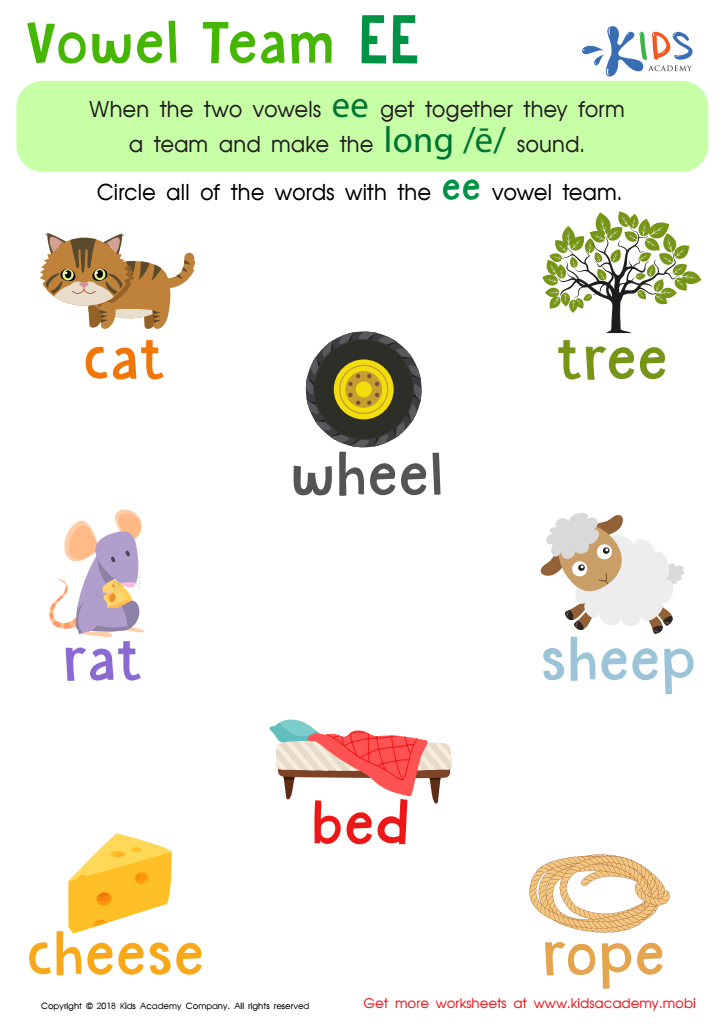
Reading: Vowel Team EE Worksheet
This worksheet is perfect for helping young learners master the /ee/ vowel team. It shows the first vowel with a long sound and the second vowel silent. It also provides pictures for unfamiliar words for readers of all levels. It's an ideal resource for teaching phonics skills.
Reading: Vowel Team EE Worksheet
Worksheet
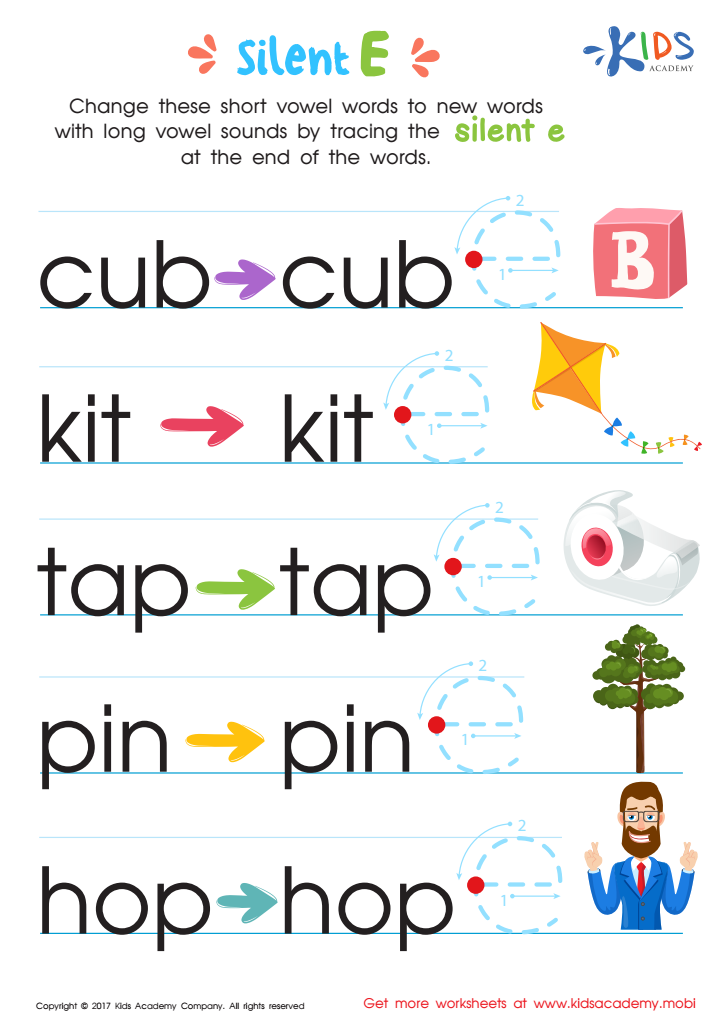
Silent E Words Worksheet
The letter e is amazing - it changes words without making a sound! Boost spelling and phonics with this Silent e worksheet from Kids Academy - fun and colorful!
Silent E Words Worksheet
Worksheet
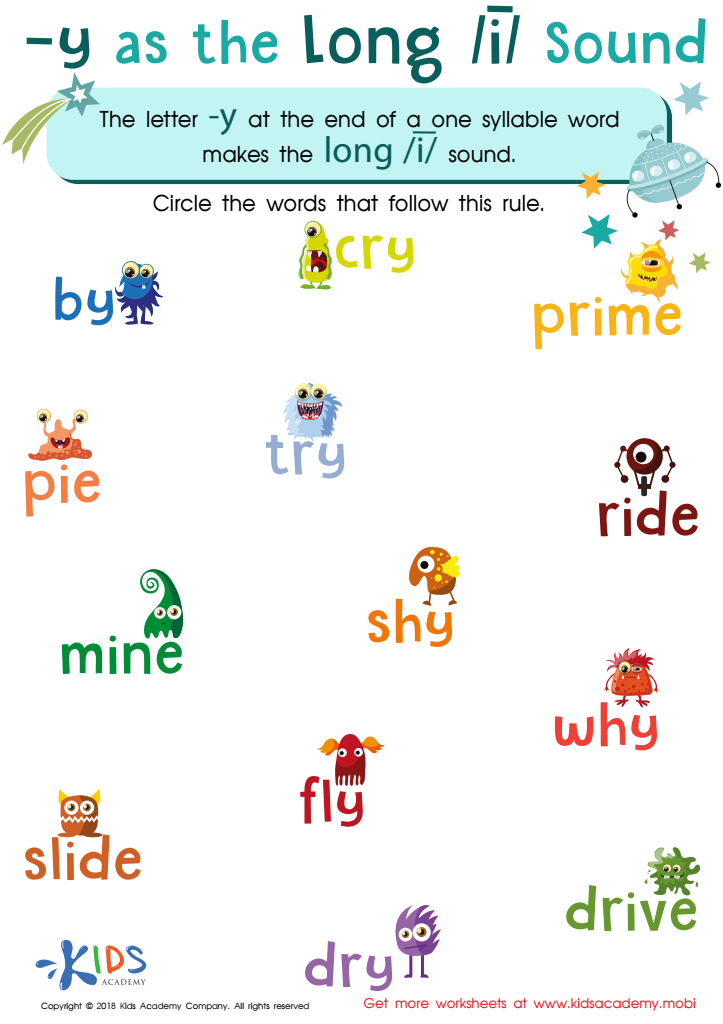
Reading: Y as Long I Worksheet
Students need practice and exposure to letters that make different sounds for decoding and reading success. This printable is a great resource for language arts classes: it explains that words ending with Y and having only one syllable make the long I sound. Students will circle all words with Y that have this sound.
Reading: Y as Long I Worksheet
Worksheet
Join Kids Academy for Free
Who is primarily going to use this learning content?




Long and short vowel practice is crucial for children ages 3-8, serving as a foundational component of early literacy development. At this formative stage, young learners are acquiring the building blocks of language, and understanding vowel sounds is central to reading and spelling proficiency.
Parents and teachers should focus on spelling practices related to long and short vowels for several reasons. First, distinguishing between vowel sounds enhances phonemic awareness, which is the ability to hear, identify, and manipulate individual sounds in words. This skill is fundamental for decoding new words and aids in fluent reading. Children who master vowel sounds can better understand word structures and patterns, fostering more effective and confident communication.
Second, consistent spelling practice reinforces memory through repetition and engagement, helping children to internalize the rules of language. When children recognize that a short 'a' in "cat" differs significantly from a long 'a' in "cake," they can apply this knowledge to both familiar and unfamiliar words.
Lastly, early success in spelling and reading can build a child's confidence and enthusiasm toward learning. By focusing on long and short vowels, parents and teachers set a child up for ongoing academic achievement, paving the way for a love of reading and lifelong literacy skills. This foundational work not only supports educational development but also empowers children as effective communicators in their daily lives.