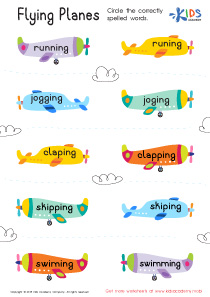
Rhyming skills development Rhyming Worksheets for Ages 3-8
4 filtered results
-
From - To
Nurture your child's rhyming skills with our engaging Rhyming Worksheets, designed for ages 3-8. These printables from Kids Academy offer a fun and effective way to develop phonemic awareness, language skills, and early reading abilities. Each worksheet is crafted to make learning enjoyable, featuring colorful illustrations and age-appropriate activities that encourage youngsters to identify and create rhymes. By practicing rhyming, children will enhance their listening skills and improve their vocabulary, providing a strong foundation for future literacy success. Perfect for home or classroom use, these worksheets will help your child master the art of rhyming while having a blast!
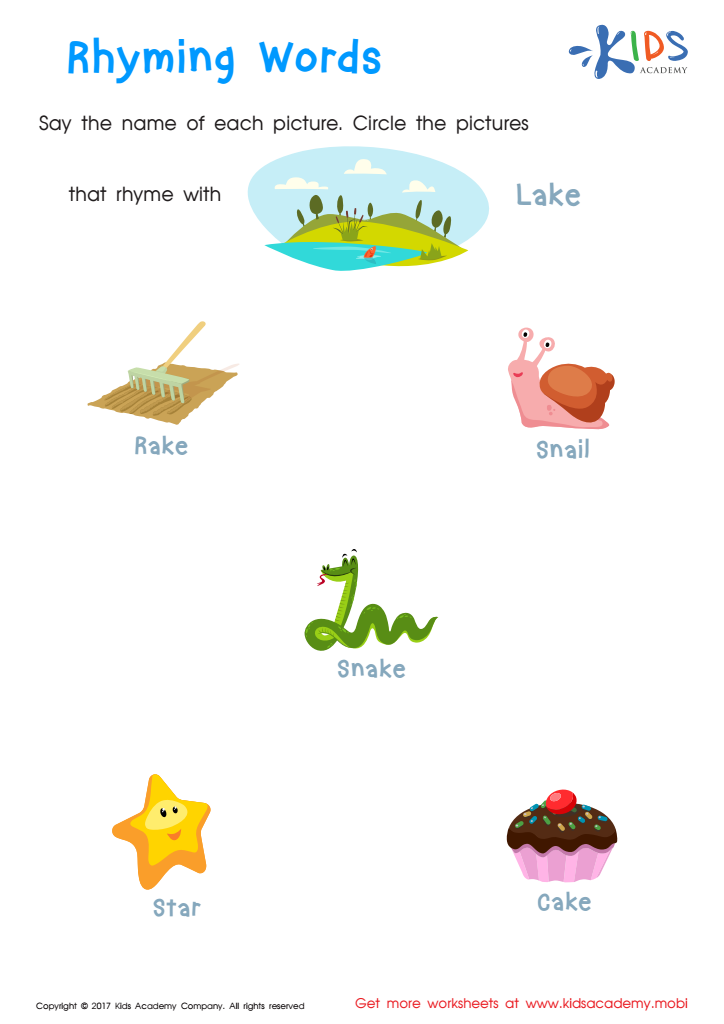
Rhyming Words Rhyming Worksheet
 Assign to My Students
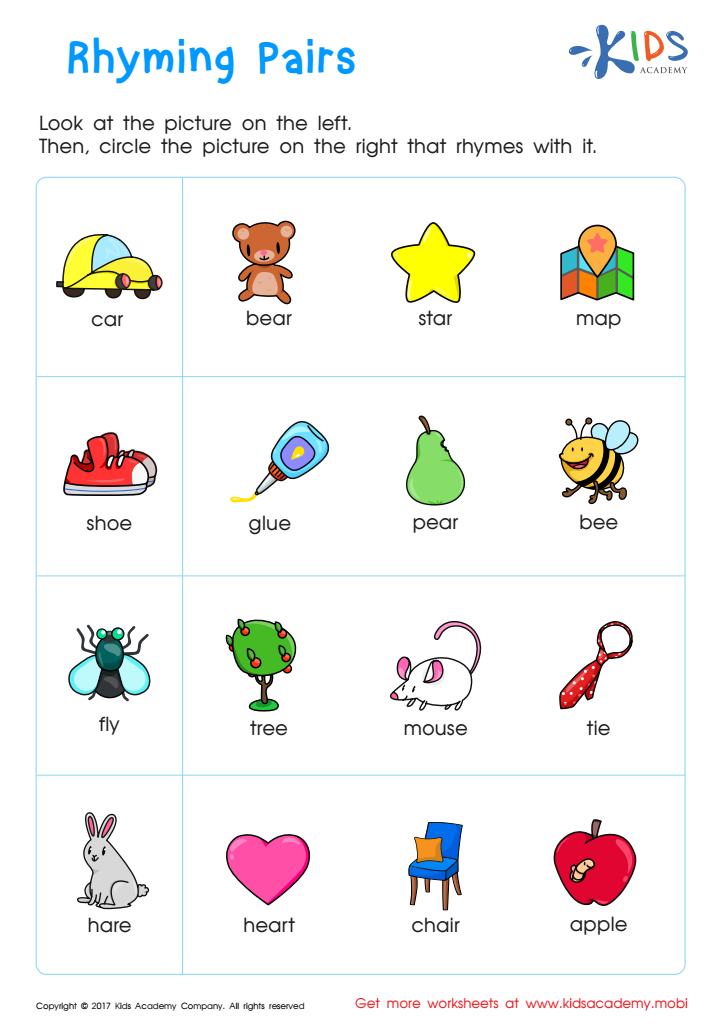
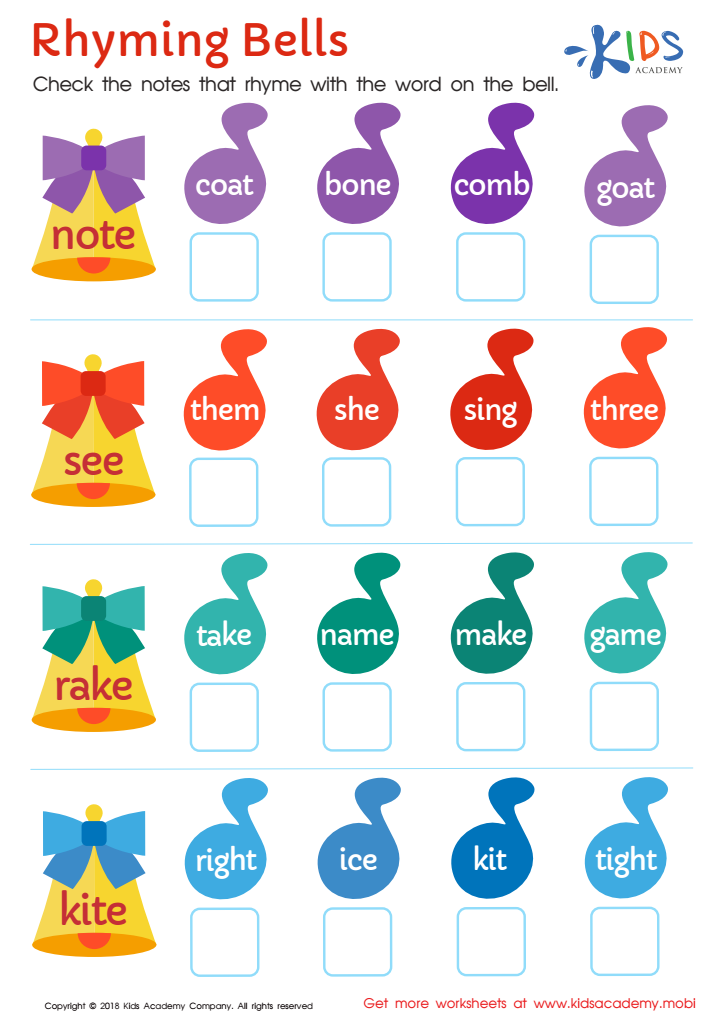
Rhyming Bells Worksheet
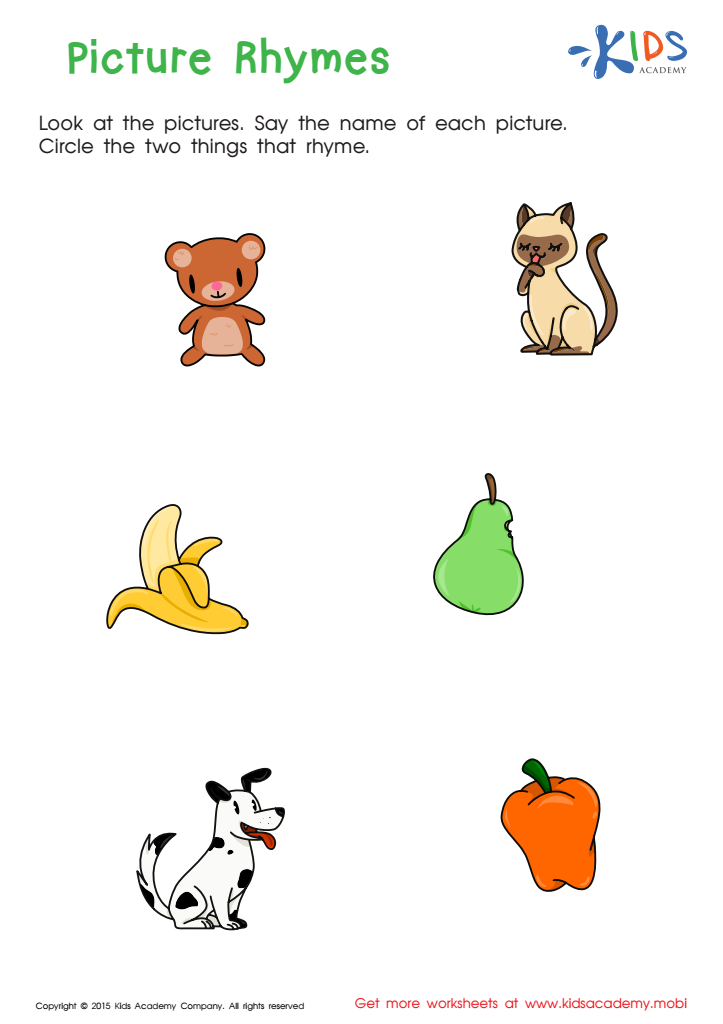
First Words: Picture Rhymes Worksheet







Rhyming skills are fundamental for children aged 3-8 as they pave the way for critical literacy development. Encouraging rhyming at this early stage enhances phonemic awareness, which is the ability to recognize and manipulate sounds in spoken words. Phonemic awareness is directly linked to reading and spelling success, as it helps children understand that words are made up of individual sounds. By engaging in rhyming activities, children learn to hear patterns in sounds, improve their auditory discrimination, and expand their vocabulary.
Rhyming also fosters memory and cognitive development. When children memorize rhymes, they are practicing retention and recall skills, which are vital for all learning tasks. Rhymes often have a rhythmic and repetitive nature, making them easier for young minds to retain and engage with.
Social and emotional development is another significant benefit. Rhyming games and songs often involve interaction, cooperation, and turn-taking, promoting social skills. These activities also offer a fun and engaging way to bond with others, reducing stress and increasing emotional well-being.
Moreover, rhymes introduce children to the rhythm and flow of language, aiding in speech development and pronunciation. Consequently, parents and teachers who invest in rhyming activities are setting children up for long-term academic and social success.