
Spelling practice Vowels and Consonants Worksheets for Ages 3-8
9 filtered results
Difficulty Level
Grade
Age
-
From - To
Subject
Activity
Standards
Discover our engaging "Spelling Practice Vowels and Consonants Worksheets" designed for children ages 3-8. Our printable activities help young learners master the basics of spelling by distinguishing between vowels and consonants while enhancing their reading and writing skills. Each worksheet is thoughtfully crafted to be both fun and educational, ensuring your child stays motivated. Through these interactive exercises, children build a solid foundation in phonics and spelling, crucial for early literacy development. Visit the Kids Academy page to explore our vibrant resources that support your child in becoming a confident speller. Start their spelling journey today!
Favorites
With answer key
Interactive
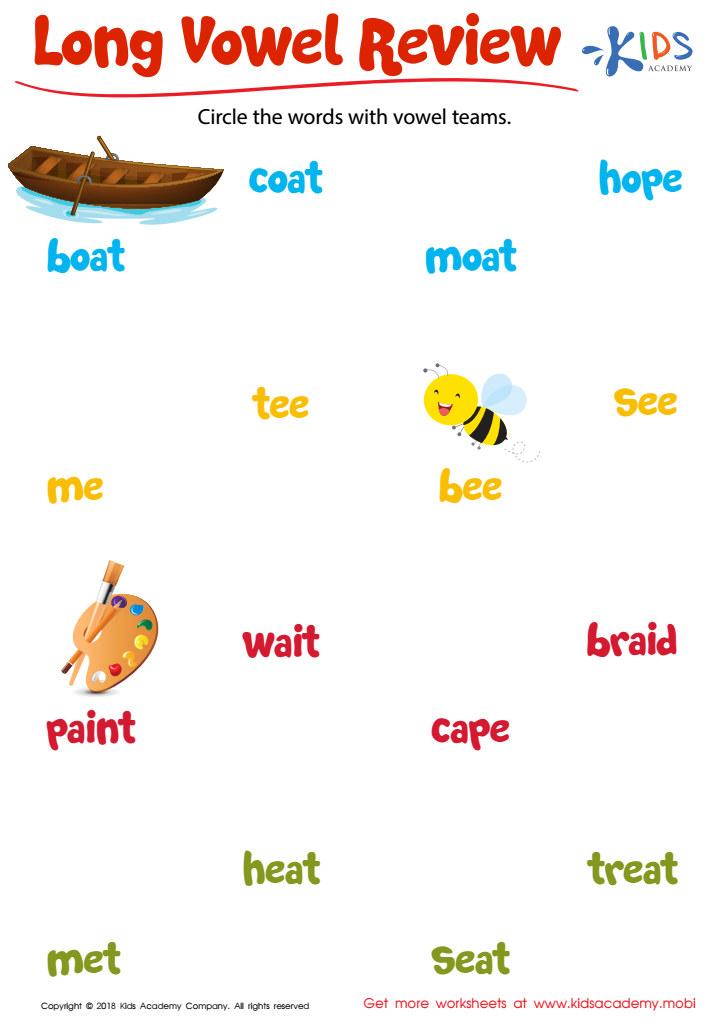
Long Vowel Review Worksheet
Vowel teams like "ea" and "ai" help us make words, and understanding these patterns aids emerging readers in becoming more fluent. This review worksheet has students finding words with vowel teams that make the long vowel sound, and helps them recognize high-frequency words.
 Assign to My Students
Long Vowel Review Worksheet
Worksheet
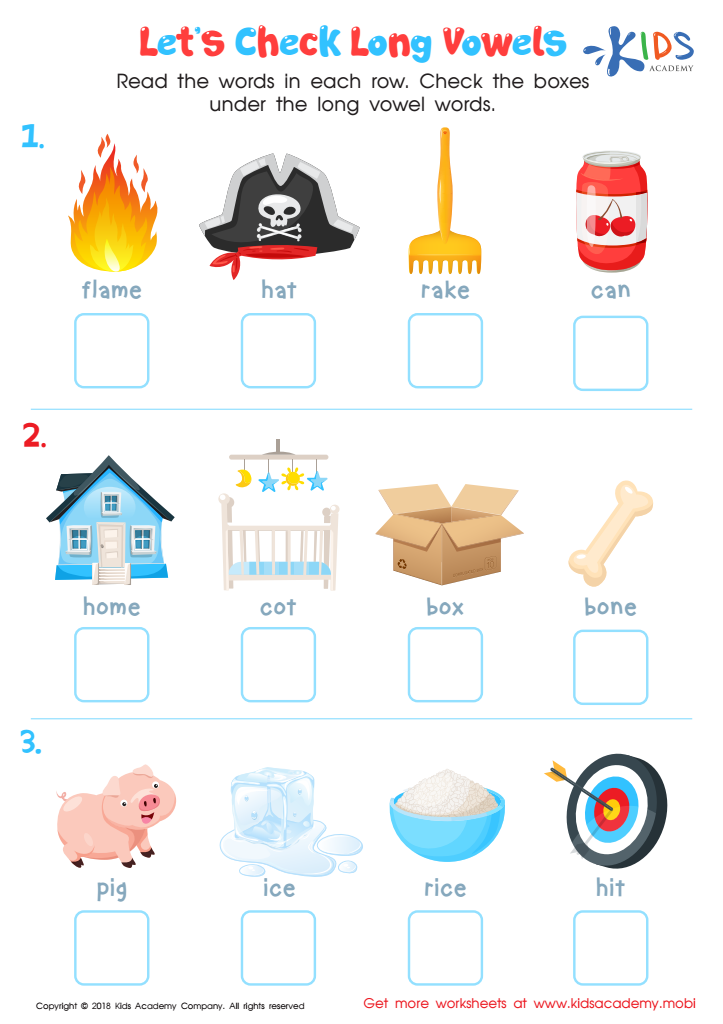
Let's Check Long Vowels: Assessment Worksheet
This worksheet helps your child identify objects and learn long vowel sounds. Ask them to say the names of the four objects in each row. Then, help them check the boxes to confirm they know the long vowel sounds. This will help them develop their reading skills.
Let's Check Long Vowels: Assessment Worksheet
Worksheet
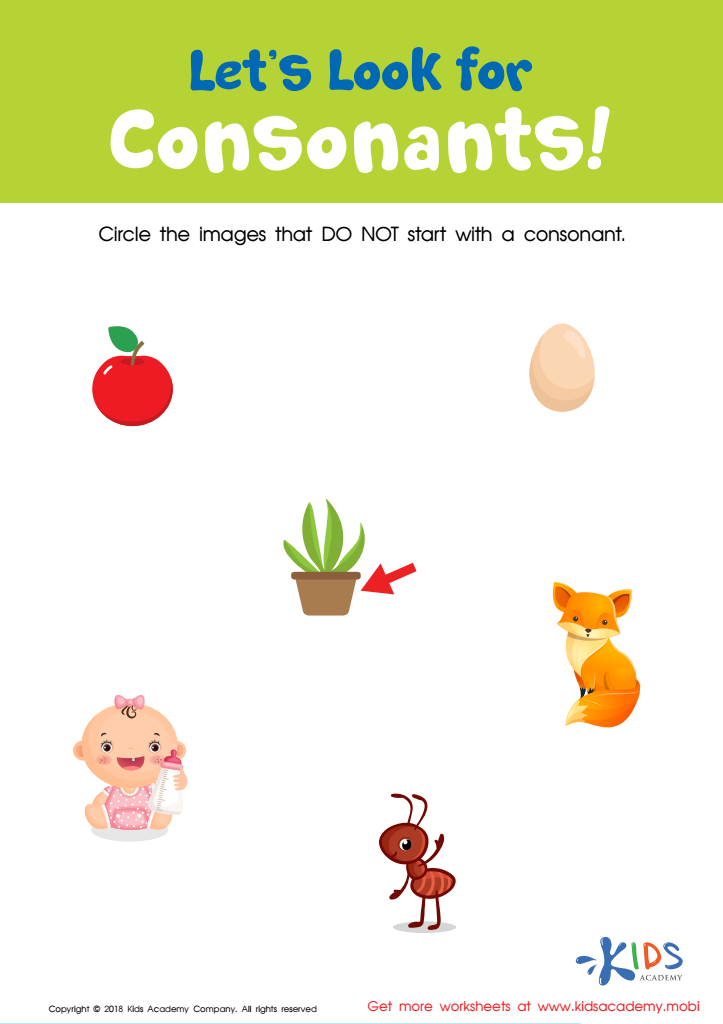
Let's Look for Consonants Worksheet
Help kids learn consonants and words that start with them. Ask them to recite the alphabet, then explain consonants are all letters but the 5 vowels. Use the worksheet to ask them to circle items without a consonant. Emphasize that's 21 consonants.
Let's Look for Consonants Worksheet
Worksheet
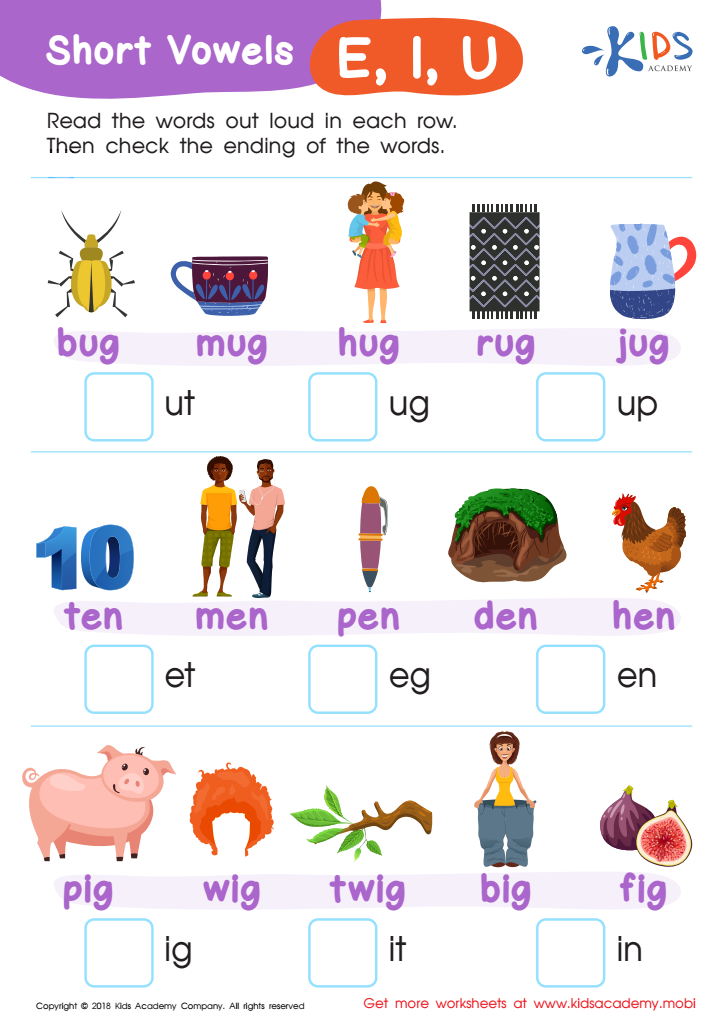
Short Vowels /e/, /i/, and /u/ Worksheet
Your emergent reader can have fun while practicing their short vowel sounds with this free, brightly colored worksheet. They'll identify one-syllable words by their pictures, then match the correct ending for each. They'll gain an understanding of how short vowel sounds vary in closed syllables with different endings, without even realizing it!
Short Vowels /e/, /i/, and /u/ Worksheet
Worksheet
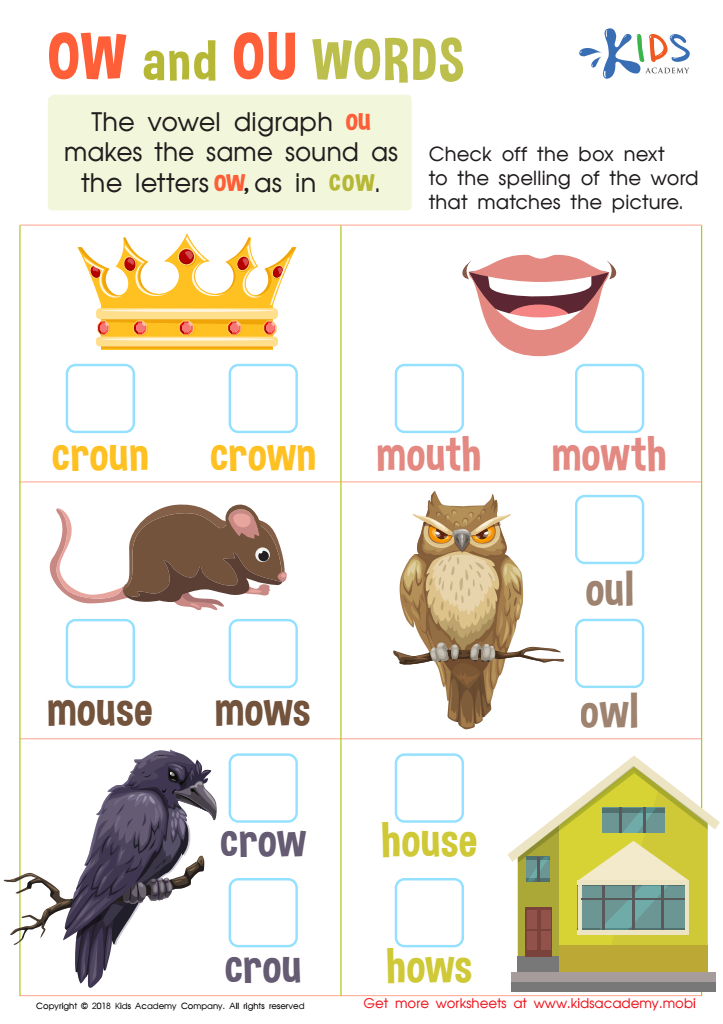
Reading: OW and OU Words Worksheet
Help your kids learn phonetics! Explain the different sounds and long/short variations. Emphasize that some vowel sounds are the same, e.g. ou = ow in cow. For practice, have them read aloud the words in the worksheet and check the box next to the spelling that matches the picture.
Reading: OW and OU Words Worksheet
Worksheet
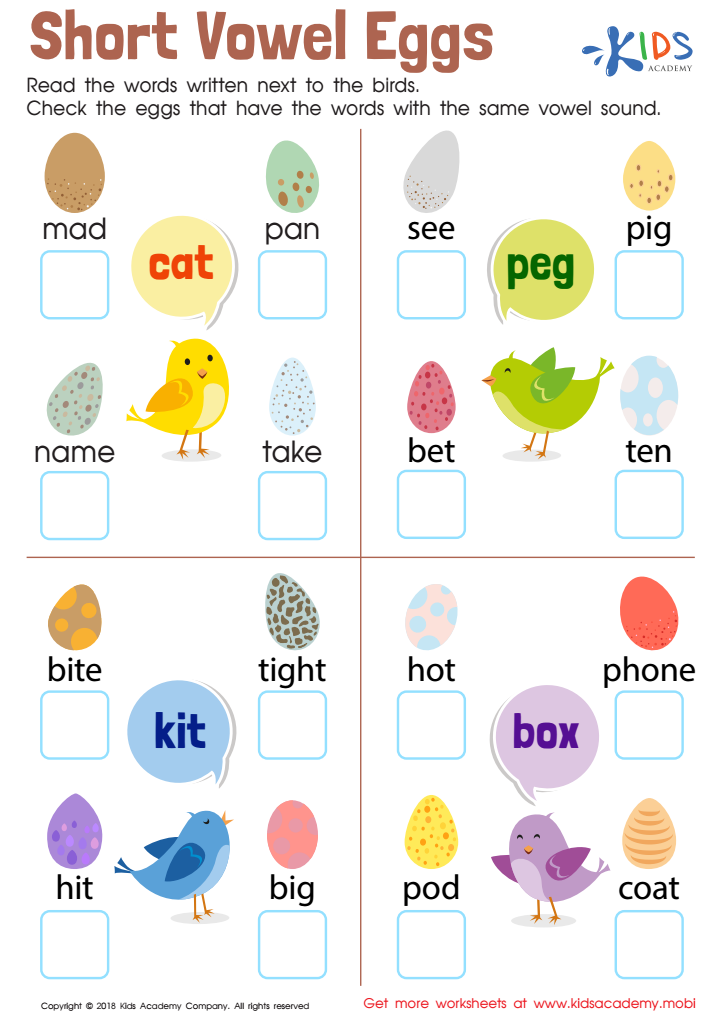
Short Vowel Eggs Worksheet
Your students will love helping these birdies pick the short vowel eggs! Have them read the words in the thought bubbles, then check off the boxes with the same short vowel sounds. The bright colors of this free Worksheet will draw them in and get them practicing their vowels!
Short Vowel Eggs Worksheet
Worksheet
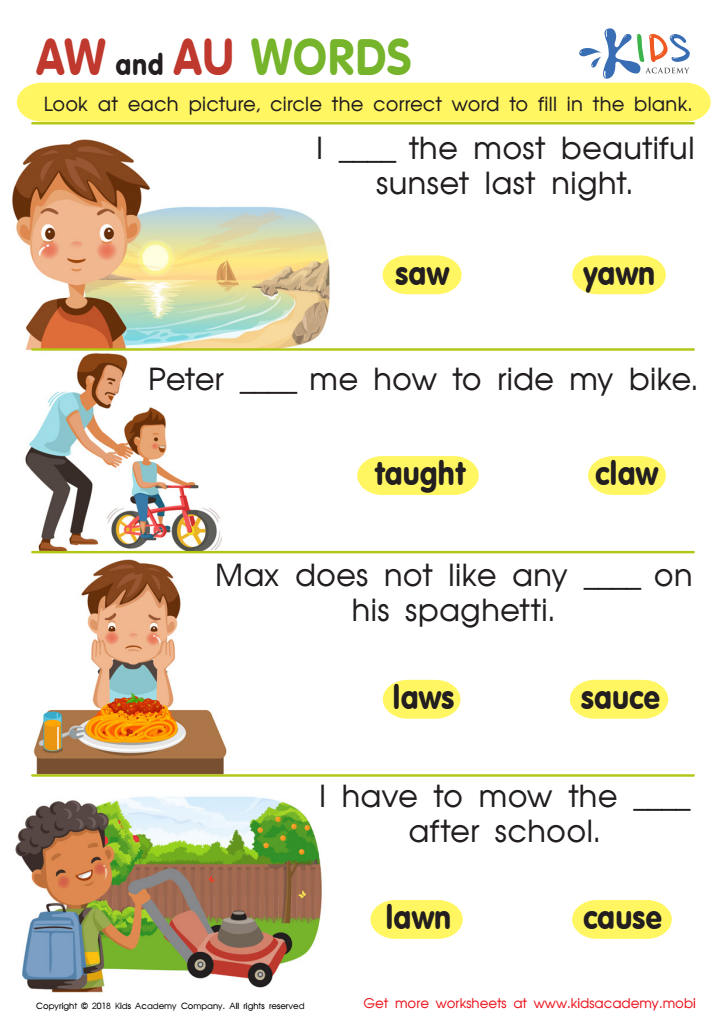
Reading: AW and AU Words Worksheet
This worksheet helps kids recognize that /au/ and /aw/ can make the same sound. Students read sentences and pick the correct word with one of the digraphs. Understanding digraphs improves decoding and reading fluency. Perfect for reading and phonics classes.
Reading: AW and AU Words Worksheet
Worksheet
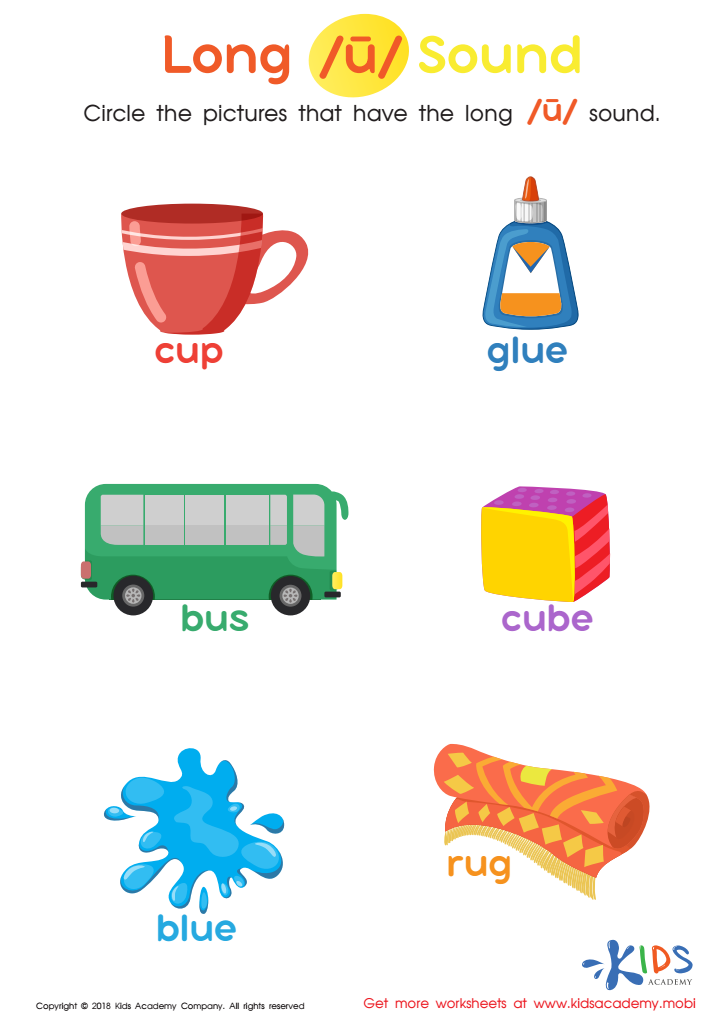
Long «u» Sound Worksheet
This fun and engaging free PDF worksheet teaches kids to differentiate between long and short «u» sounds. Through tracing circles around the correct words, they'll practice their fine motor skills while also recognizing patterns (silent-e for «ū» sound) in closed-syllable words. Bright and cheery pictures make it a great confidence booster for new readers!
Long «u» Sound Worksheet
Worksheet
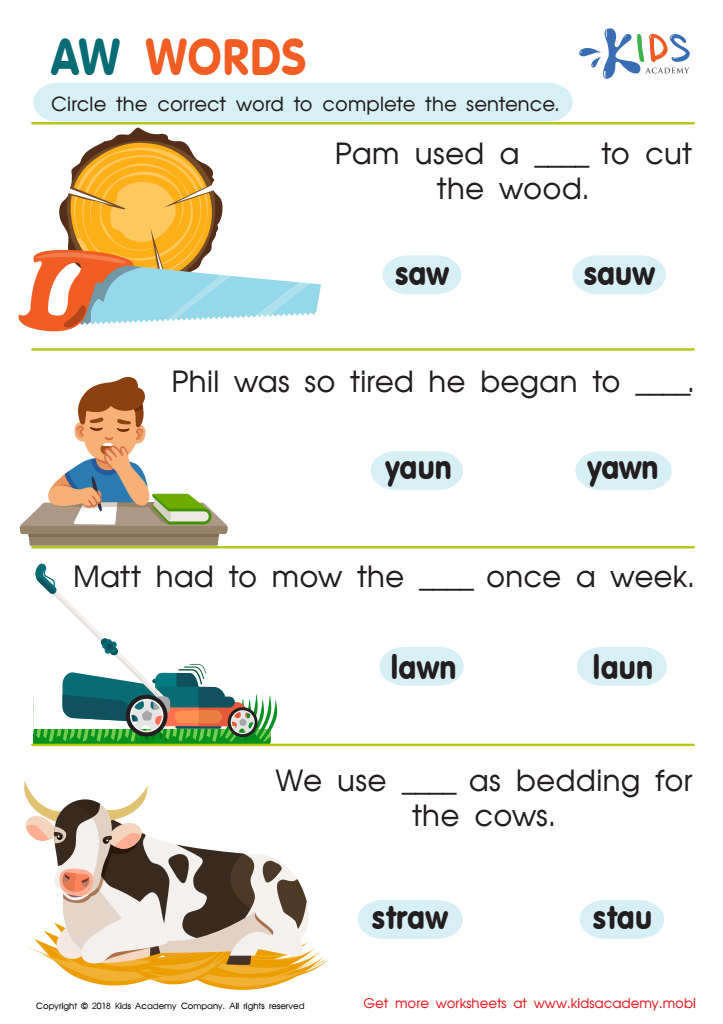
Reading: AW Words Worksheet
Practice decoding the /aw/ digraph with this printable. Students read sentences and select the word with the correct spelling to complete each one. Note, /aw/ is sometimes spelled /au/, so this worksheet helps prevent confusion. Have fun, and practice hard!
Reading: AW Words Worksheet
Worksheet
Join Kids Academy for Free
Who is primarily going to use this learning content?



Spelling practice for vowels and consonants is crucial for children aged 3-8 because it lays the foundational framework for literacy development. At this formative stage, young learners are like sponges, rapidly absorbing new information. Understanding vowels and consonants is essential because these building blocks of language help children decode words, which is vital for reading proficiency. Mastery of spelling not only boosts reading skills but also enhances writing capabilities.
Focusing on vowels and consonants helps children recognize patterns in language, improving their phonemic awareness— the ability to hear, identify, and manipulate individual sounds in spoken words. Phonemic awareness is a critical predictor of future reading success. Furthermore, spelling practice improves children’s memory, attention to detail, and cognitive development.
For parents and teachers, ensuring that children have a strong grasp of these concepts can prevent future academic difficulties. It boosts children's confidence and motivation when they can successfully navigate reading and writing tasks. Early intervention and regular practice can close any potential literacy gaps, setting children up for long-term educational success.
In summary, spelling practice with a focus on vowels and consonants is not just about rote memorization— it is a vital step in the comprehensive development of early literacy skills, forming a strong foundation for both academic performance and lifelong learning.







