Vocabulary development Vowels Worksheets for Ages 3-8
6 filtered results
-
From - To
Enhance your child's vocabulary development with our engaging Vowels Worksheets, designed specifically for ages 3-8. These worksheets focus on the essential building blocks of language by emphasizing vowel recognition and usage. They'll embark on a fun learning journey through colorful activities that promote literacy skills, phonemic awareness, and word comprehension. Our thoughtfully designed exercises foster a love for learning, helping young learners identify vowels in various words while expanding their vocabulary. Perfect for home or classroom use, these worksheets are an invaluable resource for educators and parents alike. Inspire your child's language skills today with our captivating vowel worksheets!
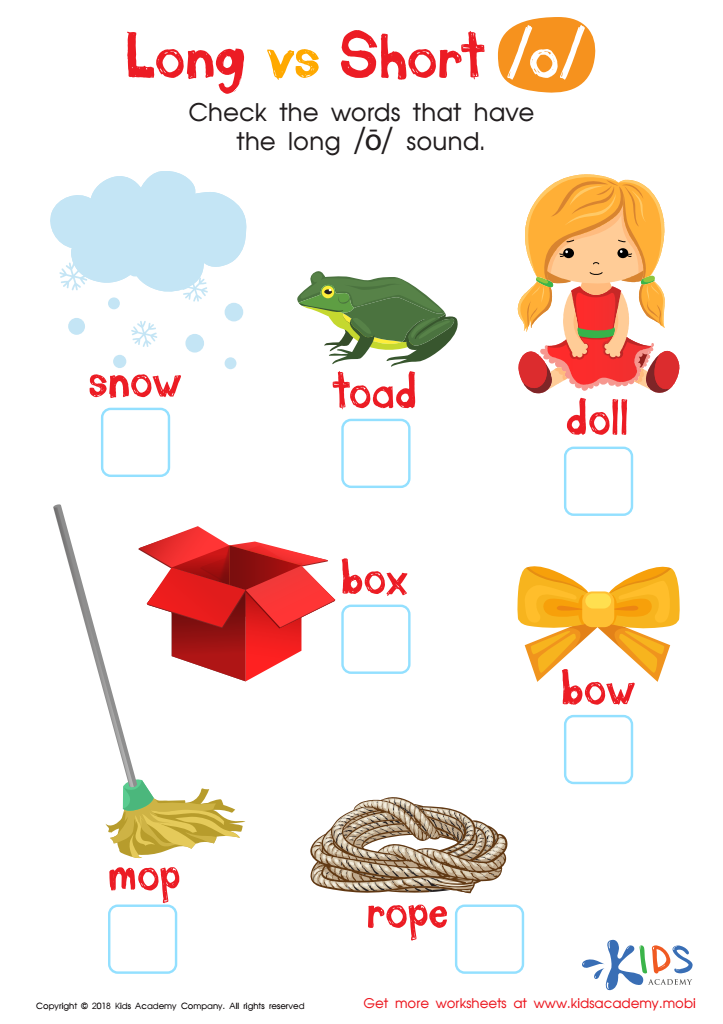
Long vs Short O Reading Worksheet
 Assign to My Students
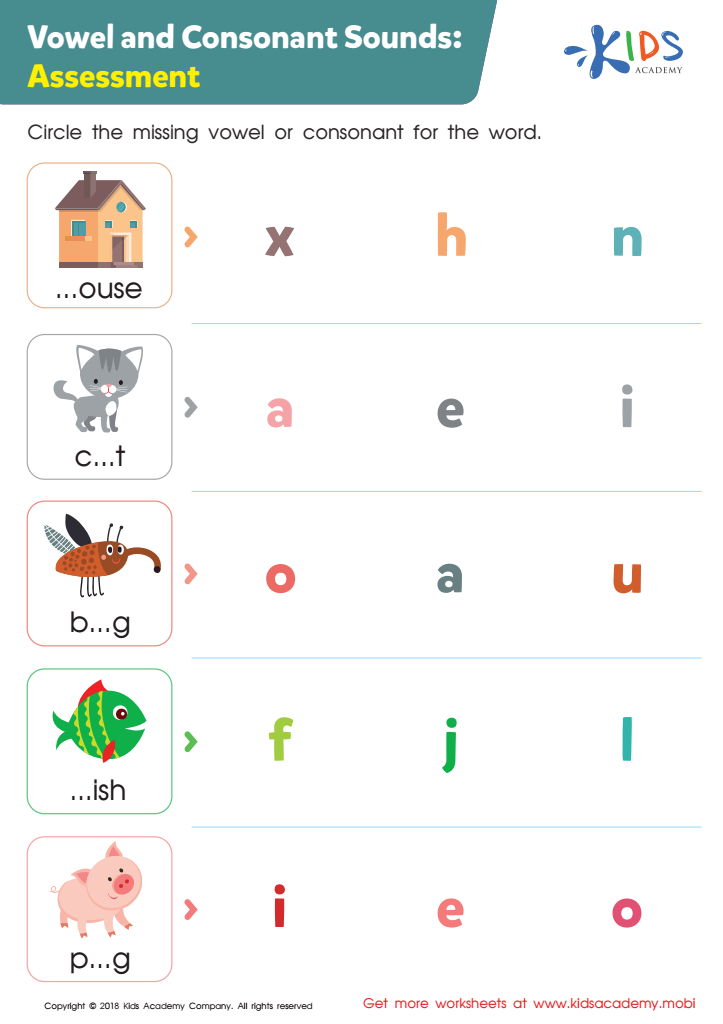
Vowel and Consonant Sounds: Assessment Worksheet
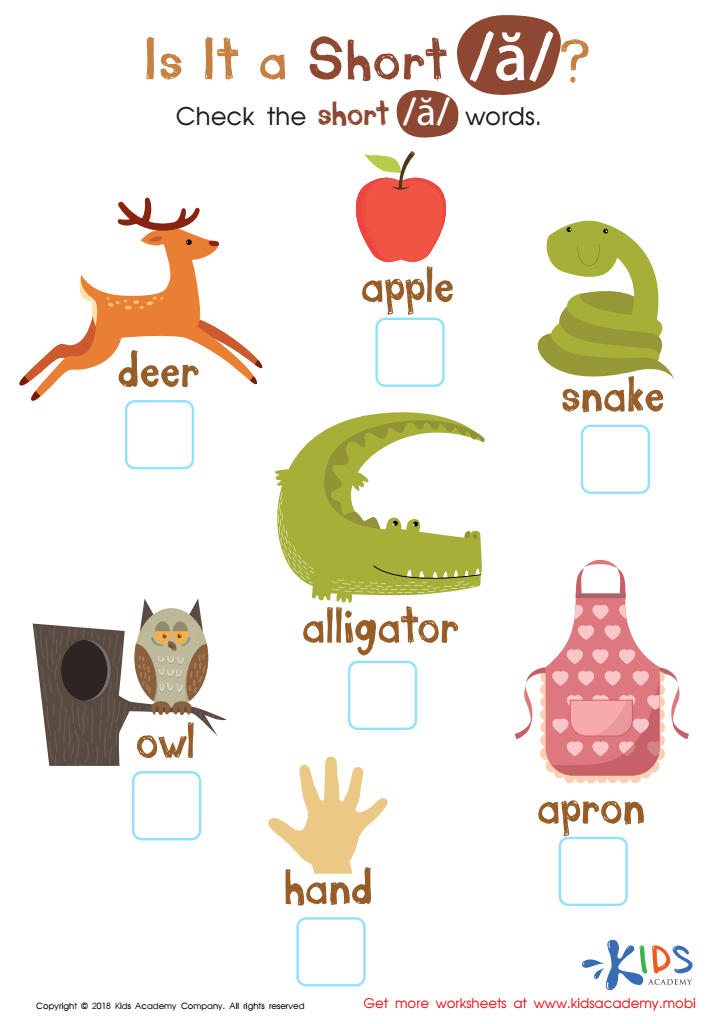
Is It Short A? Reading Worksheet
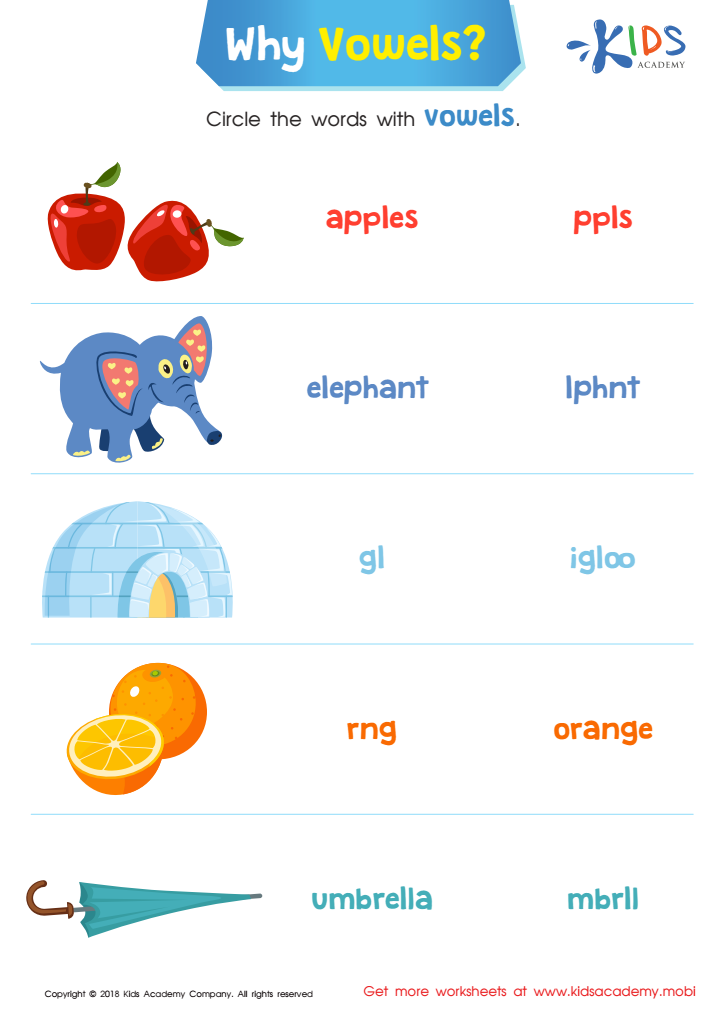
Why Vowels? Reading Worksheet
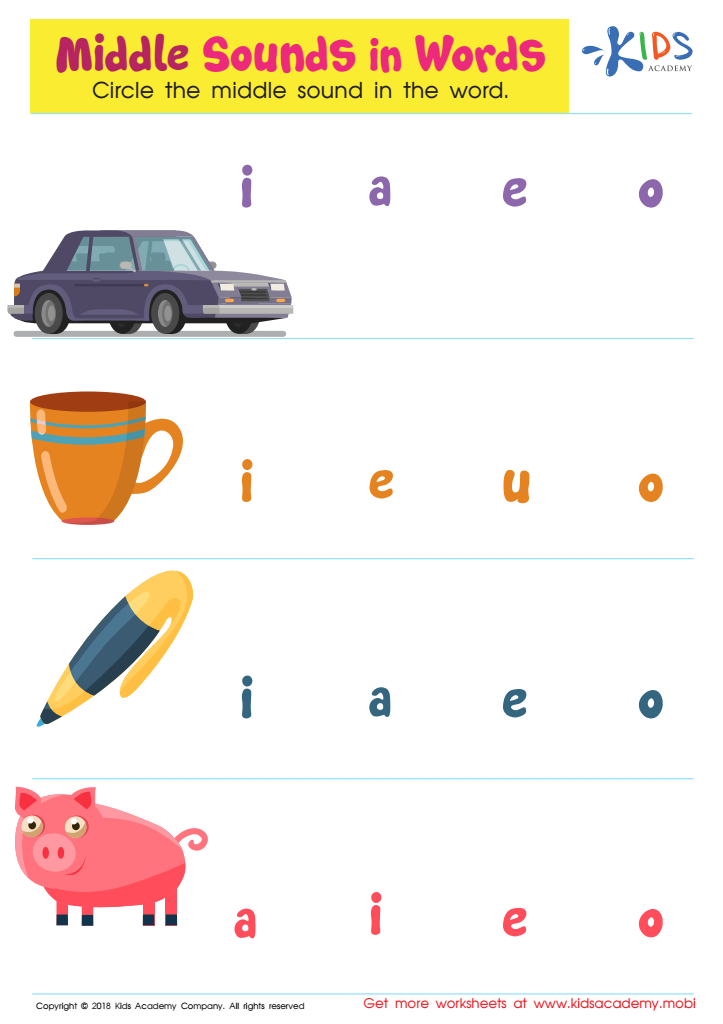
Middle Sounds in Words Worksheet
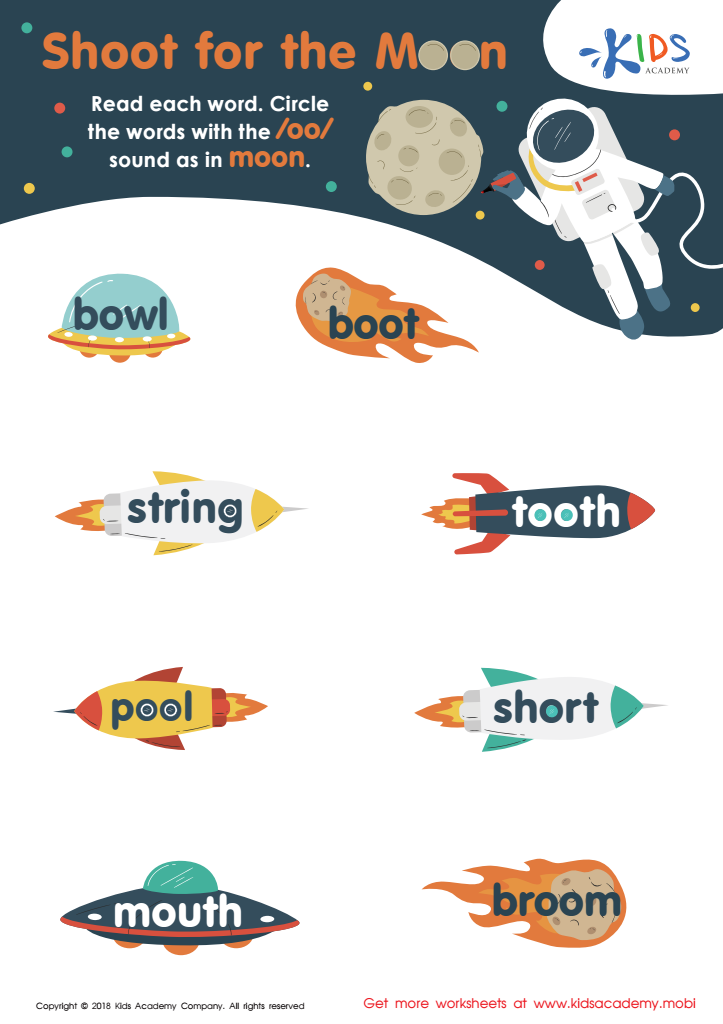
Reading: Shoot for the Moon Worksheet





Vocabulary development, particularly the understanding and use of vowels, is crucial for children aged 3-8 as it lays the foundation for reading and overall language skills. In early childhood, children are naturally curious and absorb language from their surroundings. By focusing on vocabulary that encompasses vowels, parents and teachers can leverage this developmental stage to enhance communication abilities.
Learning vowels is essential because they are the building blocks of most words. Mastery of vowel sounds aids in phonemic awareness, which is critical for decoding words when reading. As children learn to identify and pronounce vowels, they gain confidence in their speaking and reading skills, boosting their literacy development.
Moreover, rich vocabulary contributes to better comprehension. If children can articulate their thoughts and understand new concepts, they will feel encouraged to engage with others and participate in discussions. This promotes social skills and emotional intelligence.
Investing time in vocabulary development fosters a love for learning as children become more curious about language. Activities like reading aloud, playing word games, and singing can make learning about vowels fun and interactive. Ultimately, emphasizing vocabulary and vowels during these formative years equips children with vital tools for their educational journey and lifelong success.







