
Vocabulary Enrichment Vowels Worksheets for Ages 3-8
3 filtered results
Difficulty Level
Grade
Age
-
From - To
Subject
Activity
Standards
Unlock your child's language potential with our "Vocabulary Enrichment Vowels Worksheets for Ages 3-8"! Perfect for young learners, these colorful and engaging worksheets are designed to enhance their understanding of vowels and boost their vocabulary skills. Each activity combines fun illustrations with interactive tasks, helping kids recognize, pronounce, and use new words effectively. Ideal for both classroom and homeschool settings, these worksheets cater to different learning styles, ensuring every child can succeed and build a strong linguistic foundation. Dive into a world of learning and watch your child's vocabulary flourish! Explore now at Kids Academy.
Favorites
With answer key
Interactive
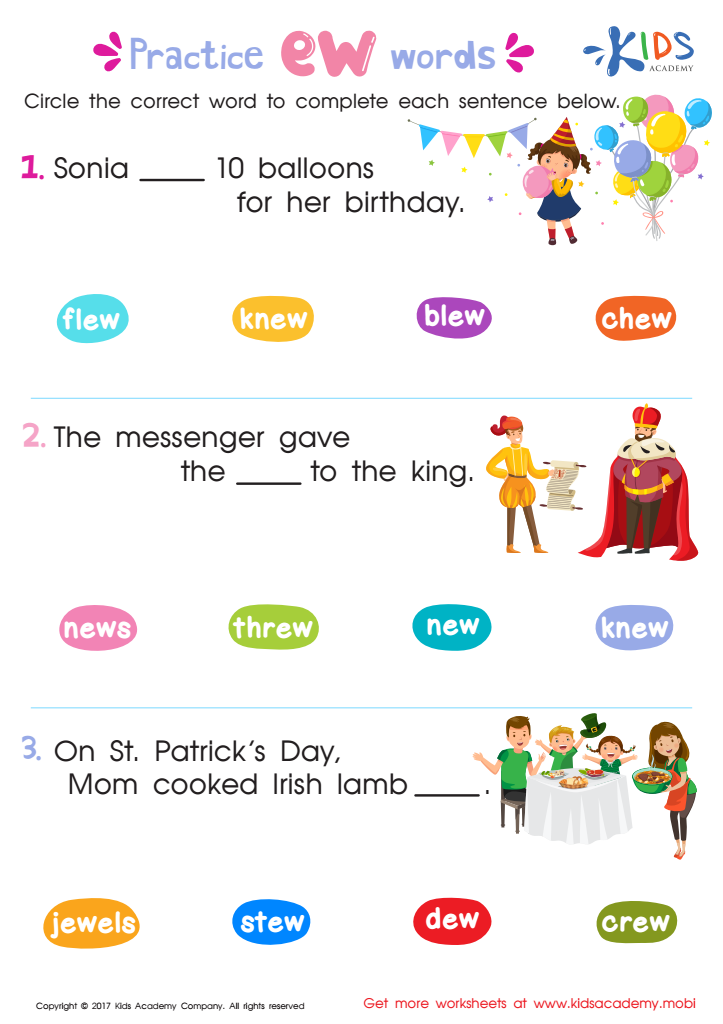
EW Words Worksheet
Practice the diphthong ew and boost your child's vocabulary with this fun ew words worksheet! Filled with illustrations, it will help your child hone their reading and spelling skills. Plus, the tricky words will make it both enjoyable and rewarding!
 Assign to My Students
EW Words Worksheet
Worksheet
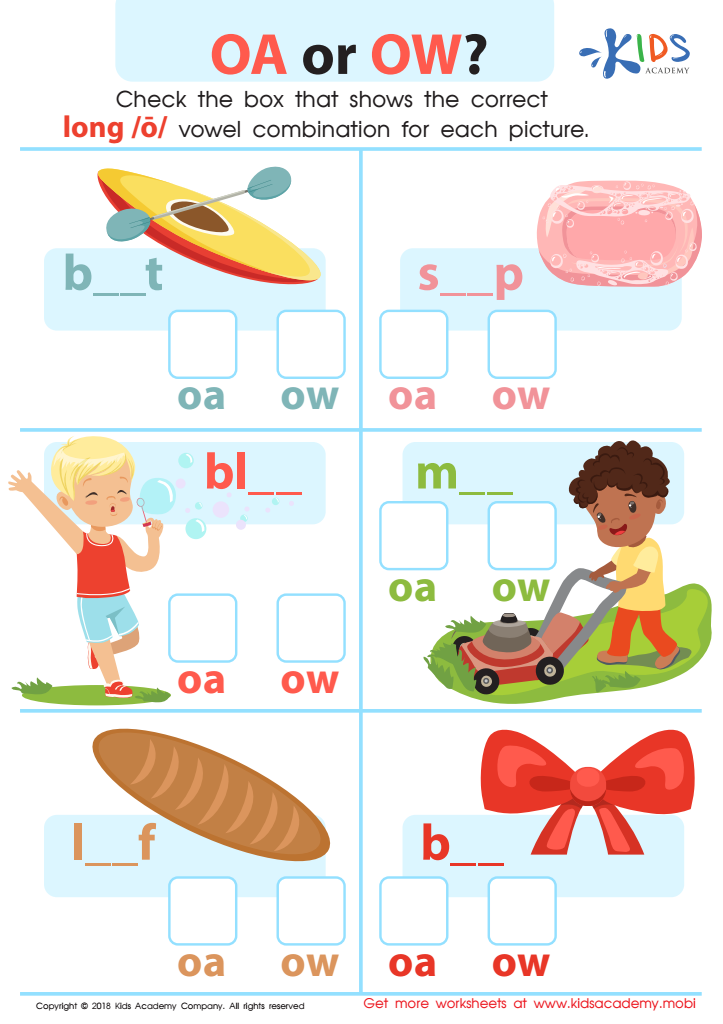
Reading: OA or OW Worksheet
This printable worksheet helps young and emergent readers with decoding words and understanding digraphs (two letters with one sound). It requires students to complete the spelling for each word based on the picture, focusing on /oa/ and /ow/ spellings. It's ideal for a reading classroom and for spelling practice.
Reading: OA or OW Worksheet
Worksheet
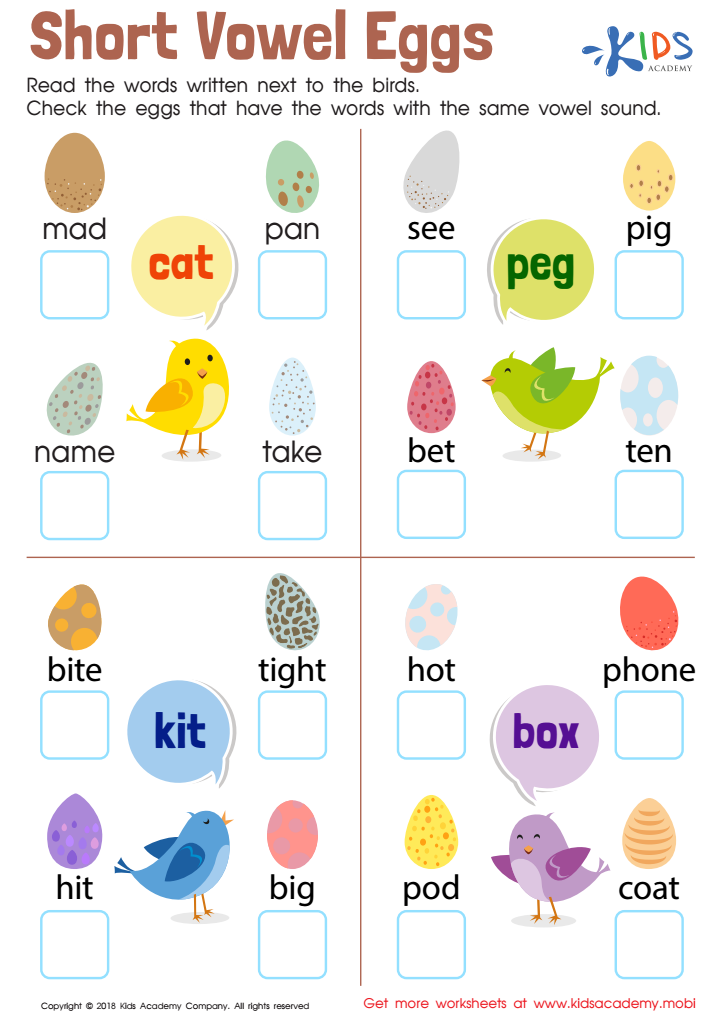
Short Vowel Eggs Worksheet
Your students will love helping these birdies pick the short vowel eggs! Have them read the words in the thought bubbles, then check off the boxes with the same short vowel sounds. The bright colors of this free Worksheet will draw them in and get them practicing their vowels!
Short Vowel Eggs Worksheet
Worksheet
Join Kids Academy for Free
Who is primarily going to use this learning content?





Parents and teachers should place a high priority on vocabulary enrichment, particularly focusing on vowels, for children aged 3-8 because these early years are crucial for language development. During this formative period, children’s brains are extremely receptive to learning, and they rapidly acquire new words and sounds. Understanding vowels is fundamental since every word in the English language contains at least one vowel. This foundational skill assists children with pronunciation, reading fluency, and spelling — essential components for future literacy.
Vowel knowledge also supports better comprehension and communication skills. When children can distinguish between different vowel sounds, they can understand and convey meanings more effectively. This clarity fosters confidence in expressing themselves and paves the way for success in both academic realms and everyday interactions.
Moreover, early vocabulary enrichment stimulates cognitive development. Engaging with words and sounds boosts children’s memory, attention, and critical thinking skills. By emphasizing vowels, parents and teachers can thereby provide a structured yet vibrant language framework that enhances overall intellectual growth.
In summary, focusing on vowels during early vocabulary enrichment offers indispensable benefits. It strengthens foundational literacy skills, enhances comprehension and communication, and supports cognitive development, ensuring children are well-prepared for future educational challenges and opportunities.







