Letter tracing skills English for Beginners Worksheets for Ages 3-8
3 filtered results
-
From - To
Enhance your child’s literacy with our engaging "Letter Tracing Skills Worksheets" designed for English beginners aged 3-8. These printable worksheets provide a fun and interactive way for young learners to practice writing letters, promoting fine motor skills and letter recognition. Each worksheet is visually appealing, incorporating colorful illustrations and playful themes to keep children motivated. Ideal for both classroom and home use, our resources cater to diverse learning styles, making it easy for parents and teachers to support early literacy development. Start your child's journey to reading and writing success with our expertly crafted activities today!
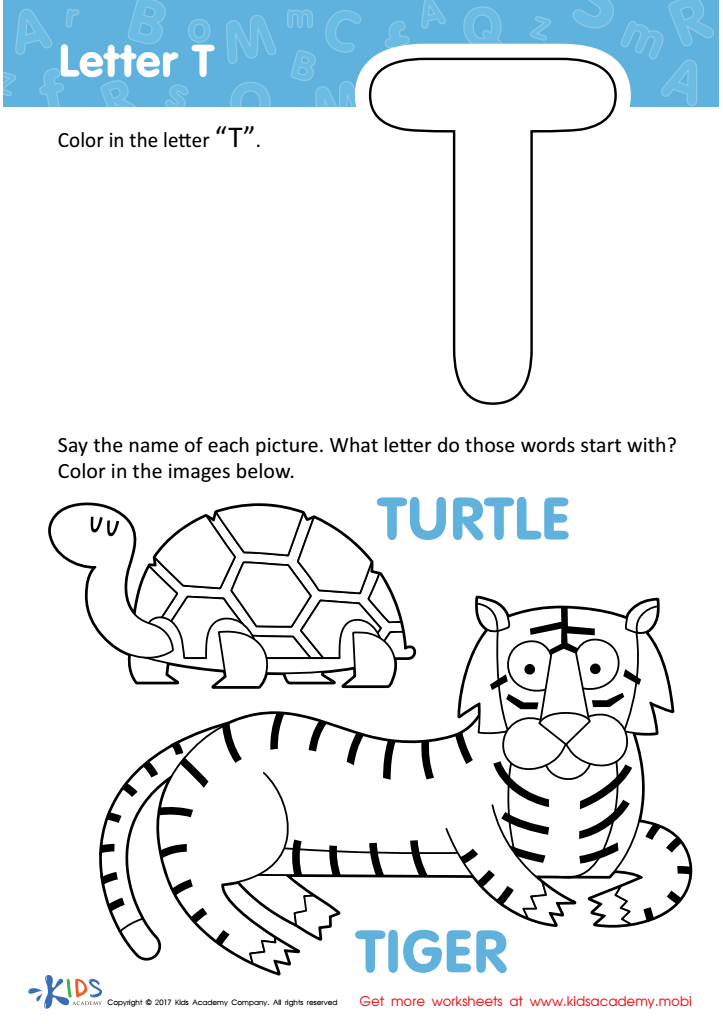
Letter T Coloring Sheet
 Assign to My Students

Letter C Tracing Page
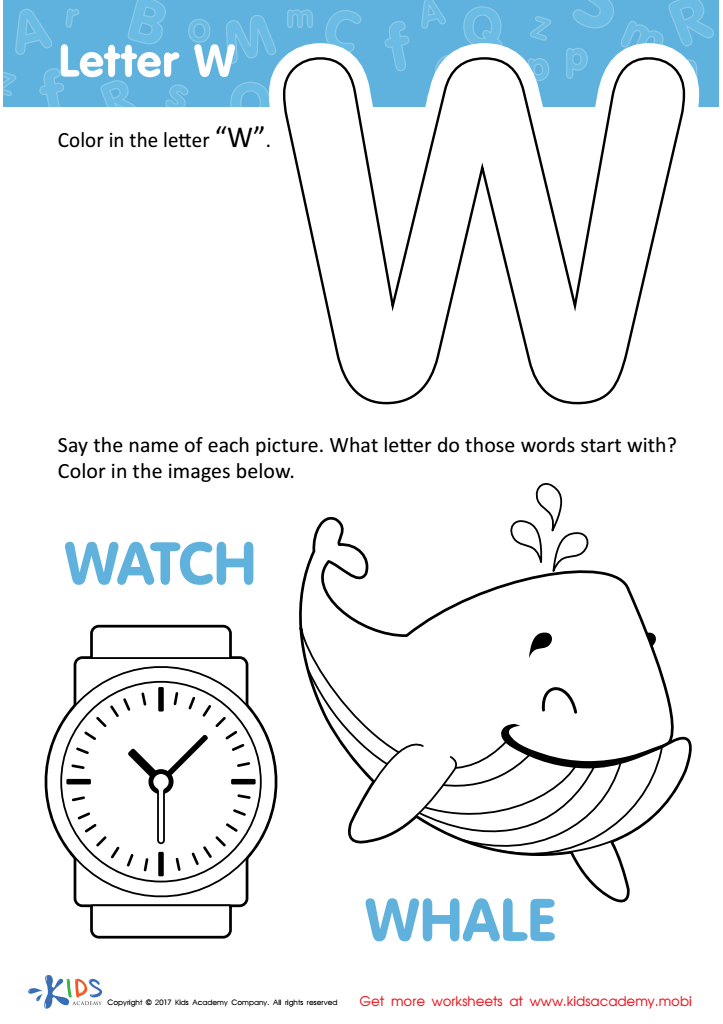
Letter W Coloring Sheet
Assign to My Students





Letter tracing skills are a fundamental component of early literacy and play a crucial role in the development of children aged 3-8. For parents and teachers, nurturing these skills is essential for several reasons. First, letter tracing helps children learn the shape and form of letters, which is vital for writing and reading proficiency. Mastering letter formation assists in their ability to recognize letters in different contexts, making it easier for them to decode words later on.
Moreover, tracing reinforces fine motor skills and hand-eye coordination, which are essential for overall development. As children trace letters, they develop muscle memory, making it easier for them to write independently as they progress in their education. This can lead to increased confidence in their writing abilities, fostering a positive attitude toward learning.
Engaging in letter tracing activities also provides a multisensory experience, which can enhance cognitive development and retention. It makes learning fun and interactive, keeping young learners motivated and engaged. Therefore, parents and teachers should prioritize letter tracing skills, as they lay the groundwork for children's future academic success and encourage a joy for learning that can carry into other subjects and life experiences.