
Alphabetical order practice Worksheets for Ages 3-8
3 filtered results
Difficulty Level
Grade
Age
-
From - To
Subject
Activity
Standards
Introducing our engaging Alphabetical Order Practice Worksheets for children ages 3-8! Tailored to nurture early literacy skills, these printable sheets help young learners grasp the basics of ABC order in a fun, interactive manner. Perfect for preschool to early elementary students, each worksheet features vibrant illustrations and simple exercises designed to boost alphabet recognition and sequencing abilities. With a focus on playful learning, our worksheets transform education into an exciting journey, fostering a love for reading from an early age. Enhance your child’s educational foundation and confidence with our expertly crafted alphabetical order practice activities.
Favorites
With answer key
Interactive
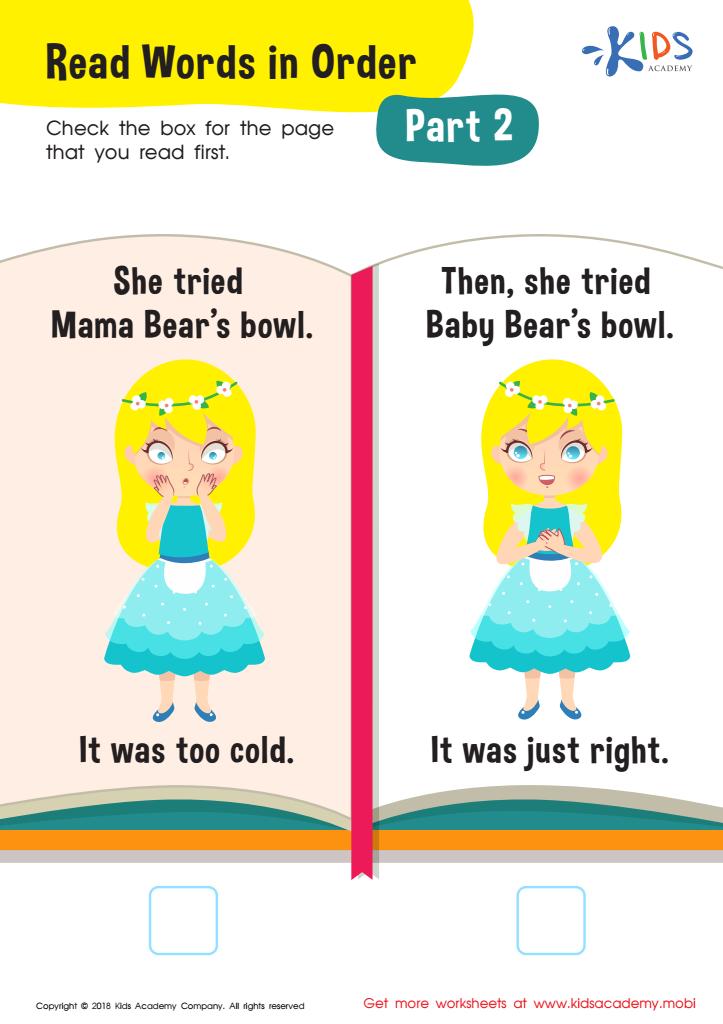
Read Words Order Part 2 Worksheet
Help your students make progress with reading by using this easy worksheet. It includes two pictures with short sentences your child should be able to read. Ask them to read these out loud, and if they're struggling, help them. Then, they should check the box that shows the page they'd read first.
 Assign to My Students
Read Words Order Part 2 Worksheet
Worksheet
Join Kids Academy for Free
Who is primarily going to use this learning content?








Alphabetical order practice is crucial for young children aged 3-8 because it lays a foundational basis for essential literacy skills. Firstly, understanding alphabetical order helps children recognize and remember letters, aiding in the development of their reading and writing abilities. Familiarity with letter sequences enhances their ability to quickly identify letters and synthesize sounds, which is vital for phonemic awareness – the understanding that words are made up of individual sounds.
Moreover, knowing the alphabetical order is fundamental for organizing information. This skill is frequently used in various practical contexts, such as looking up words in a dictionary, navigating through contacts in a phone, or sorting files and books. Introducing this concept early on allows children to develop efficient organizational skills and promotes logical thinking, which is beneficial for their academic growth.
Practicing alphabetical order also encourages attention to detail and patience. Activities like sorting alphabet cards or engaging in alphabet-related games require concentration and fosters fine motor skills. These activities contribute to overall cognitive development, enhancing memory, and even promoting socio-emotional skills through cooperative play.
In essence, caring about alphabetical order practice prepares children for a lifetime of learning and problem-solving, laying the groundwork for academic and everyday success. Prioritizing this practice supports comprehensive development, making it a valuable aspect of early childhood education.








