Basic subtraction practice Worksheets for Ages 3-8
3 filtered results
-
From - To
Welcome to our Basic Subtraction Practice Worksheets for Ages 3-8! Tailored for young learners, these fun and engaging worksheets help children develop foundational subtraction skills through interactive activities. Designed to captivate early learners, our worksheets incorporate colorful visuals and age-appropriate challenges, making subtraction both enjoyable and accessible. Whether practicing with simple numbers or grasping the concept of taking away, our resources foster confidence and proficiency in math. Ideal for classroom use or at-home learning, these worksheets are perfect for reinforcing essential skills and ensuring your child is well-prepared for future math success. Start your child's subtraction journey today!
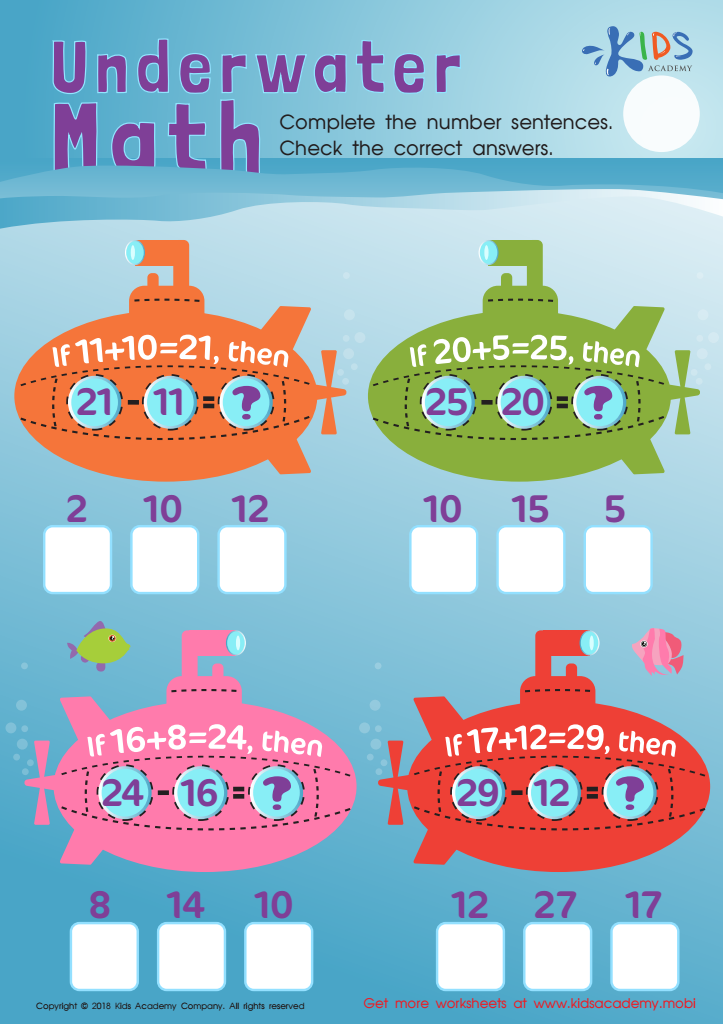
Addition and Subtraction: Underwater Math Worksheet
 Assign to My Students
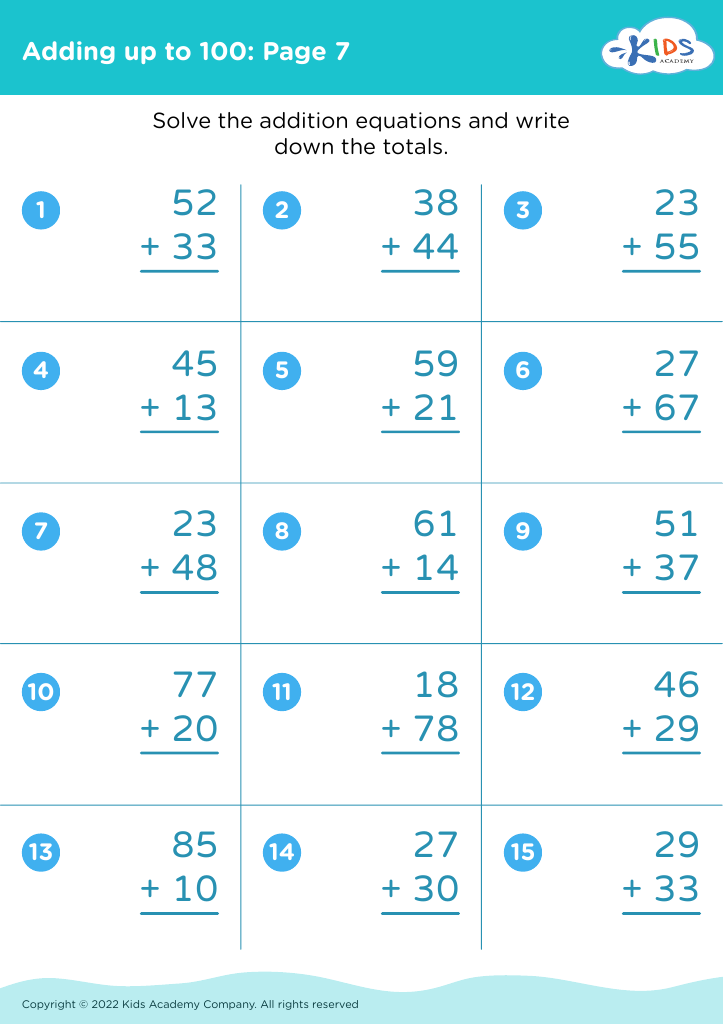
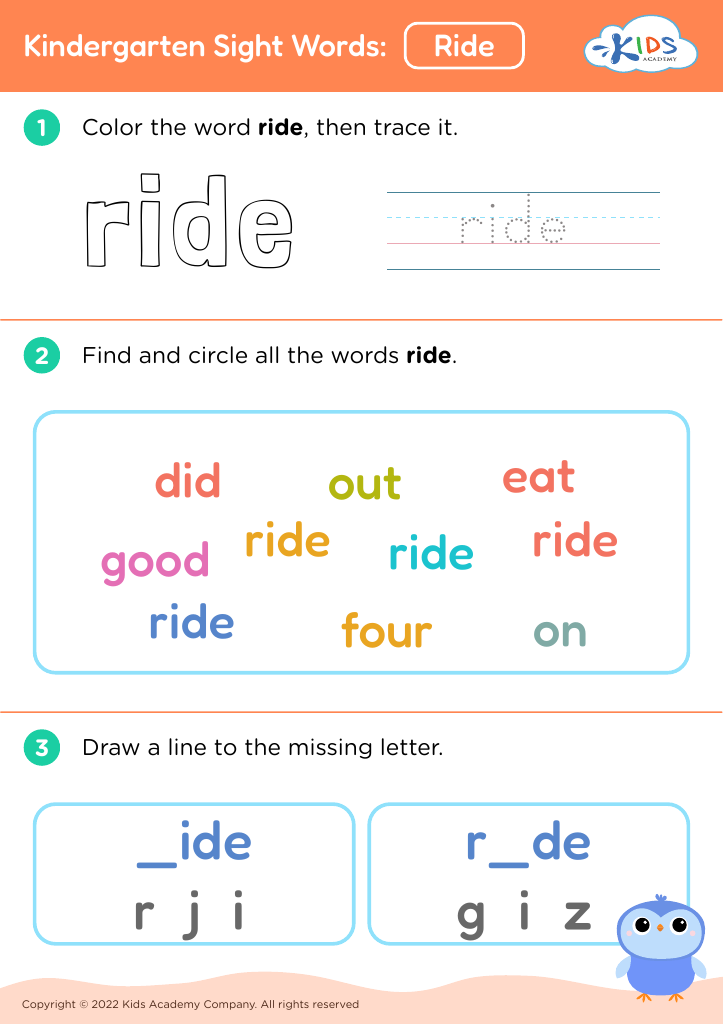







Basic subtraction practice for children aged 3-8 lays the foundation for essential mathematical skills and cognitive development. At this early stage, children are particularly receptive to learning concepts that will shape their understanding of numbers and relationships. Mastering subtraction enhances problem-solving abilities, promotes critical thinking, and fosters the development of logical reasoning.
Moreover, practice in subtraction helps children grasp the concept of "part-whole" relationships, crucial for further mathematical understanding. As children learn to subtract, they develop perseverance and resilience as they work through challenges, building their confidence in their abilities.
Subtraction activities can be engaging and interactive, using everyday objects and playful scenarios that make learning enjoyable. This not only improves their numerical fluency but also nurtures a positive attitude toward math, counteracting any anxiety associated with the subject.
Furthermore, these foundational skills support future academic success, as subtraction is an integral part of various curricula. Parents and teachers play an important role in creating a supportive learning environment by encouraging practice at home or in the classroom. By fostering these skills early, they help prepare children for more complex mathematical concepts in the future, setting them on a path toward lifelong learning and success.








