Conversion skills Worksheets for Ages 3-8
5 filtered results
-
From - To
Transform your child's learning journey with our Conversion Skills Worksheets for ages 3-8! Designed to foster fundamental math skills, these engaging worksheets help young learners master the basics of conversions such as time, measurement, and currency. Each printable offers fun, age-appropriate exercises that seamlessly blend learning with play. Our expertly crafted resources encourage critical thinking and problem-solving, essential for early academic development. Perfect for home or classroom use, these worksheets are an excellent tool to bolster your child's confidence in overcoming everyday math challenges. Start exploring our collection today and watch your little one thrive!
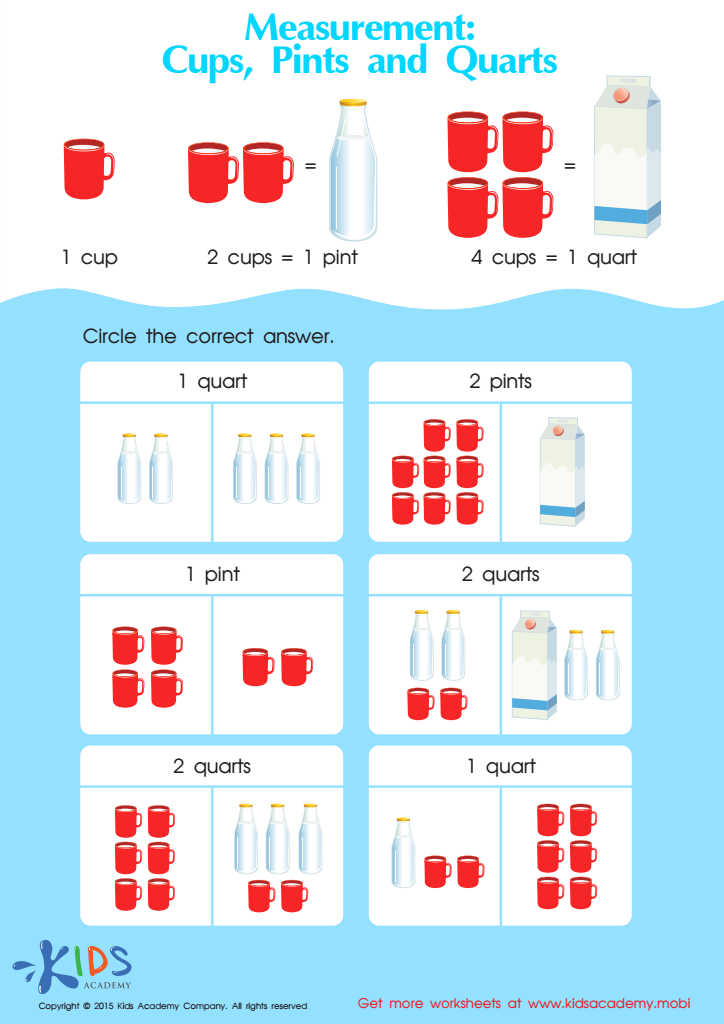
Cups, Pints and Quarts Worksheet
 Assign to My Students
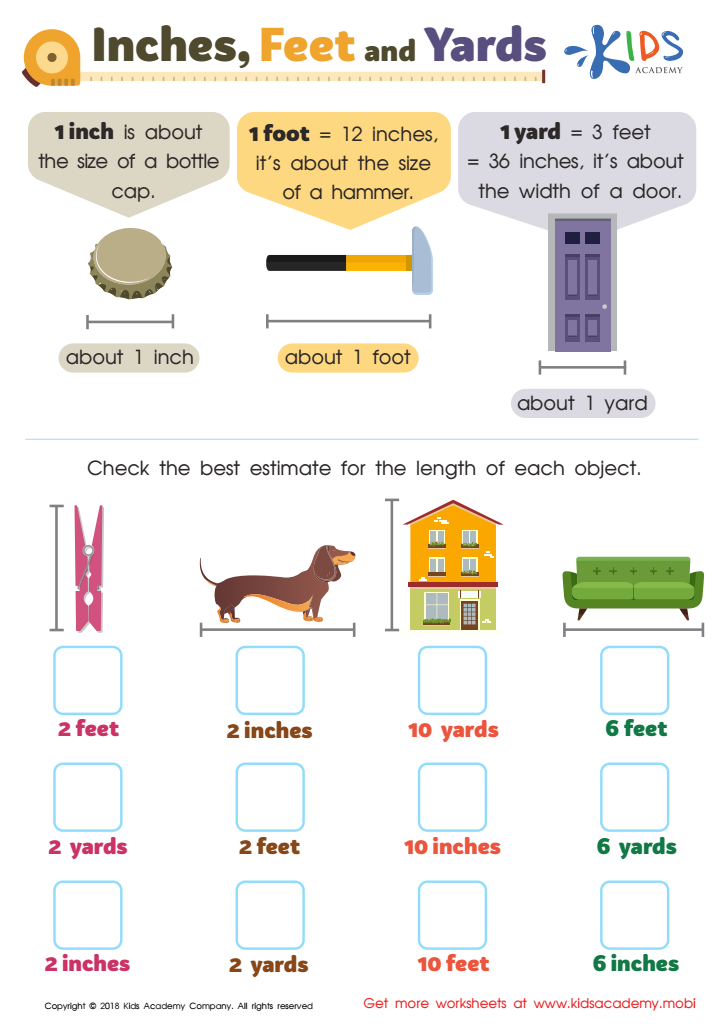
Inches, Feet and Yards Worksheet
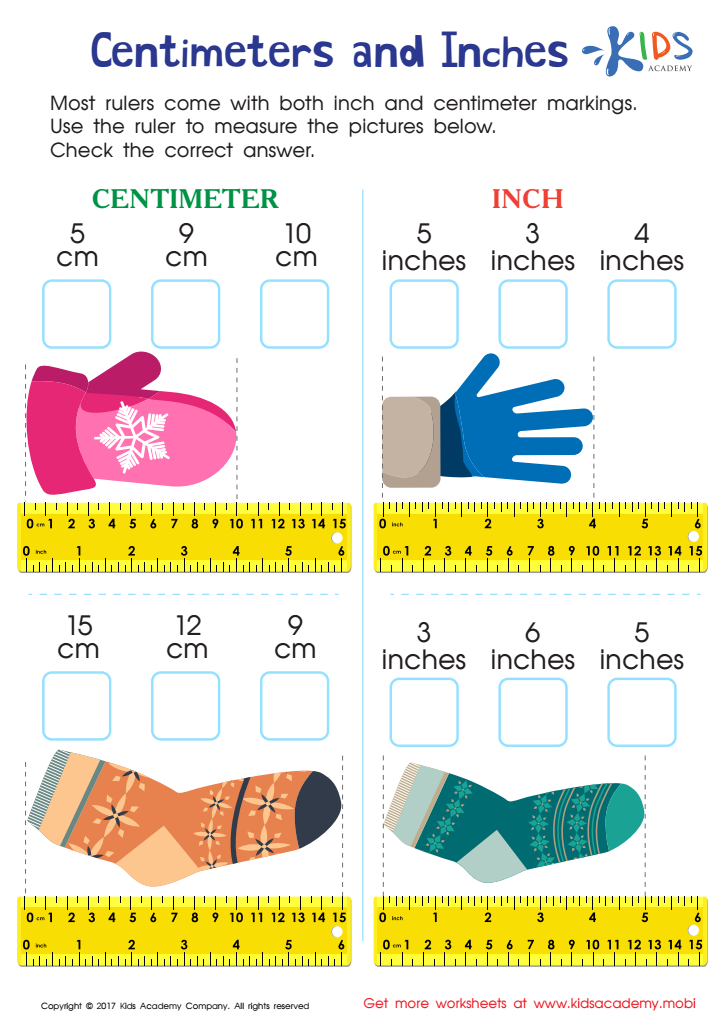
Centimeters and Inches Worksheet
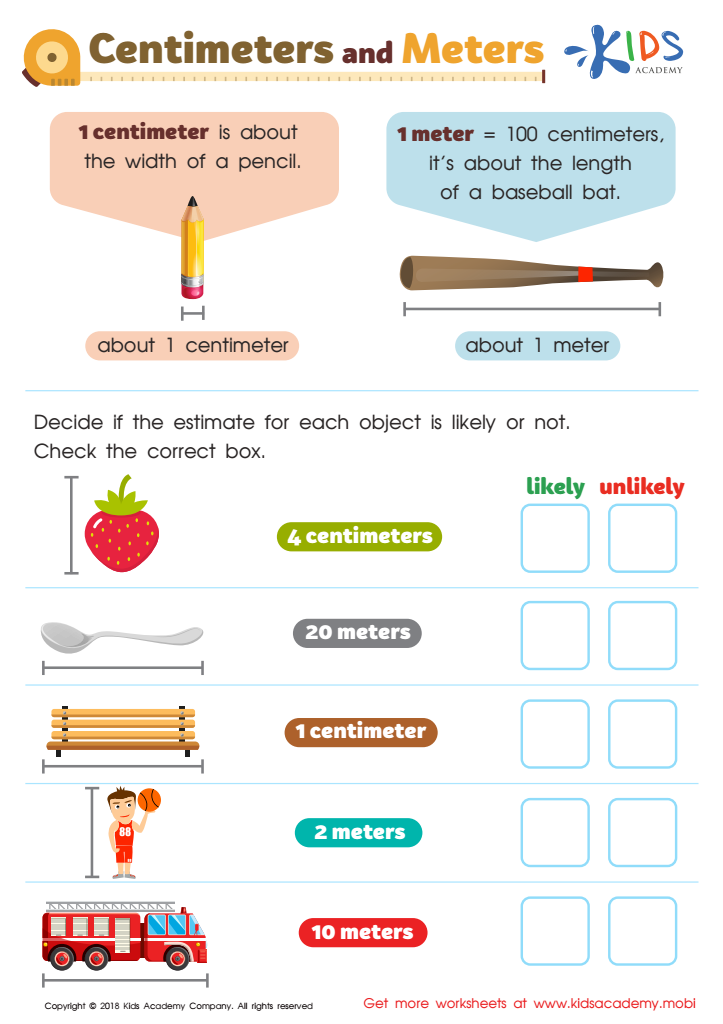
Centimeters and Meters Worksheet
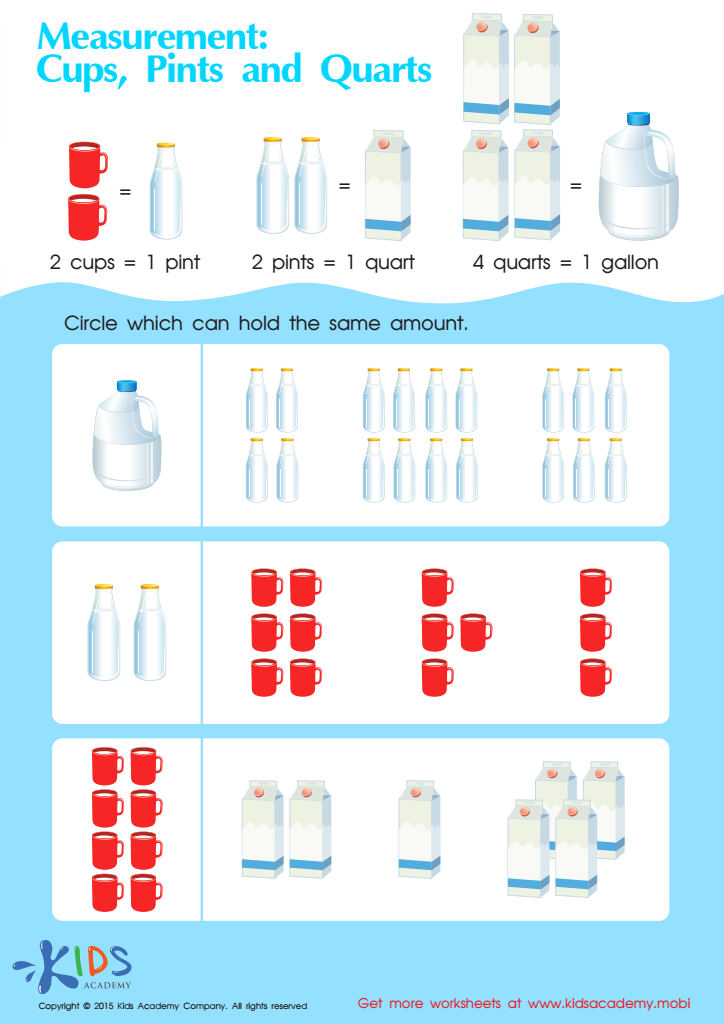
Cups, Pints and Quarts 2 Worksheet








Conversion skills, which involve changing or interpreting quantities from one form to another (e.g., from cups to pints, inches to centimeters, or lequipe other non-numerical interpretations like days to months), are a crucial aspect of early childhood education for ages 3-8 and should be a focus for both parents and teachers. Developing these skills at a young age fosters foundational mathematical literacy, often referred to as number sense, which is critical for understanding more complex math concepts later in life.
Moreover, conversion skills encourage cognitive development. Young children learn to think flexibly when they convert quantities: they must understand relationships between numbers and use reasoning to make logical conclusions. This empowers them to solve real-world problems and boosts their critical thinking abilities.
Conversion skills are also preventative for future learning difficulties. Children who can easily transition between different formats of numerical information and their contexts are less likely to experience anxiety or confusion when faced with higher-level math, engineering, and science subjects in their academic journey.
Finally, these skills Bridge Learning and everyday life by making activities practical and relevant. Whether a child is cooking with a parent, organizing toys, or navigating distances in a playground, the ability to convert and understand different units fosters independence and confidence, promoting a smooth, ongoing dialogue between abstract concepts and tangible experiences. This alignment with day-to-day tasks ease future academic pursuits enriches their personality and self-efficacy.








