Decision making skills Worksheets for Ages 3-8
13 filtered results
-
From - To
Enhance your child's decision-making abilities with our engaging worksheets designed for ages 3-8. These activities are crafted to promote critical thinking and problem-solving skills in a fun, interactive manner. By applying real-life scenarios and age-appropriate puzzles, children will learn to weigh options, recognize consequences, and make informed choices. Our worksheets encourage positive decision-making, instilling confidence and independence from an early age. Perfect for home or classroom use, these resources align with educational standards to support foundational learning. Explore our diverse range of worksheets, and watch your little ones develop essential skills while enjoying the learning process!
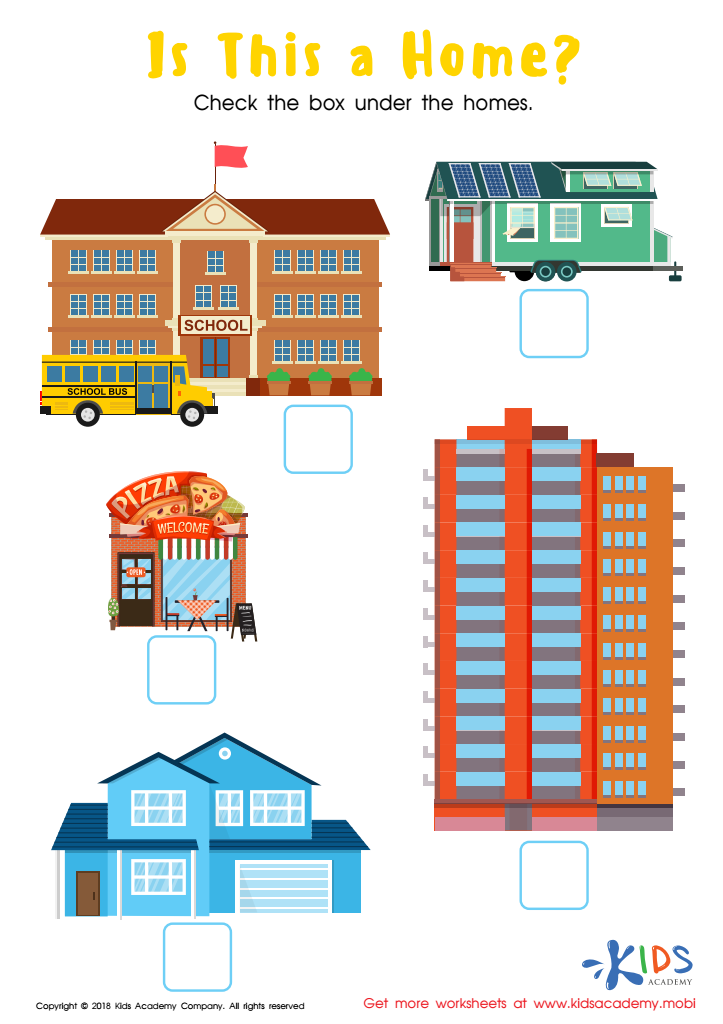
Is this a Home? Worksheet
 Assign to My Students
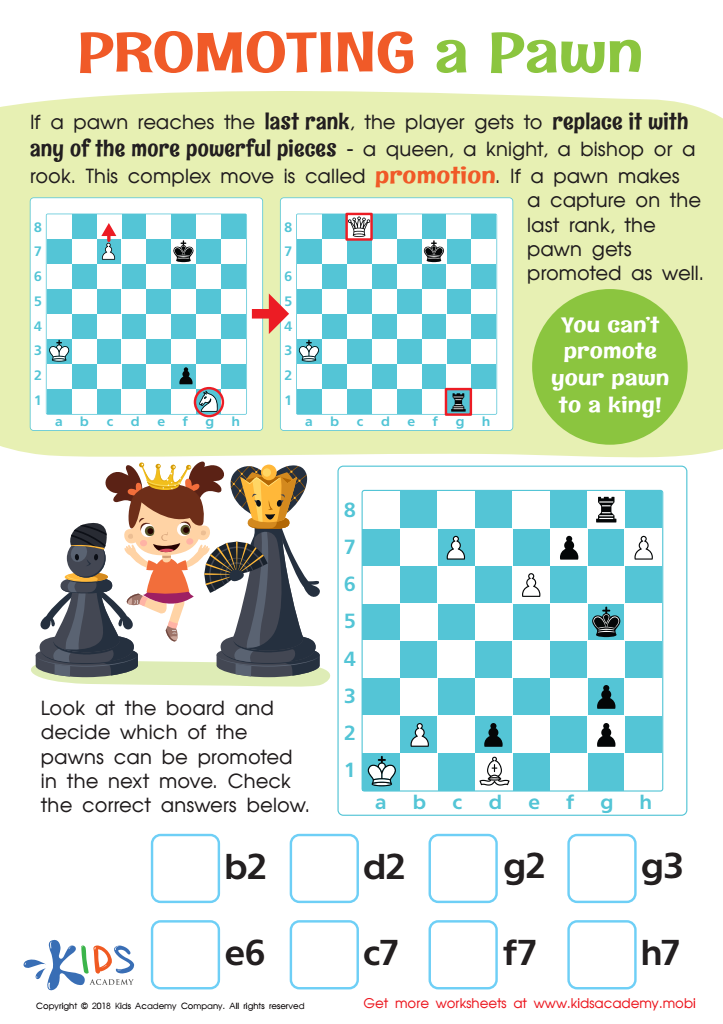
Promoting a Pawn Worksheet
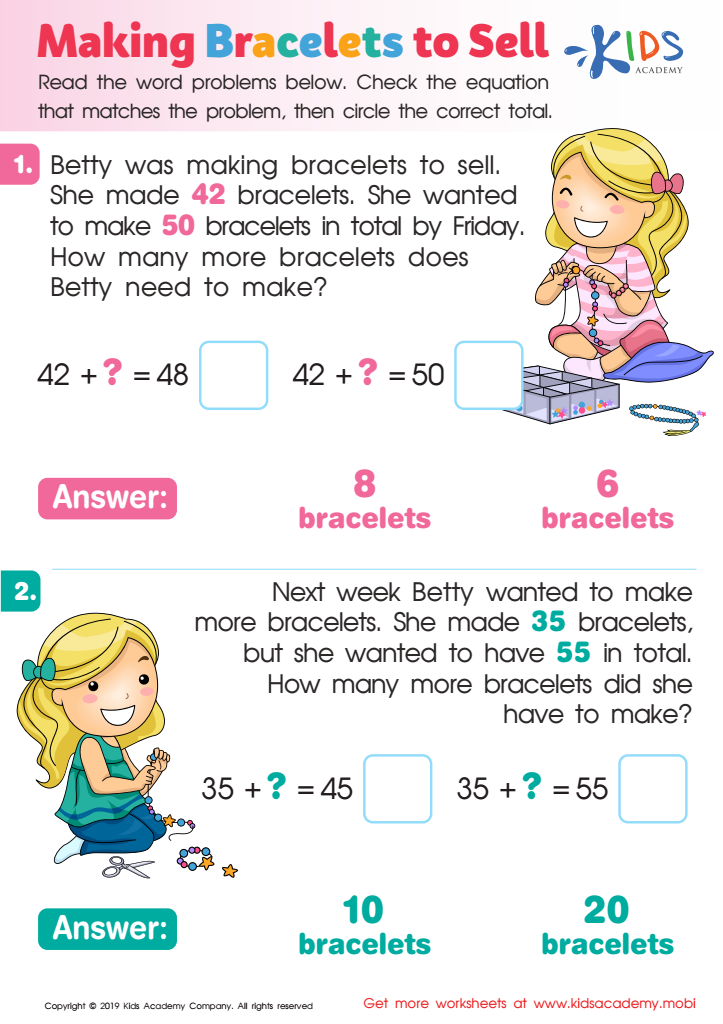
Making Bracelets to Sell Worksheet
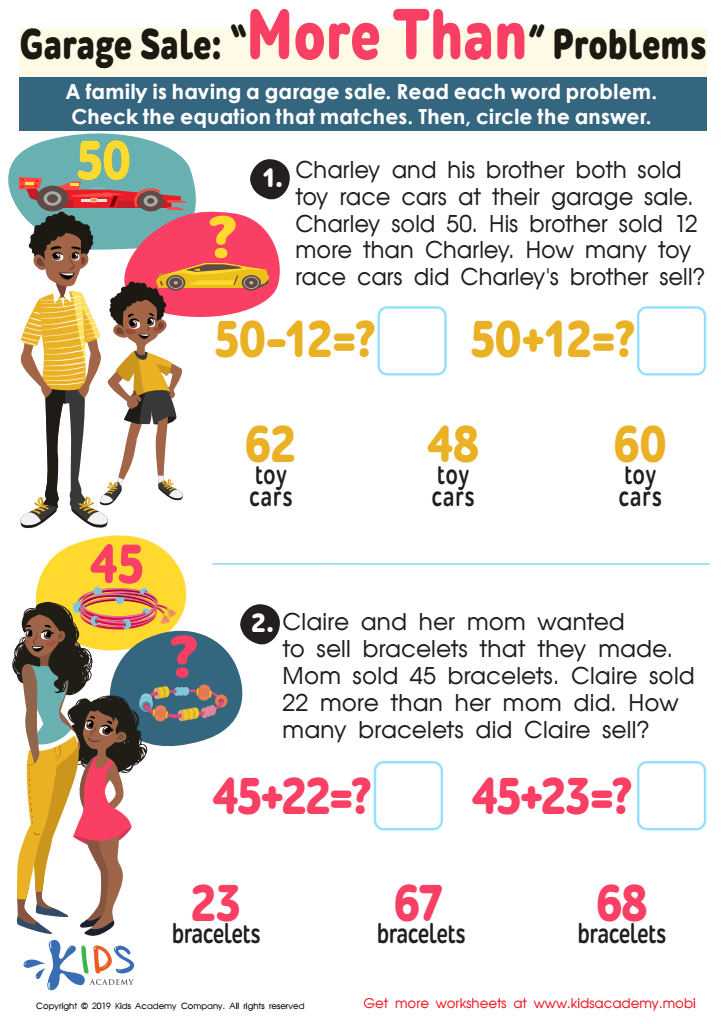
Garage Sale - More yhan Worksheet
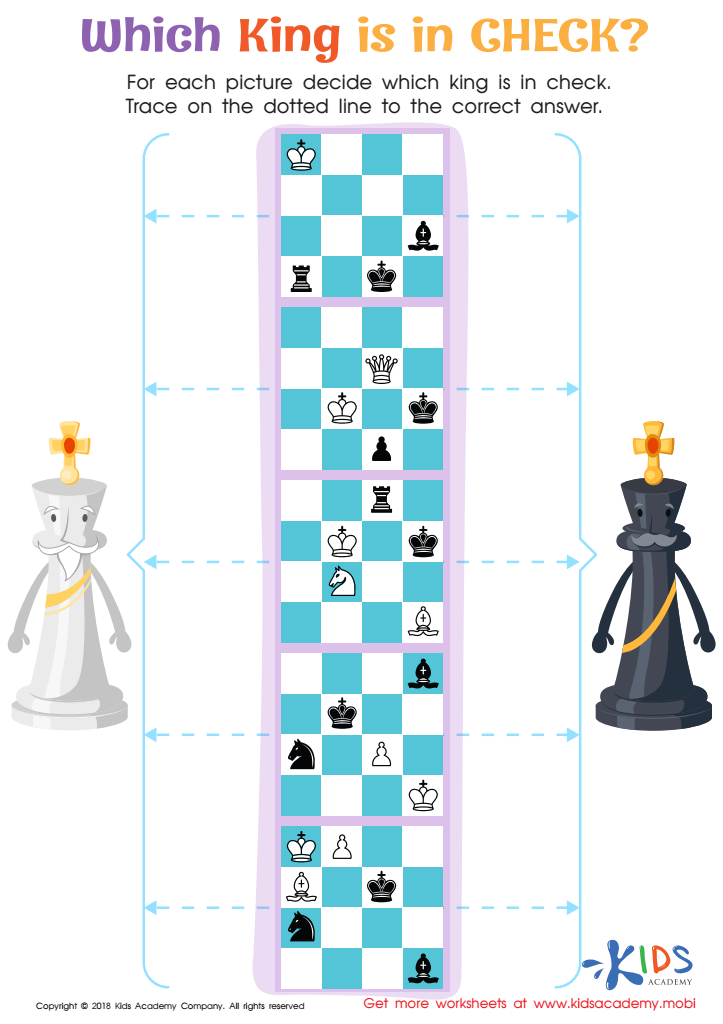
Which King is in Check? Worksheet
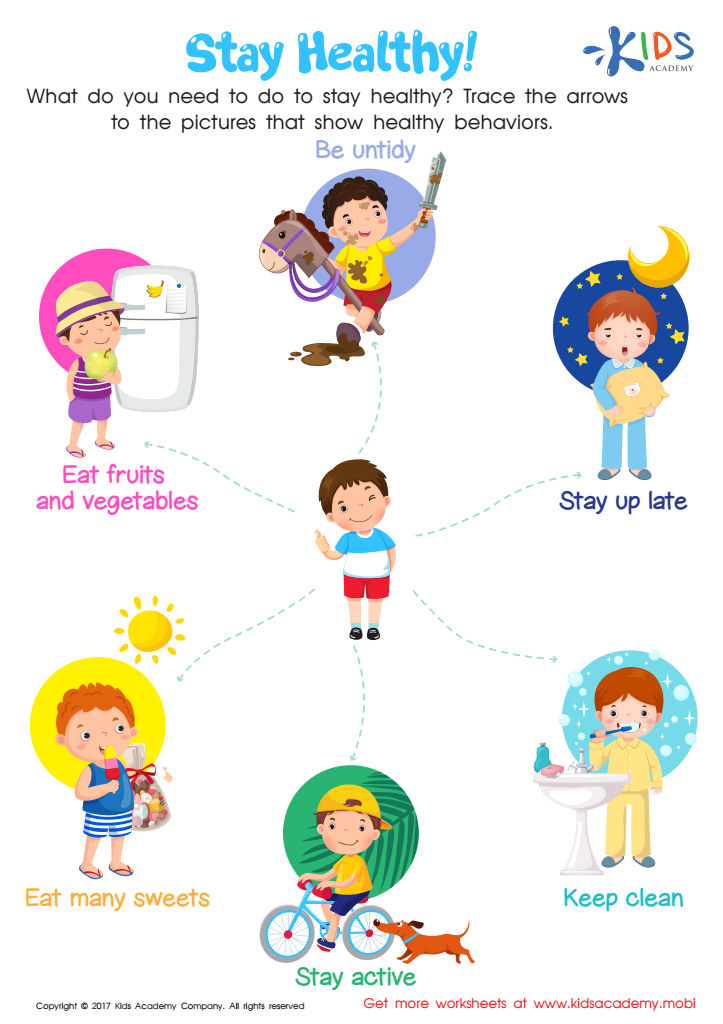
Healthy and Unhealthy Behaviors Worksheet
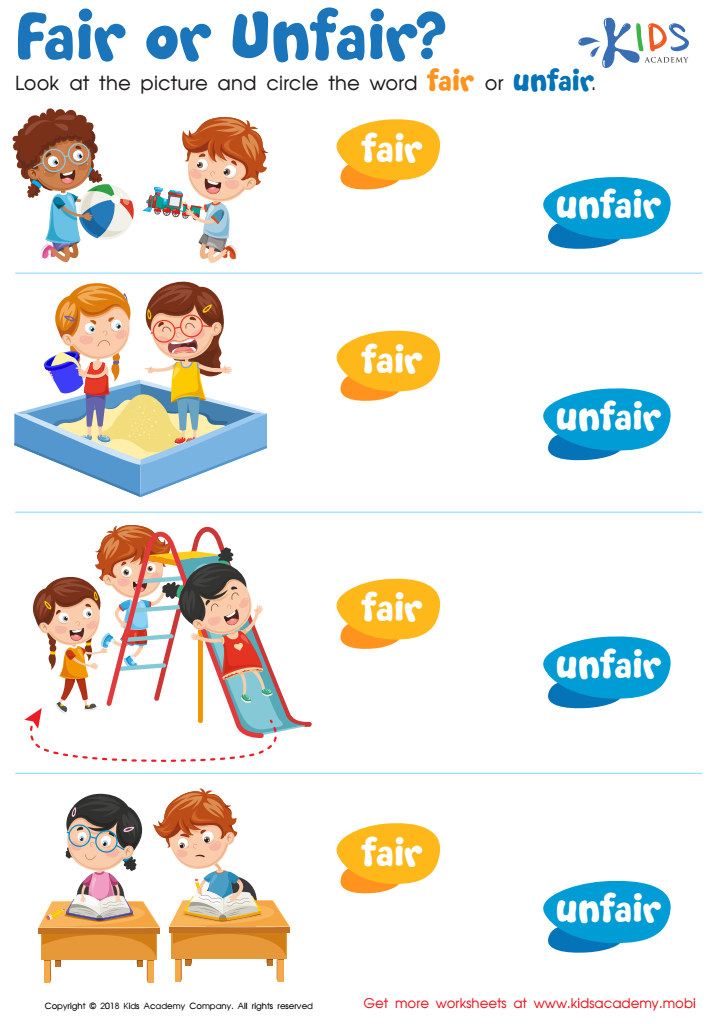
Fair or Unfair Worksheet
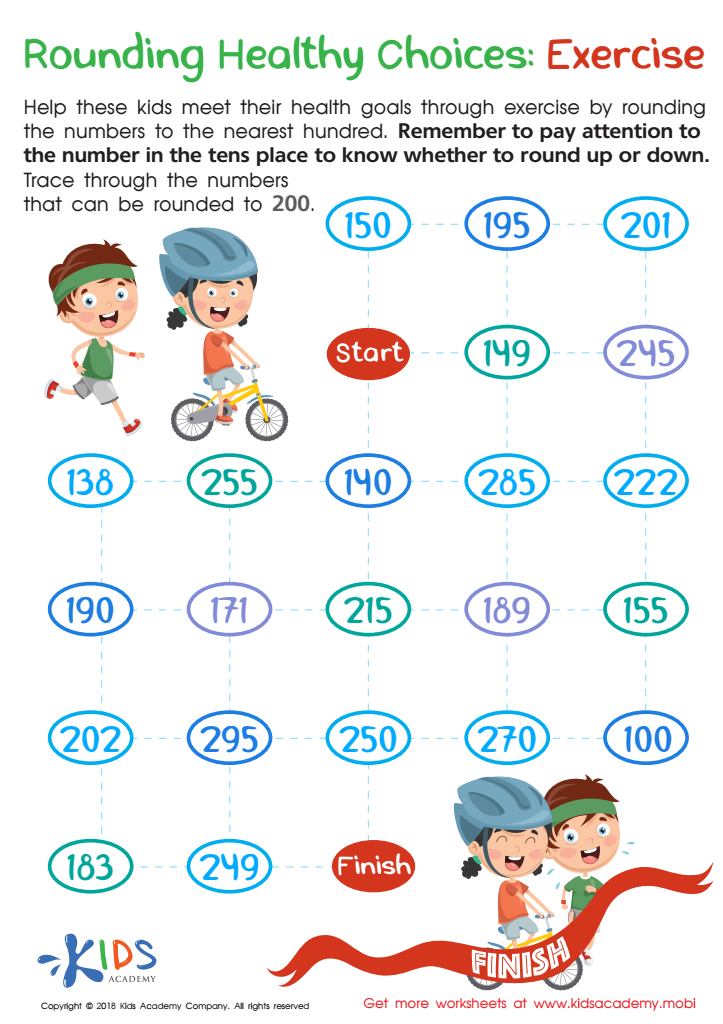
Rounding Healthy Choices Exercise Worksheet
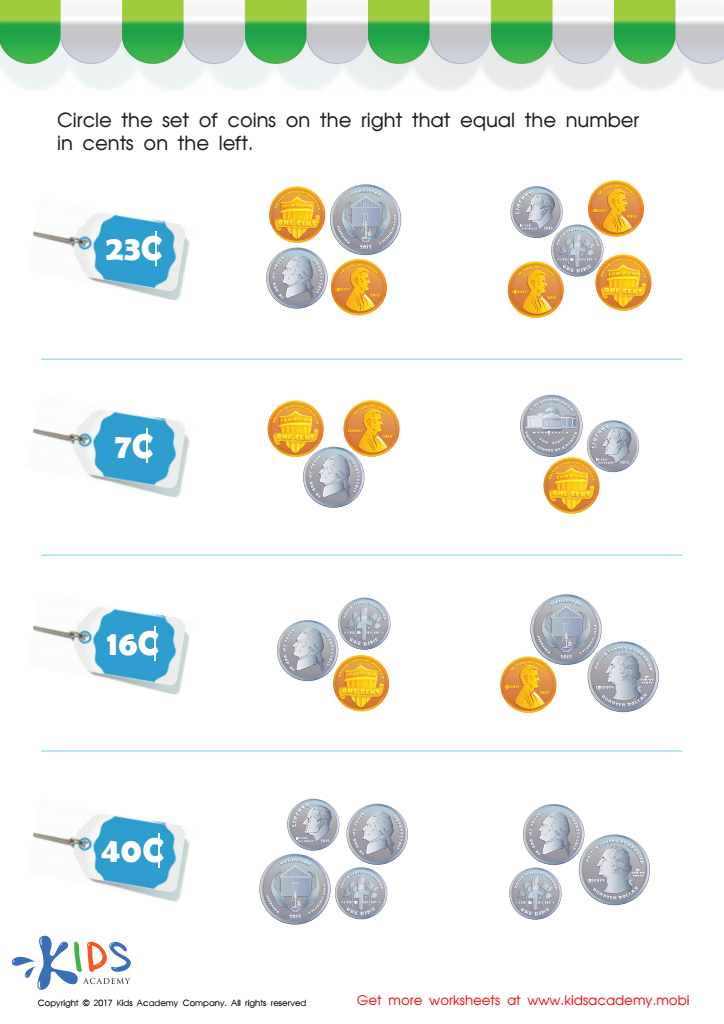
Picking the Coins You Need Money Worksheet

Towns Worksheet
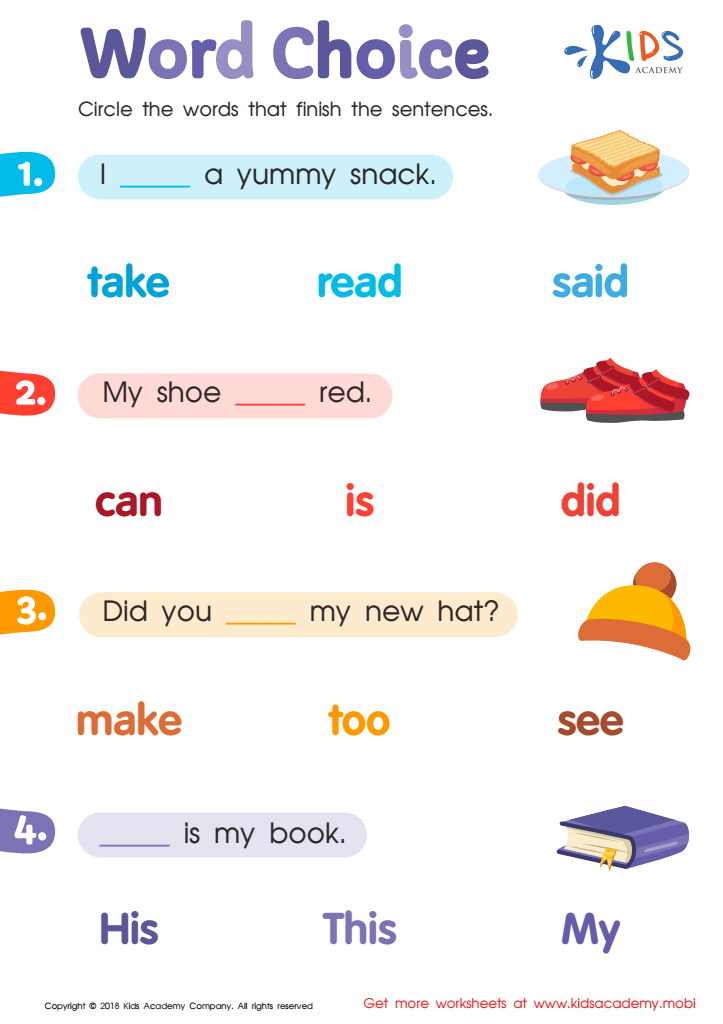
Word Choice Worksheet
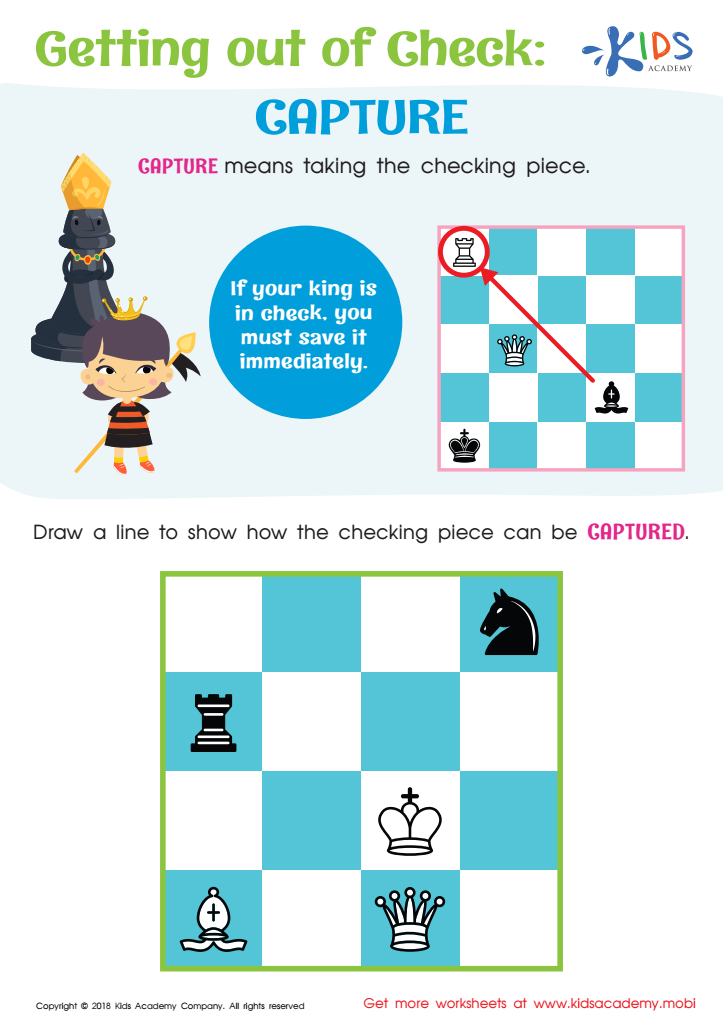
Getting out of Check: Capture






Decision-making skills are critical for young children aged 3-8, as they set the foundation for their future learning and personal development. During this stage, children begin to explore their environment and learn how to make choices, a key aspect of their growth. Parents and teachers play a crucial role in nurturing these skills through everyday experiences.
By fostering decision-making abilities, children learn to evaluate options, weigh consequences, and understand the concept of cause and effect. This not only helps them navigate simple choices, like selecting what to wear or which snack to eat, but also builds their confidence and independence. As they gain experience in making decisions, they develop a sense of responsibility and ownership over their actions.
Moreover, strong decision-making skills contribute to emotional intelligence, as children learn to consider their feelings and the impacts of their choices on others. Teaching strategies—such as role-playing, offering choices, and discussing outcomes—enhance critical thinking, problem-solving, and social interactions.
Ultimately, cultivating decision-making skills not only prepares children for more complex situations as they grow but also helps create a positive learning environment where they feel empowered and capable. Therefore, both parents and teachers should prioritize these skills in early childhood education.








