Developing spatial awareness Worksheets for Ages 3-8
3 filtered results
-
From - To
Enhance your child's spatial awareness with our engaging worksheets designed for ages 3-8! Our fun and interactive activities help young learners understand shapes, directions, and positions, essential skills for their cognitive development. These worksheets promote problem-solving, visualization, and coordination through enjoyable exercises, such as shape sorting, mazes, and mapping tasks. Perfect for both home learning and classroom use, our resources cater to different learning styles and are easy to incorporate into your daily routine. Foster creativity and critical thinking while building a strong foundation in spatial concepts with our thoughtfully designed worksheets. Start your child's learning journey today!
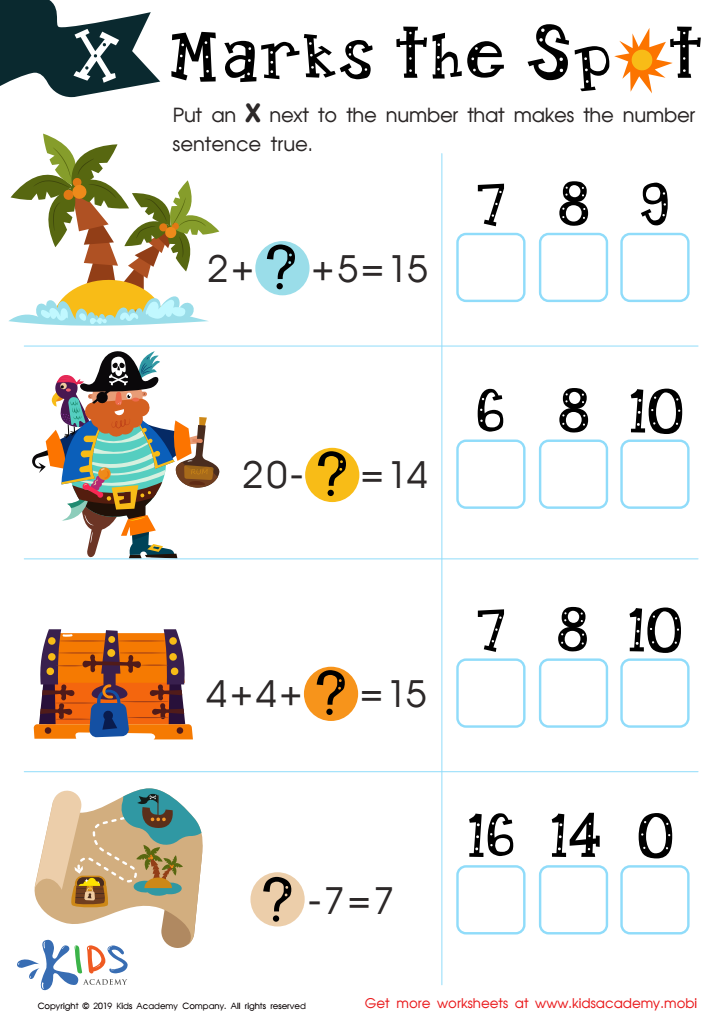
X Marks the Spot Worksheet
 Assign to My Students
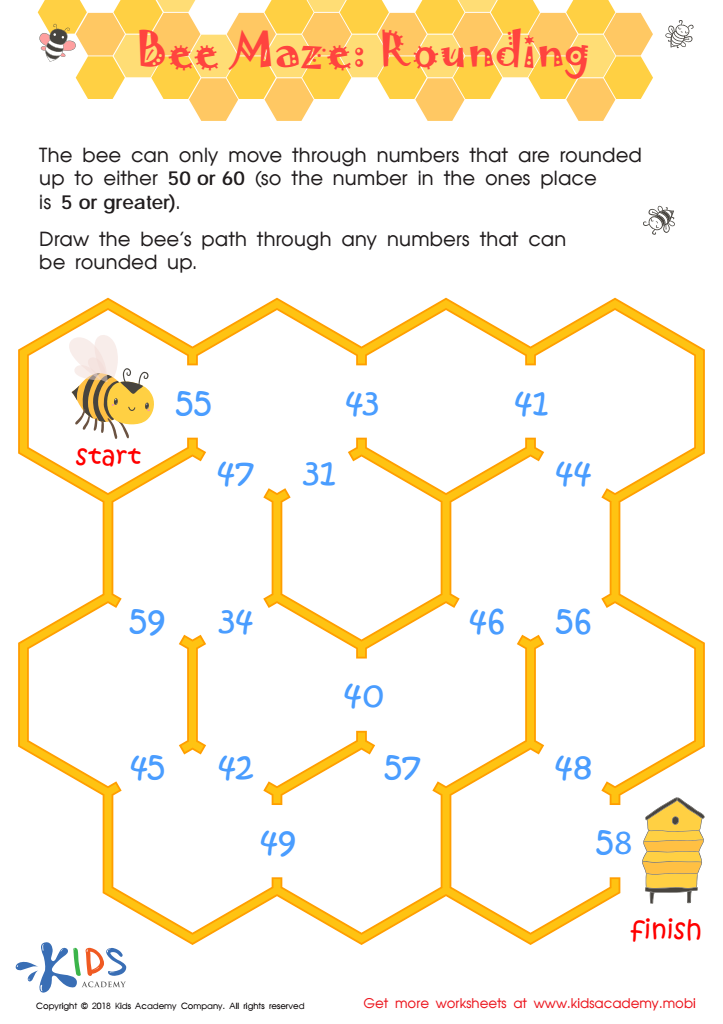
Bee Maze Rounding Worksheet
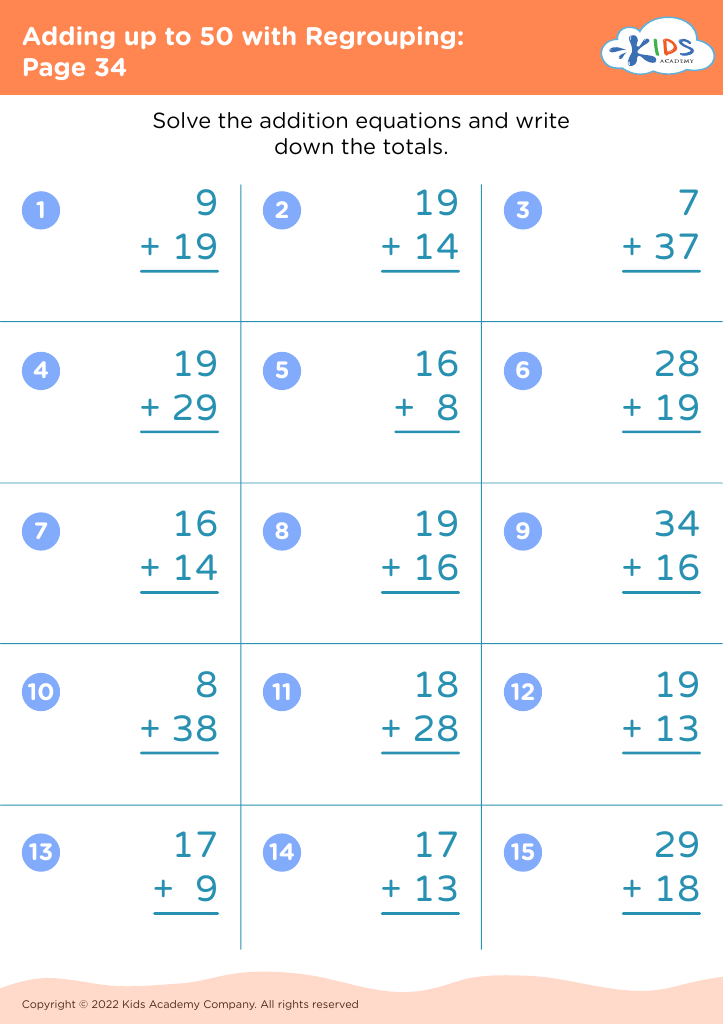


.jpg)





Developing spatial awareness in children ages 3-8 is crucial as it lays the foundation for numerous cognitive skills essential for everyday life and future academic success. Spatial awareness refers to the ability to understand and navigate the relationships between objects, shapes, and spaces. This skill enhances problem-solving abilities, critical thinking, and fine motor skills, all of which are important during early childhood development.
At this age, children are naturally curious and eager to explore their environments. Engaging in activities that promote spatial awareness, such as puzzles, block building, and outdoor play, helps them learn to visualize and manipulate objects. These experiences contribute to their understanding of concepts such as distances, sizes, and proportions, which are significant in mathematics and science.
Additionally, strong spatial skills are linked to later achievements in STEM (Science, Technology, Engineering, and Mathematics) fields. As such, parents and teachers should prioritize activities that foster spatial reasoning. By doing so, they not only support children's cognitive development but also equip them with essential skills that promote confidence, creativity, and independence. This holistic approach to early education ultimately prepares children for a successful transition to more complex learning experiences.








