
Drawing conclusions Worksheets for Ages 3-8
3 filtered results
Difficulty Level
Grade
Age
-
From - To
Subject
Activity
Standards
Discover a world of engaging Drawing Conclusions Worksheets designed for ages 3-8 at Kids Academy! Our printable worksheets improve critical thinking and comprehension, making learning fun. Bursting with vibrant illustrations and age-appropriate exercises, these worksheets guide young learners to deduce information from visual and textual clues. Perfect for early learners, these resources foster essential skills for academic success. From playful settings to relatable scenarios, each activity challenges children to think deeper and sharpen their inference abilities. Ignite curiosity and develop understanding with our expertly crafted worksheets – ideal for home or classroom use. Start enhancing young minds today!
Favorites
With answer key
Interactive
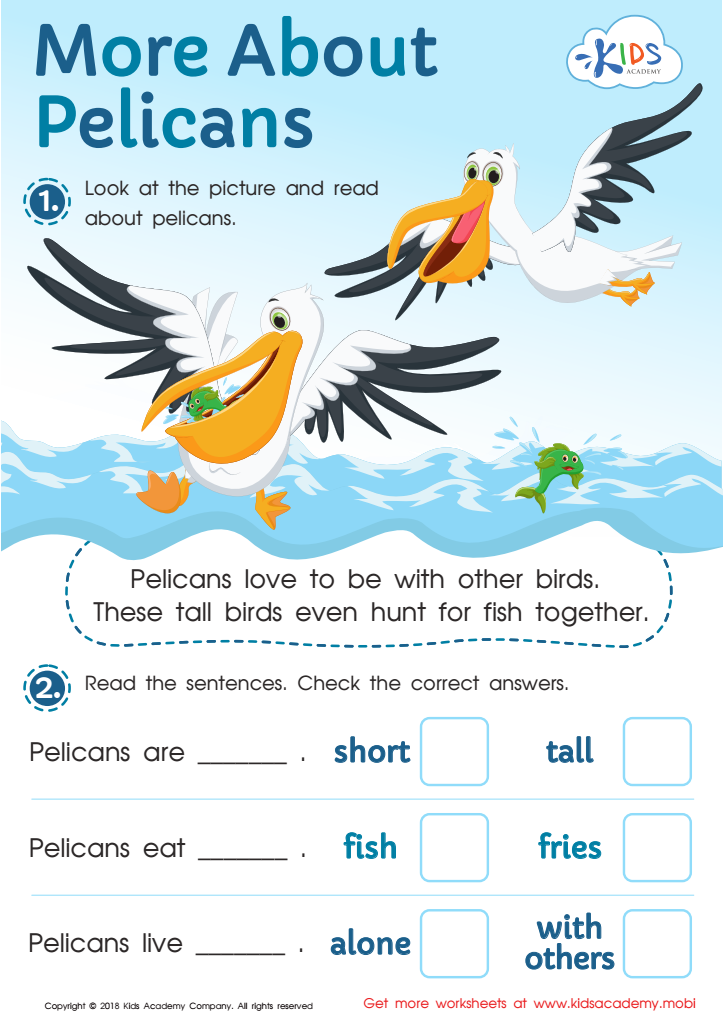
More About Pelicans Worksheet
Train your reader to look for clues in words with this fun worksheet about pelicans! As they read each sentence, they'll learn more about these majestic birds. Once they finish, answer the questions and explore even more!
 Assign to My Students
More About Pelicans Worksheet
Worksheet
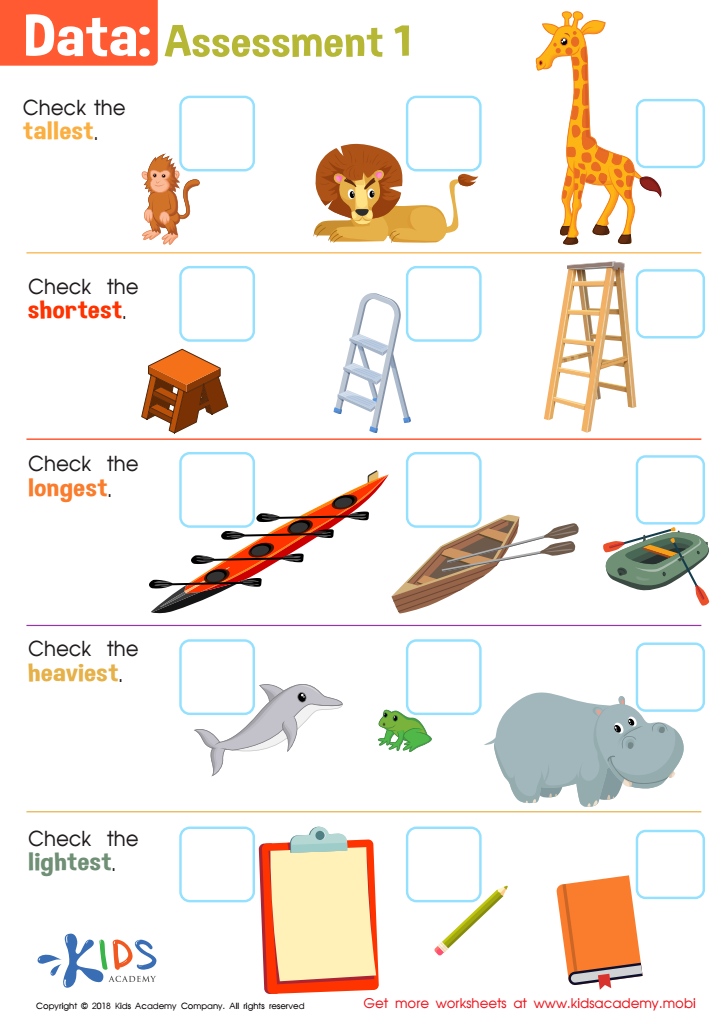
Data: Assessment 1 Worksheet
This free worksheet helps you assess where your young students are with measurement superlatives like tallest, shortest, heaviest, longest and lightest. It features cute, colorful pics of familiar objects so your kids have a reference, and helps you identify areas to work on.
Data: Assessment 1 Worksheet
Worksheet
Join Kids Academy for Free
Who is primarily going to use this learning content?







Drawing conclusions is a crucial skill for young children aged 3-8, as it underpins a range of essential cognitive and social abilities. For parents and teachers, fostering this skill can significantly enhance a child's intellectual development and problem-solving capabilities.
Engaging in activities that require drawing conclusions helps children learn to observe and interpret information, which is fundamental for reading comprehension. When children make connections between what they see and their prior knowledge, they become more adept at understanding stories, instructions, and their environment.
Moreover, this ability encourages critical thinking. By evaluating details and predicting outcomes, children learn to think independently and make informed decisions. These are vital skills not only academically but also in everyday social interactions and practical tasks.
Socially, drawing conclusions also plays a role in empathy. Understanding cause and effect relationships, such as how actions affect others, helps children develop compassion and cooperative behaviors.
Additionally, fostering this skill early can boost confidence. As children practice and improve their ability to draw conclusions, they feel more competent in their interactions and learning experiences.
In summary, by emphasizing the practice of drawing conclusions, parents and teachers equip children with foundational skills that support their academic success, critical thinking, social development, and self-confidence, laying a strong groundwork for future learning and interaction.








