
Drawing skills Worksheets for Ages 3-8
10 filtered results
Difficulty Level
Grade
Age
-
From - To
Subject
Activity
Standards
Unleash your child's creativity with our engaging Drawing Skills Worksheets designed for ages 3-8 at Kids Academy. These fun and interactive worksheets are a perfect blend of learning and play, aimed at improving fine motor skills, hand-eye coordination, and artistic expression. Suitable for various skill levels, our worksheets include activities like tracing, simple shapes to more intricate designs, all tailored to inspire your little artist. With vibrant illustrations and clear instructions, each worksheet is crafted to keep young learners captivated while they develop essential drawing skills. Visit our website today to download and watch your child’s imagination soar!
Favorites
With answer key
Interactive
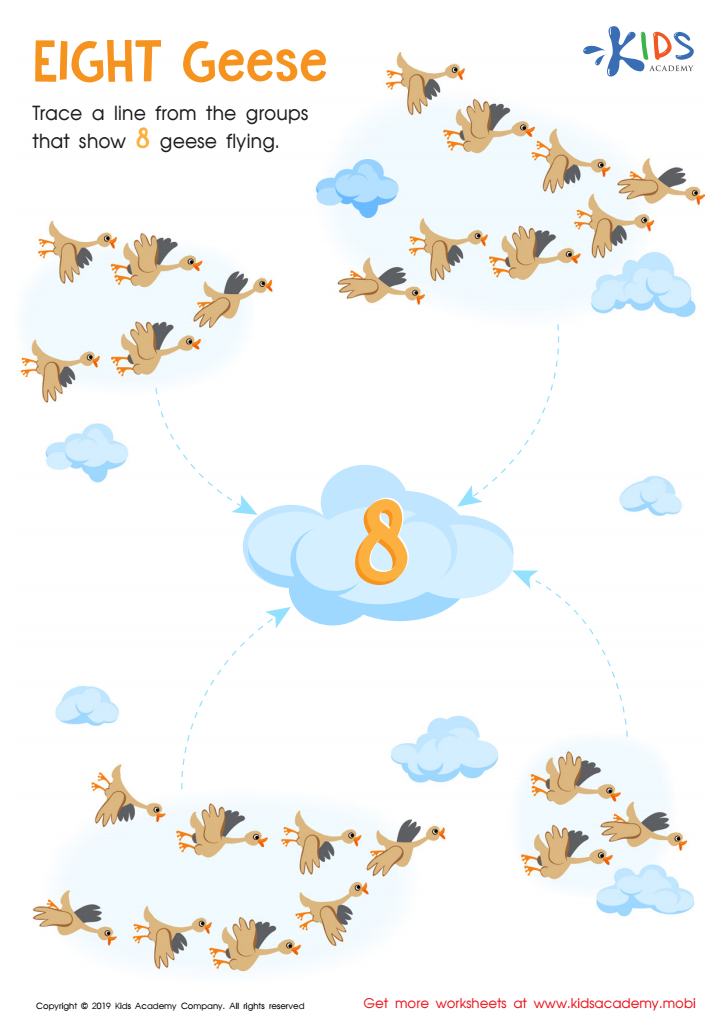
Eight Geese Worksheet
Assess your child's counting skills with this worksheet. Help them count the geese in each group, then trace a line from the groups showing 8. Give your kids a boost by providing lots of exercises and learning aids to help with counting. They likely count objects they come across, like spoons and stones. Use this opportunity to give them practice and help them learn.
 Assign to My Students
Eight Geese Worksheet
Worksheet
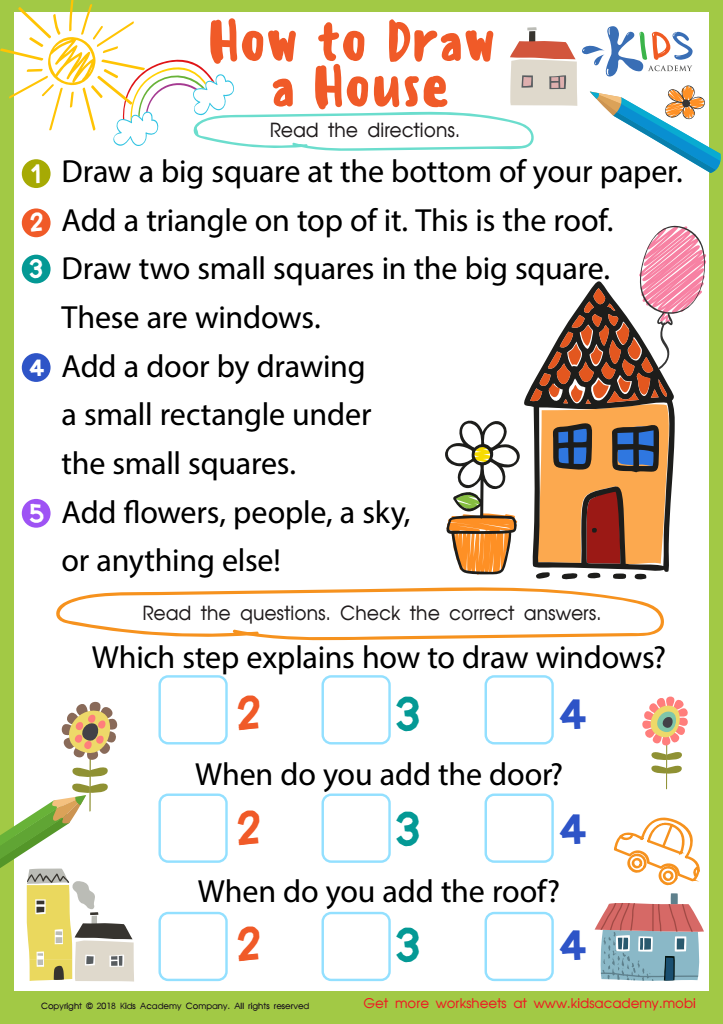
How to Draw House Worksheet
Does your child love to draw? Why not try teaching them some easy tricks? Get them to follow directions on this worksheet and learn how to draw a house. Read the questions at the end and ensure they get the answers right. Your kids will surely love it!
How to Draw House Worksheet
Worksheet
Join Kids Academy for Free
Who is primarily going to use this learning content?








Parents and teachers should care about the development of drawing skills in children ages 3-8 because these skills are fundamental to a child's overall development. Drawing provides a means for children to express their emotions and ideas in a tangible form, fostering emotional intelligence and communication skills. During these early years, fine motor skills are still developing, and the act of drawing helps to refine hand-eye coordination and finger dexterity, which are essential for other tasks such as writing.
Cognitively, drawing encourages imaginative thinking and problem-solving. As children decide what to draw and how to execute their vision, they engage in decision-making and critical thinking. This artistic process helps the brain make connections and develops neural pathways crucial for future academic learning. Socially, drawing in groups or as part of a classroom activity can promote collaboration and sharing, helping young children learn to work with others and understand different perspectives.
Lastly, encouraging drawing provides an emotional outlet for children. By translating their thoughts and experiences into drawings, they learn to articulate their feelings and can better manage stress and frustrations. Overall, drawing is a comprehensive developmental tool that supports physical, cognitive, emotional, and social growth in young children.








