Fine motor skills development Worksheets for Ages 3-8 - Page 2
27 filtered results
-
From - To
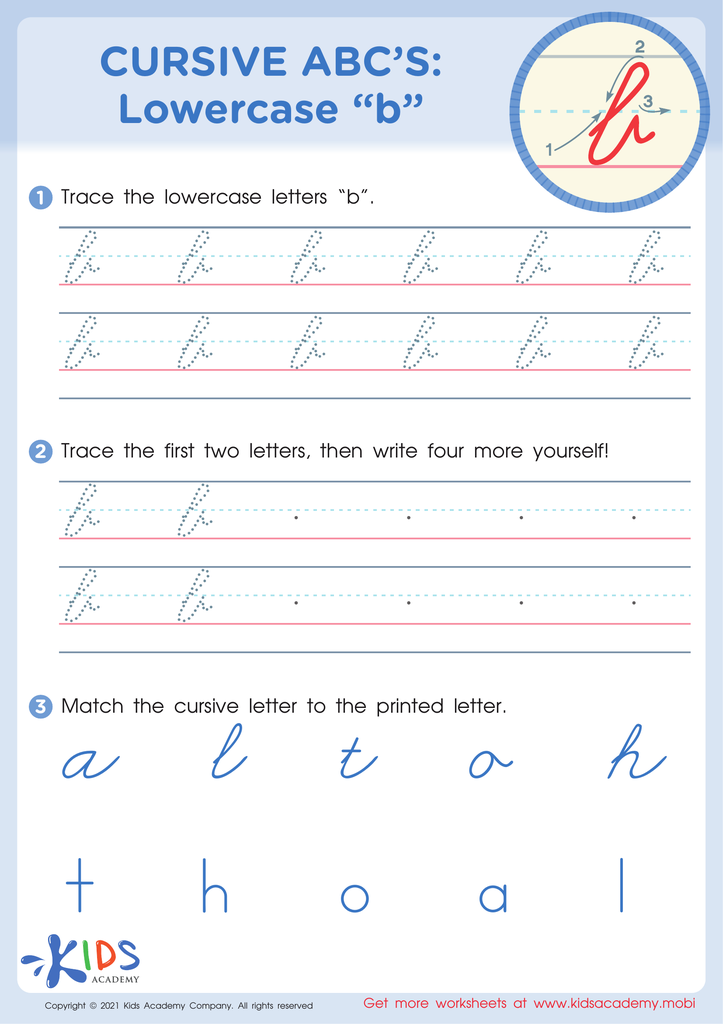
Cursive ABCs: Lowercase b
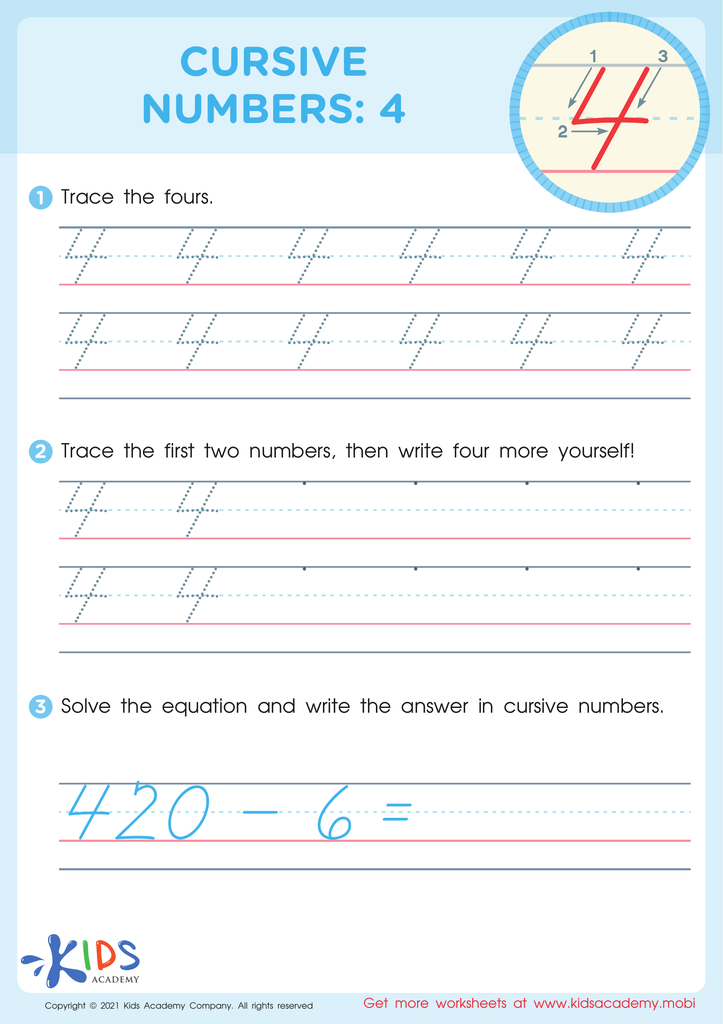
Cursive Numbers: 4 Worksheet








Fine motor skills development is crucial for children ages 3-8 as it lays the foundation for a range of essential life skills. These skills involve the coordination of small muscles, particularly in the hands and fingers, which are vital for performing everyday tasks such as writing, buttoning clothes, and using utensils.
For parents and teachers, fostering strong fine motor skills in young children promotes confidence and independence. When children can manipulate objects effectively, they experience a sense of accomplishment, encouraging them to take on new challenges. Moreover, fine motor skills are closely linked to academic success; for example, writing and drawing require dexterity and control.
In addition, the development of fine motor skills enhances cognitive abilities, as children learn to focus, follow steps, and solve problems while engaging in activities like puzzles or crafting. These skills also provide a backdrop for social interaction, as children often work collaboratively during activities that involve sharing tools and resources.
Ultimately, by prioritizing fine motor skill development, parents and teachers equip children with the tools they need to thrive, both in their current educational environment and in their future endeavors. This focus can significantly impact their overall growth and effective functioning in various aspects of life.








