Fractions understanding Worksheets for Ages 3-8
3 filtered results
-
From - To
Discover our engaging Fractions Understanding Worksheets designed for children ages 3-8! These interactive resources help young learners grasp the concept of fractions through fun activities and visual aids. Each worksheet focuses on essential skills such as identifying, comparing, and interpreting fractions in a playful manner. With vibrant illustrations and age-appropriate challenges, children will develop a strong foundation in fractions while enjoying the learning process. Perfect for parents and educators, these worksheets provide an effective way to enhance math skills from an early age. Instill a love for learning and watch as your child builds confidence in their mathematical abilities!
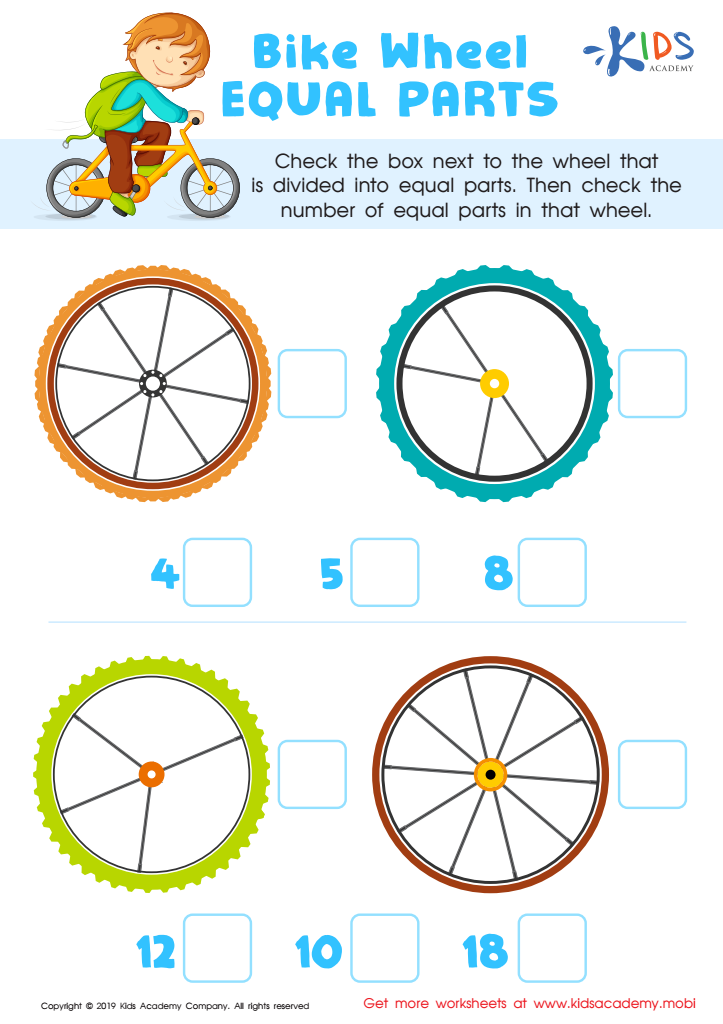
Bike Wheel Equal Parts Worksheet
 Assign to My Students
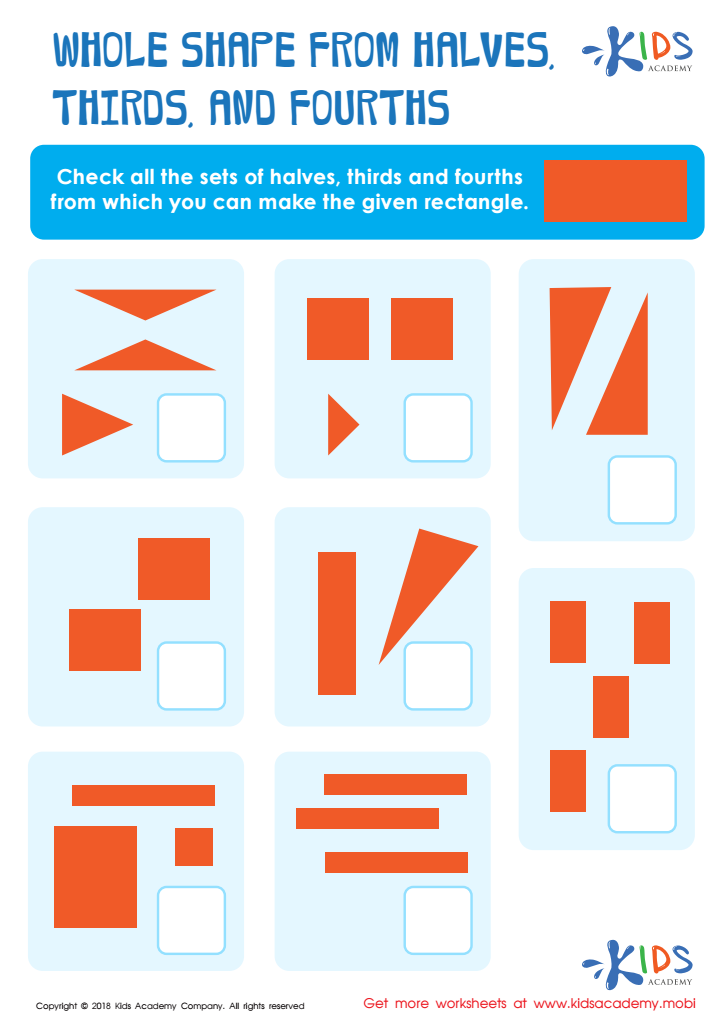
Whole Shape from Halves, Thirds and Fourths Worksheet






Understanding fractions is a fundamental skill that lays the groundwork for more advanced mathematical concepts. For children aged 3-8, grasping the basics of fractions contributes significantly to their overall cognitive development. At this age, children are naturally curious and open to learning, making it an ideal time to introduce the concept of parts and wholes.
Fractions help develop critical thinking and problem-solving skills. When children learn to divide items into equal parts, they begin to understand the significance of fair sharing, which enhances their social interactions. This foundational knowledge promotes not only mathematical skills but also prepares them for real-world applications, such as cooking or dividing resources.
Furthermore, proficiency in fractions will support future topics such as multiplication, division, and algebra, preventing math anxiety later on. Parents and teachers play a crucial role in fostering this understanding through fun and engaging activities like cooking, arts and crafts, or games. Early exposure to fractions helps children recognize their relation to everyday life, making math relatable and enjoyable. In turn, this encourages a positive attitude towards learning and builds a strong mathematical foundation they can build upon as they grow.








