
Grammar comprehension Worksheets for Ages 3-8
3 filtered results
Difficulty Level
Grade
Age
-
From - To
Subject
Activity
Standards
Discover our wide range of grammar comprehension worksheets designed specifically for children aged 3-8. These engaging worksheets foster essential grammar skills, from the basics of sentence structure to advanced punctuation and parts of speech. Ideal for both classroom use and home learning, our printable materials make learning grammar fun and accessible. Each worksheet is crafted to encourage critical thinking and language development, ensuring children build a strong foundation in English. Start your child on the path to grammar mastery with our thoughtfully curated activities that grow with their progress. Boost your child's confidence in grammar today!
Favorites
With answer key
Interactive
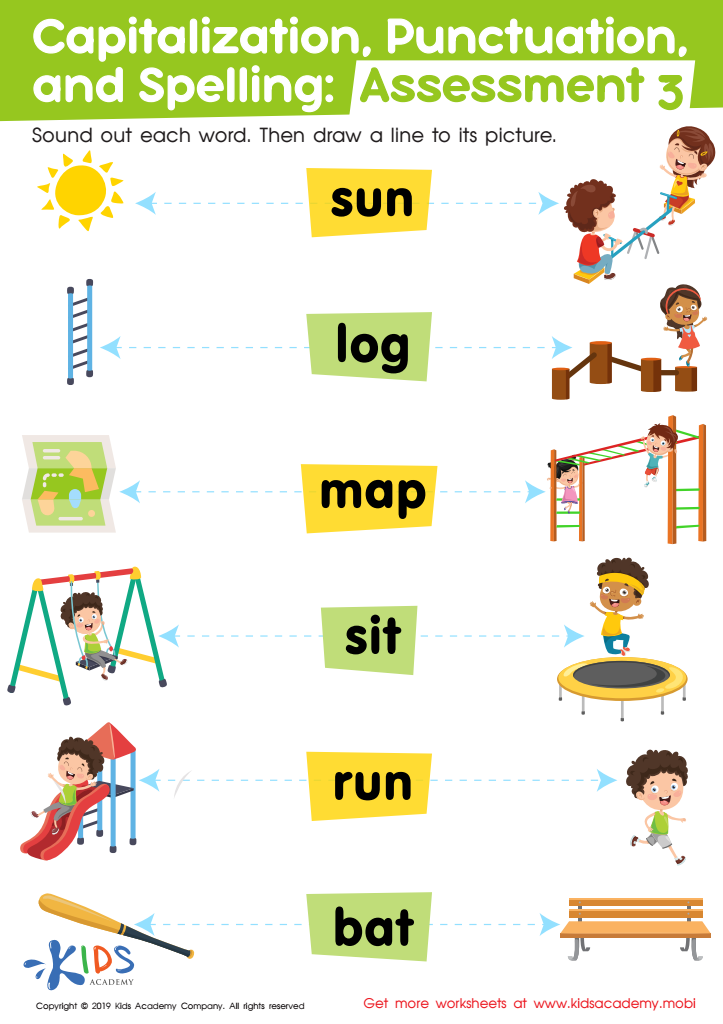
Capitalization. Punctuation. Spelling. Assessment 3 Worksheet
Before starting this worksheet, have your kids spell some simple words. Correct if wrong and show the right spellings. Then, ask them to link the pictures to the words you read out. Spelling is key for a good writer, and kids need to know how to spell to read texts easily.
 Assign to My Students
Capitalization. Punctuation. Spelling. Assessment 3 Worksheet
Worksheet
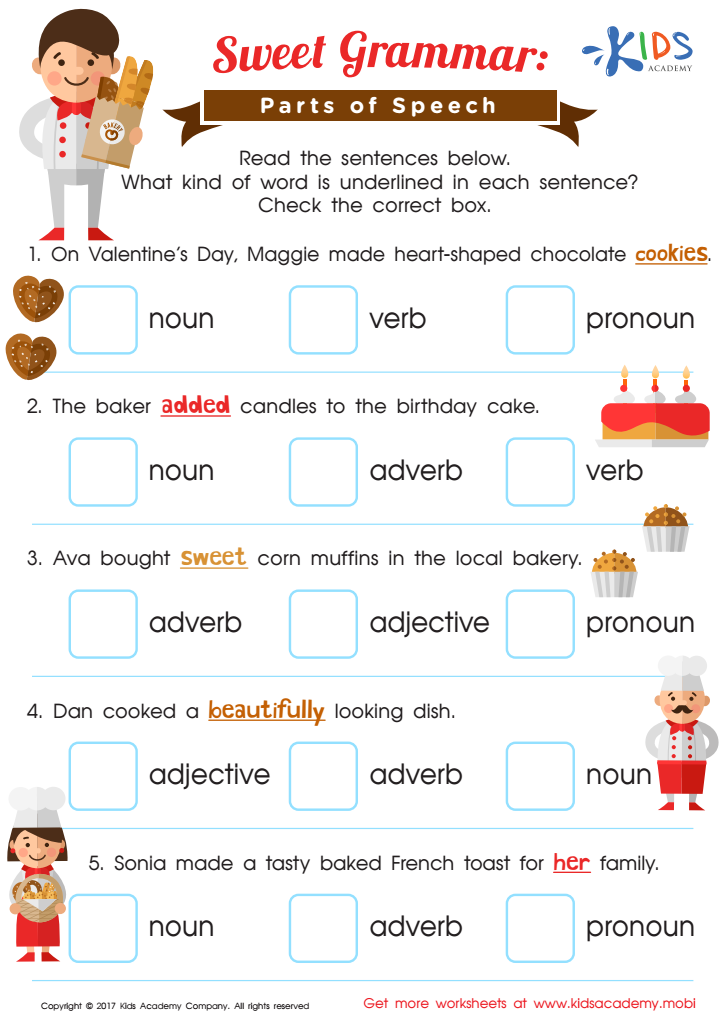
Parts of Speech Worksheet
It's hard to tell the difference between parts of speech! This parts of speech worksheet for 3rd graders makes it easier! With a fun theme, it encourages kids to master nouns, pronouns, adjectives and adverbs.
Parts of Speech Worksheet
Worksheet
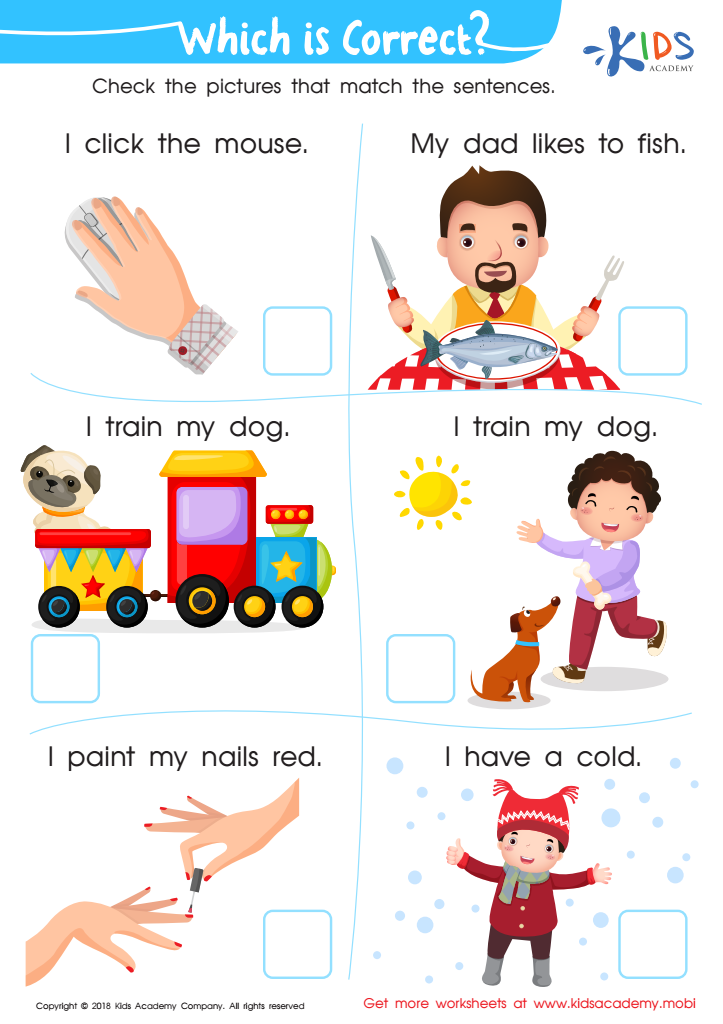
Which Is Correct? Worksheet
Go over the exercise with your students. Ask them to read the sentences and explain what they mean. Check the pictures that correspond to the sentences. For example, what does "My dad likes to fish" mean? Test their understanding with the worksheet.
Which Is Correct? Worksheet
Worksheet
Join Kids Academy for Free
Who is primarily going to use this learning content?







Grammar comprehension at ages 3-8 lays the foundation for effective communication and academic success. Developing solid grammar skills early on ensures children can express their thoughts clearly and understand others. When parents and teachers emphasize grammar, young learners become better communicators, which boosts their confidence in speaking and writing. Strong grammar also supports reading comprehension, as children can easily parse sentences, recognize relationships between words, and grasp the meaning of the text.
Moreover, early mastery of grammar contributes to overall cognitive development. As children learn to construct sentences and understand grammar rules, they also enhance their critical thinking and problem-solving abilities. This foundational knowledge gives them an advantage in all academic areas and helps them acquire new languages more easily in the future.
Parental involvement in this learning phase adds significant value. When parents read with their children, model proper grammar, and engage in conversations, they reinforce what is taught in the classroom and create a rich language environment. Teachers, on the other hand, can use fun and interactive activities to teach grammar, making learning an enjoyable experience.
In summary, fostering grammar comprehension from ages 3-8 equips children with essential communication skills, strengthens cognitive abilities, and lays the groundwork for future academic and personal success.








