
Improve spelling skills Worksheets for Ages 3-8
3 filtered results
Difficulty Level
Grade
Age
-
From - To
Subject
Activity
Standards
Discover essential worksheets designed to improve spelling skills in children aged 3-8. At Kids Academy, our exclusive collection focuses on enhancing vocabulary, letter recognition, and foundational spelling abilities through engaging and interactive activities. Tailored to suit various learning styles, these worksheets blend fun with education to keep young minds captivated and motivated. Ensure your child’s spelling proficiency with exercises that promote gradual progress and build confidence. Perfect for at-home practice or as a classroom supplement, our resources make spelling enjoyable and rewarding. Empower your young learners with the tools they need for spelling success!
Favorites
With answer key
Interactive
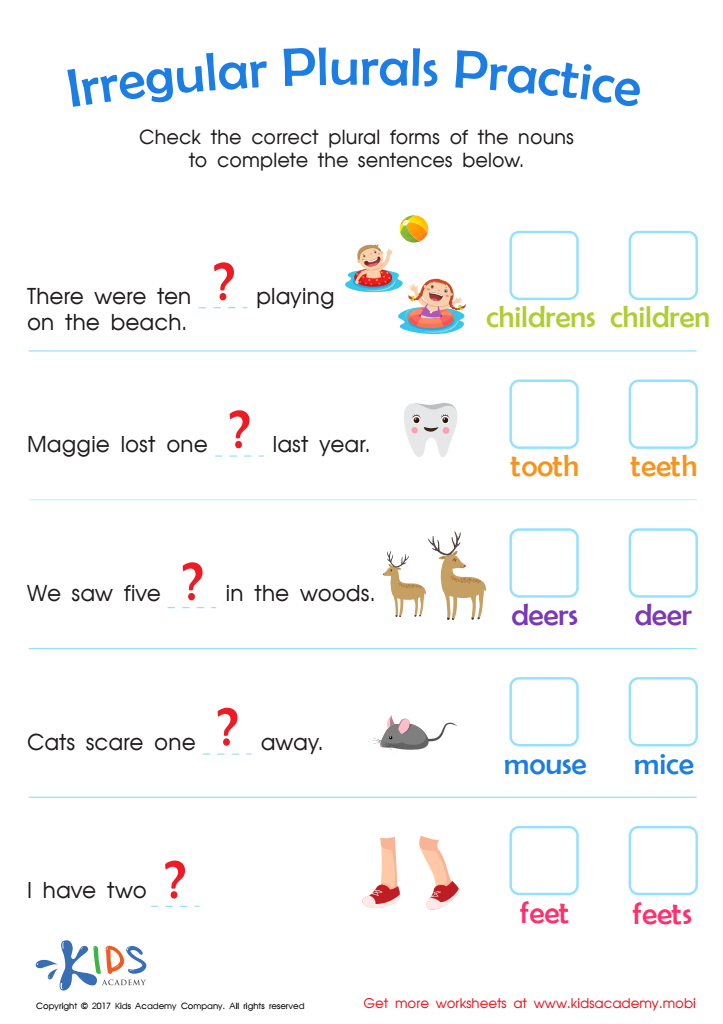
Irregular Plural Nouns Worksheet
This worksheet for 2nd graders offers an engaging activity for practicing irregular nouns by choosing the right option. It covers the most common irregular plurals, making it a quick, easy, and effective way to learn.
Irregular Plural Nouns Worksheet
Worksheet
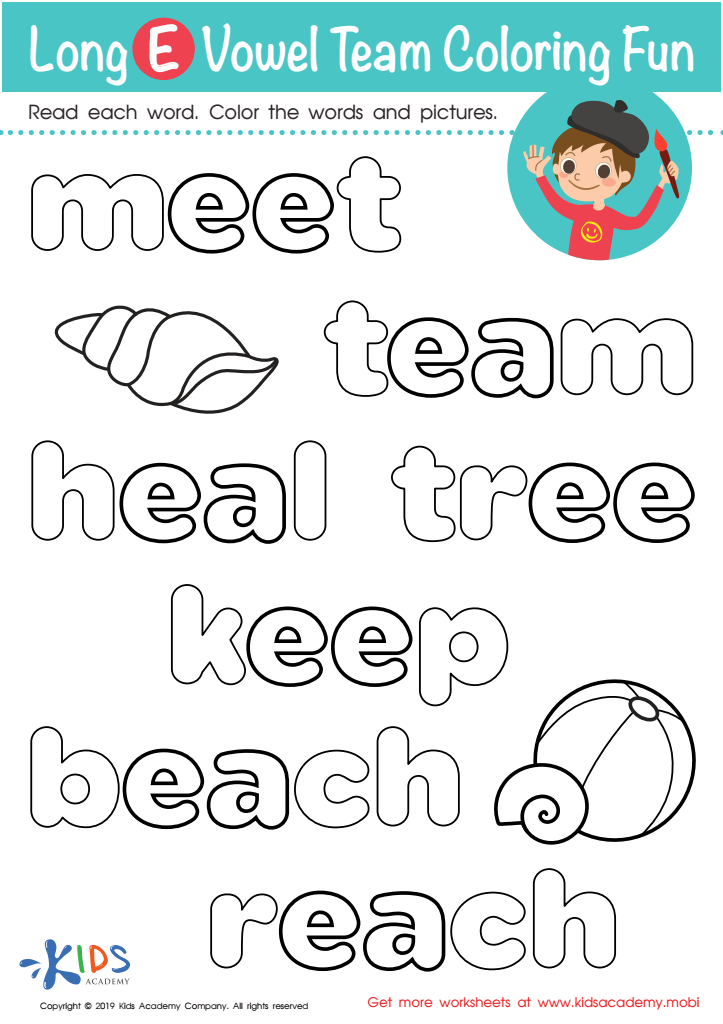
Long E Vowel Team Coloring Worksheet
Divide your students into teams and have them read words with long E sounds, such as "meet" and "team." Let them recognize that the sound can be created with either "ee" or "ea" letter pairings. Then, have the teams color words and pictures with the appropriate letters. This will make your phonics lesson fun and effective.
Download (PDF)
 Assign to My Students
Assign to My Students
Long E Vowel Team Coloring Worksheet
Worksheet
Join Kids Academy for Free
Who is primarily going to use this learning content?






Teaching spelling skills to children aged 3-8 is crucial as it lays the foundation for their future literacy and academic success. At this formative age, their brains are exceptionally receptive to learning, absorbing information that will support reading and writing proficiencies. Spelling serves as a fundamental building block for these key skills, helping children decode words and understand language patterns.
Accurate spelling enhances vocabulary development. When children can spell words correctly, they can better grasp meanings and usage, which in turn improves their communication abilities. Furthermore, strong spelling skills are directly linked to reading comprehension. A child who can spell accurately is typically more capable of deciphering new words and grasping text effectively.
For teachers, emphasizing spelling offers a gateway to teaching phonics, word recognition, and language rules, which enrich the overall literacy curriculum. For parents, supporting spelling education at home creates a reinforcing loop where children practice and consolidate what they learn at school, making the process more holistic and consistent.
Improved self-esteem is another benefit—children confident in their spelling are more likely to participate in class, engage in writing activities, and take on new reading challenges. Overall, investing in spelling skills lays a solid educational foundation, boosting academic and personal growth for young learners.








