
Improving categorization skills Worksheets for Ages 3-8
4 filtered results
Difficulty Level
Grade
Age
-
From - To
Subject
Activity
Standards
Enhance your child's cognitive development with our "Improving Categorization Skills" worksheets designed for ages 3-8. These engaging and colorful printables are crafted to help young learners master the ability to categorize and sort items based on different attributes, such as color, shape, size, and more. Through fun activities and practice, children develop critical thinking and problem-solving abilities essential for academic success. Ideal for parents and educators, our worksheets offer a structured approach to teaching categorization, making learning both enjoyable and effective. Visit Kids Academy to discover a wide range of worksheets that build a strong foundation in early learning skills.
Favorites
With answer key
Interactive
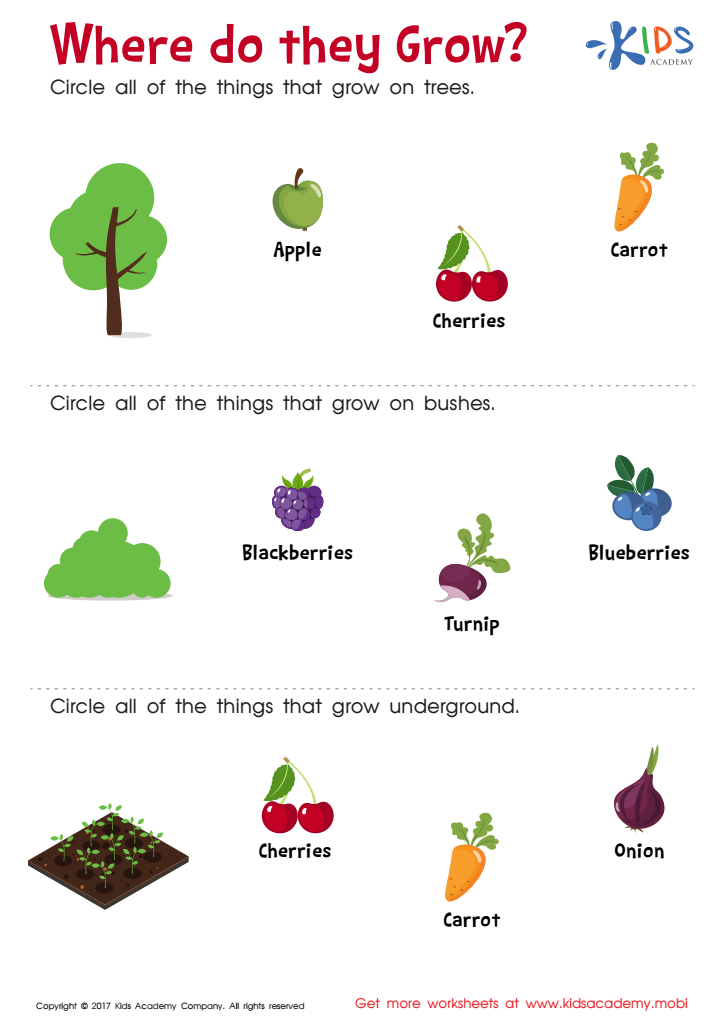
Where Do They Grow Worksheet
With this worksheet, your child can learn about apples, cherries, and blueberries and gain important science skills.
 Assign to My Students
Where Do They Grow Worksheet
Worksheet
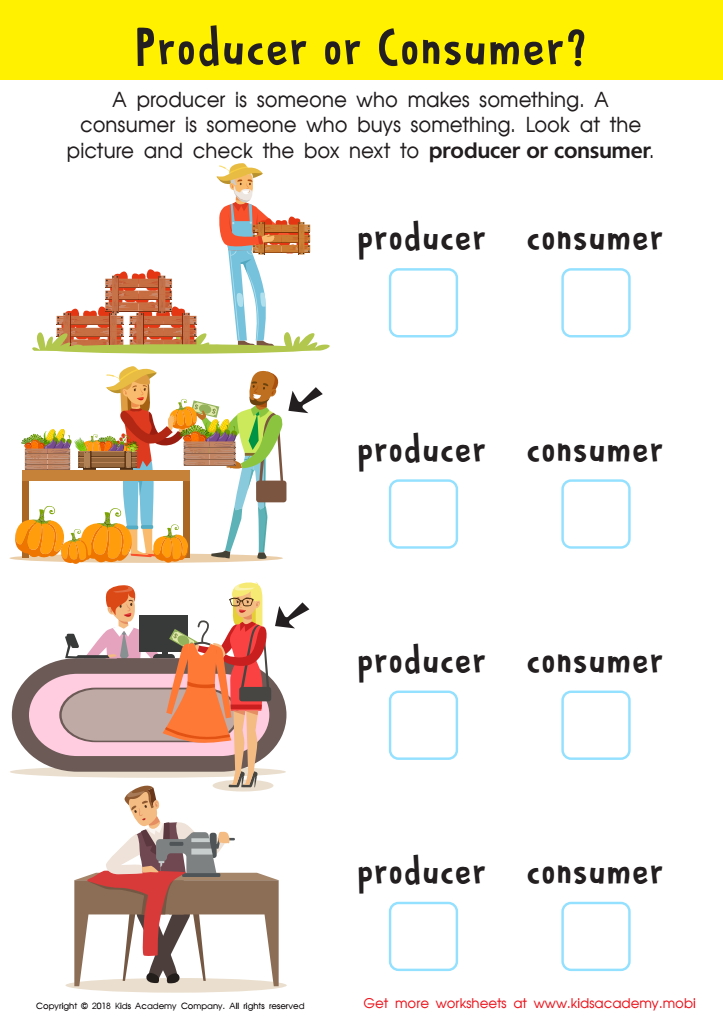
Producer or Consumer? Worksheet
Test your child's knowledge by asking who's a producer and consumer. Explain producer makes things and consumer buys them. Use a snack example. Look at the picture with your kids and help them check the box next to producer or consumer.
Producer or Consumer? Worksheet
Worksheet
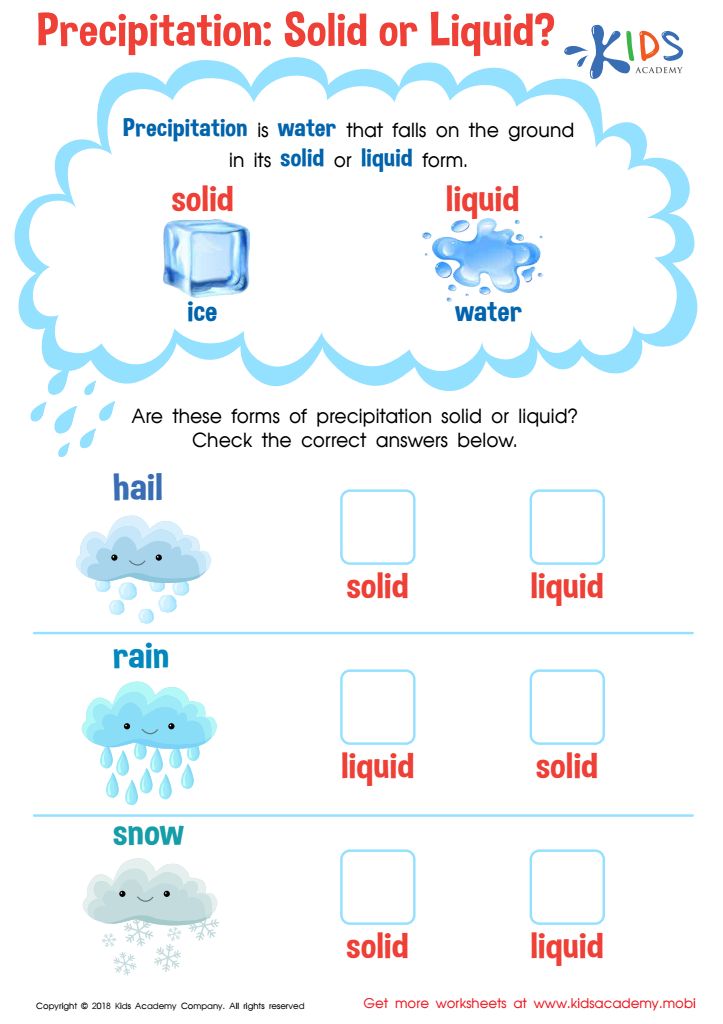
Precipitation: Solid or Liquid? Worksheet
Teach students that precipitation is water from the clouds/sky in either solid or liquid form, e.g. rain is liquid and snow is frozen. Use the worksheet with them to check if the forms of precipitation pictured are solid or liquid.
Precipitation: Solid or Liquid? Worksheet
Worksheet
Learning Skills
Join Kids Academy for Free
Who is primarily going to use this learning content?



%20(1).jpg)
.jpg)
Improving categorization skills in children aged 3-8 is pivotal for their cognitive development and future learning success. During these formative years, categorization – the ability to group objects, ideas, or information based on common features – enhances their understanding of the world. This skill nurtures critical thinking and problem-solving capabilities by allowing children to identify patterns and make connections between different pieces of information. For instance, recognizing that cats and dogs both belong to the 'animals' category helps children process and recall information more efficiently, making learning across various subjects easier.
Furthermore, categorization is foundational for language development—an essential skill for academic achievements. By sorting words and concepts into groups, children expand their vocabulary and improve comprehension, which can enhance reading skills and communication. Moreover, strong categorization abilities support mathematical reasoning. Understanding that objects can be grouped by shape, size, or number aids in grasping early math concepts, such as sorting, counting, and identifying patterns.
For parents and teachers, supporting the development of categorization skills through engaging activities—like sorting games or discussion groups—not only maximizes educational outcomes but also boosts confidence and curiosity in young learners. Hence, fostering these skills lays a critical groundwork for more complex cognitive tasks and a lifelong love for learning.








