Information processing Worksheets for Ages 3-8
4 filtered results
-
From - To
Enhance your child’s cognitive development with our age-appropriate Information Processing Worksheets designed for kids ages 3-8. These expertly crafted worksheets help young learners grasp essential skills in organizing and interpreting information. Each worksheet offers engaging activities that promote critical thinking, pattern recognition, sorting, and sequencing – foundational skills crucial for academic success. Our visually appealing and interactive sheets ensure that learning remains fun and motivating for children. Trusted by educators and parents, our worksheets provide an outstanding resource to boost your child's learning journey and build a solid foundation for future complex problem solving and information management.
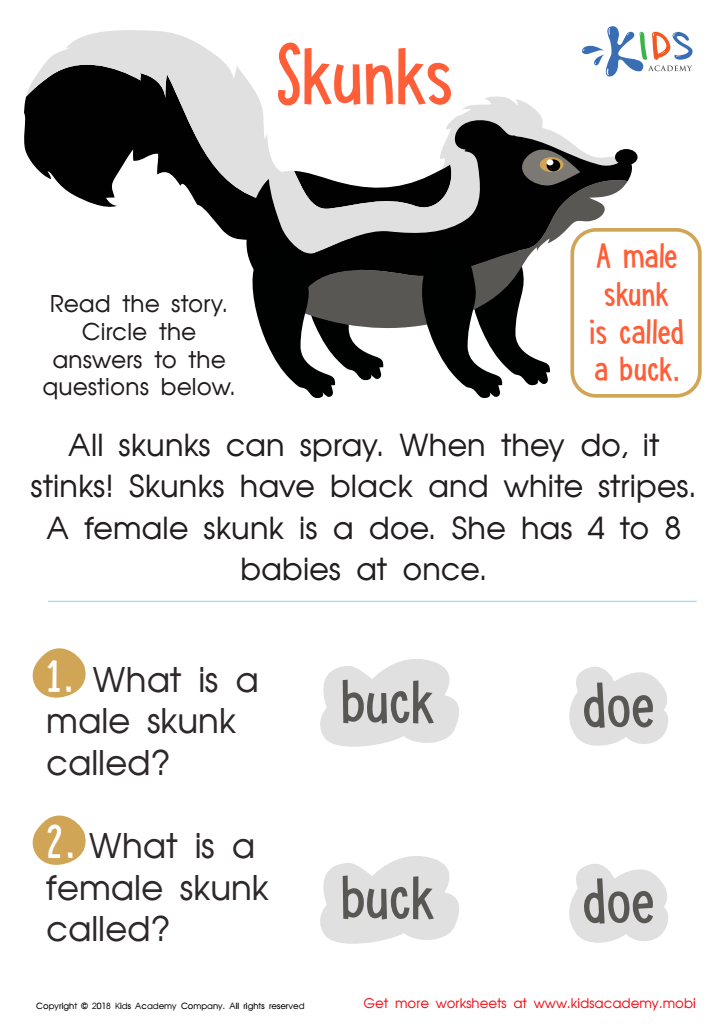
Skunks Worksheet
 Assign to My Students
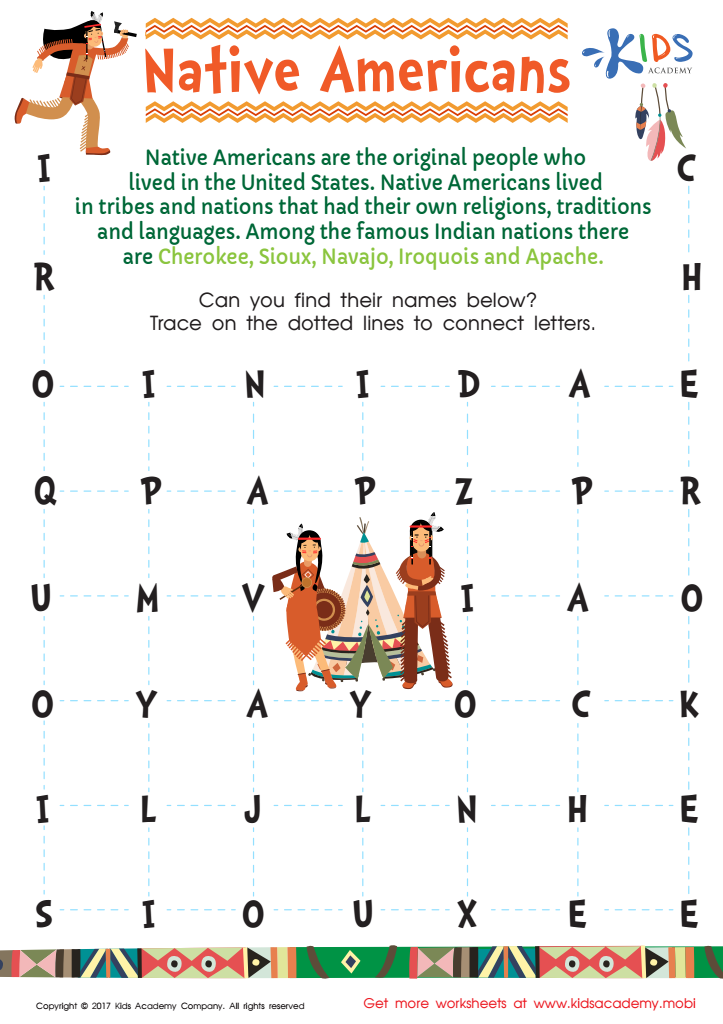
Native American Word Search Printable

Golden Eagles Worksheet
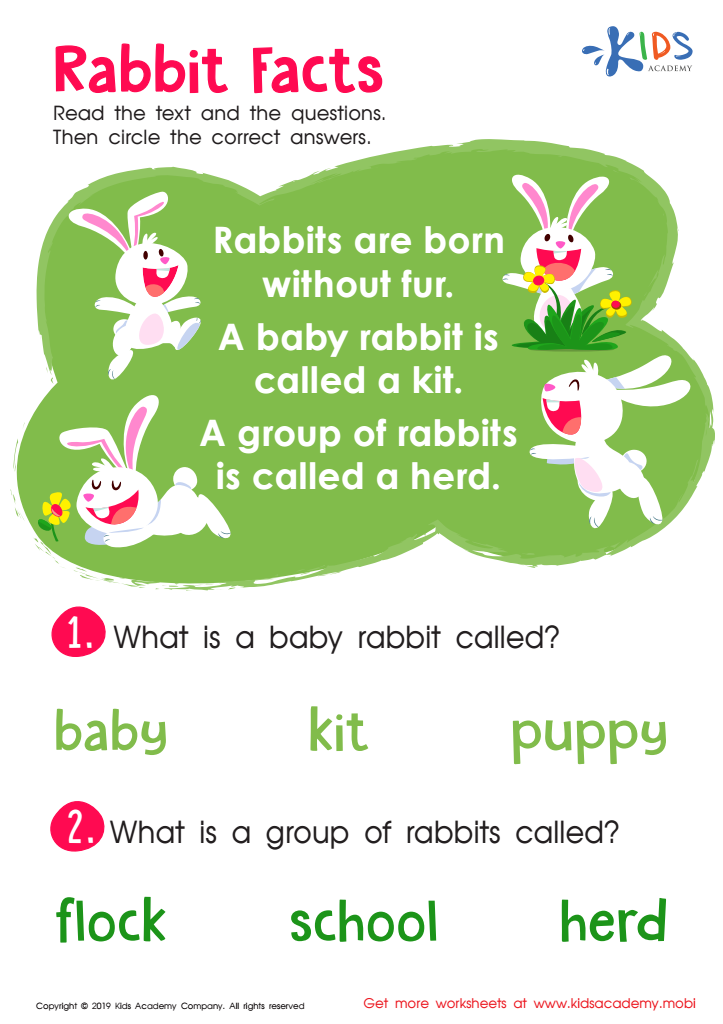
Rabbit Facts Worksheet








Parents and teachers play a crucial role in the cognitive development of children aged 3-8, a critical period for information processing. Information processing refers to how children take in, analyze, and recall information, which is foundational for learning and problem-solving skills. Understanding this concept helps adults provide more effective support in a child's early years.
First, fostering information processing skills early on aids in language acquisition, literacy, and numeracy. Activities like storytelling, sing-alongs, and interactive play enhance children's ability to process information by teaching them how to sequence events, understand cause and effect, and grasp new concepts. This sets a solid foundation for academic success.
Second, children learn how to concentrate and pay attention, skills essential for classroom learning. By recognizing the stages of information processing—such as sensory input, perception, memory storage, and retrieval—adults can tailor educational activities that match cognitive abilities at different ages.
Finally, recognizing how children process information allows caregivers to identify any potential learning difficulties early, enabling timely interventions. Techniques that stimulate cognitive growth—like puzzles, memory games, and hands-on activities—can be incorporated into daily routines, enhancing learning experiences.
Overall, understanding and supporting children's information processing capabilities during these formative years fosters a love for learning, builds effective communication skills, and lays a strong foundation for lifelong intellectual development.








