Learning times tables Worksheets for Ages 3-8
3 filtered results
-
From - To
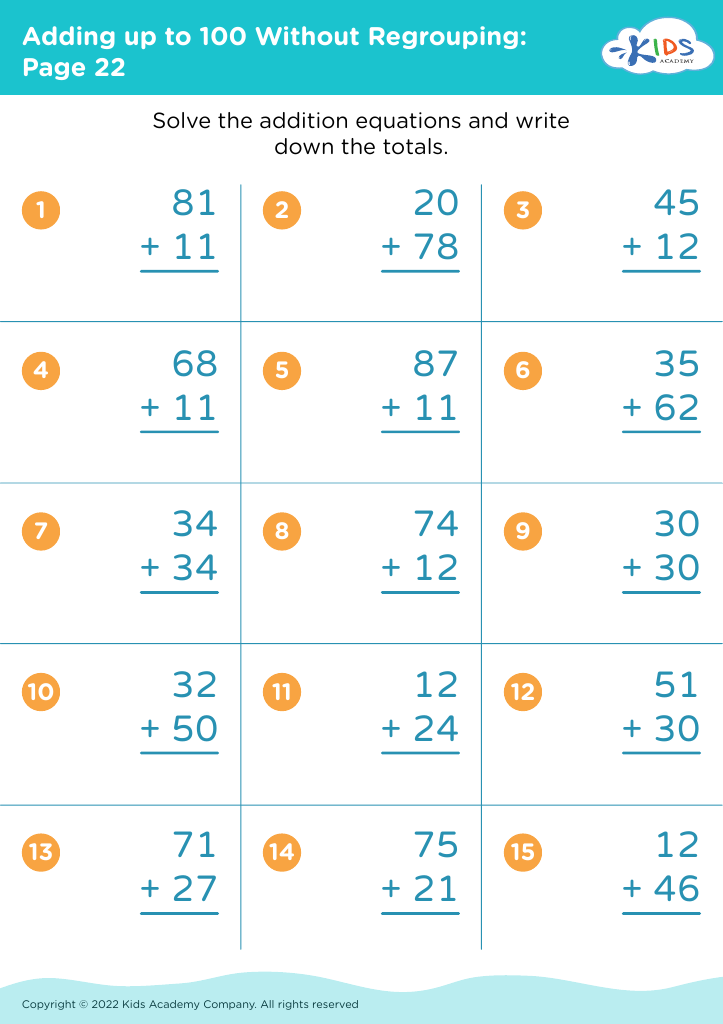
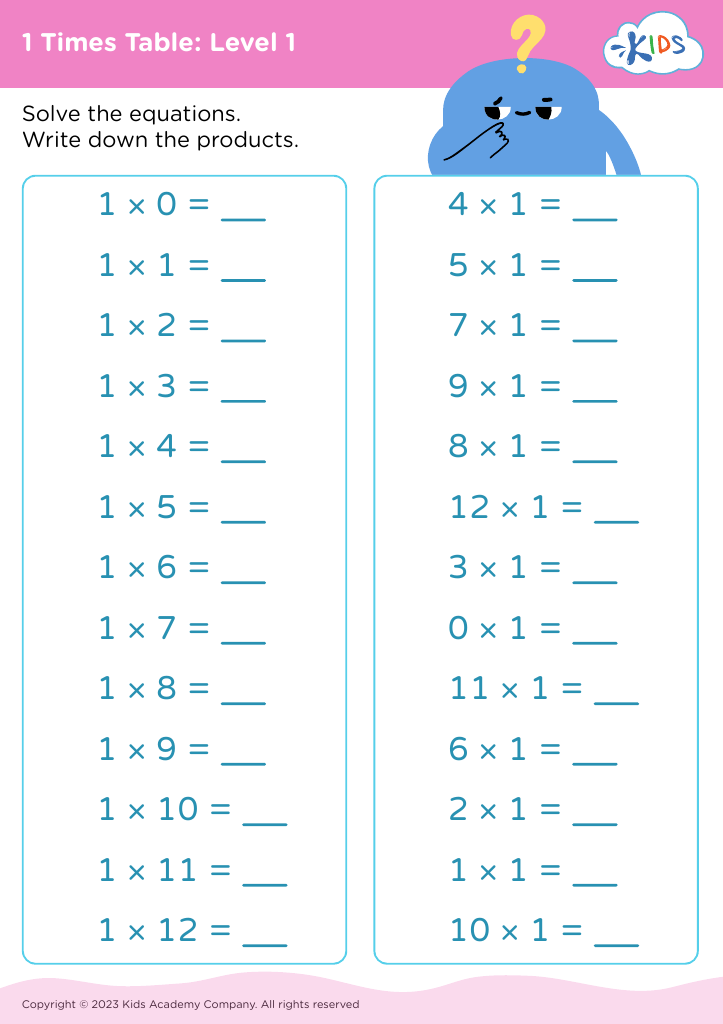
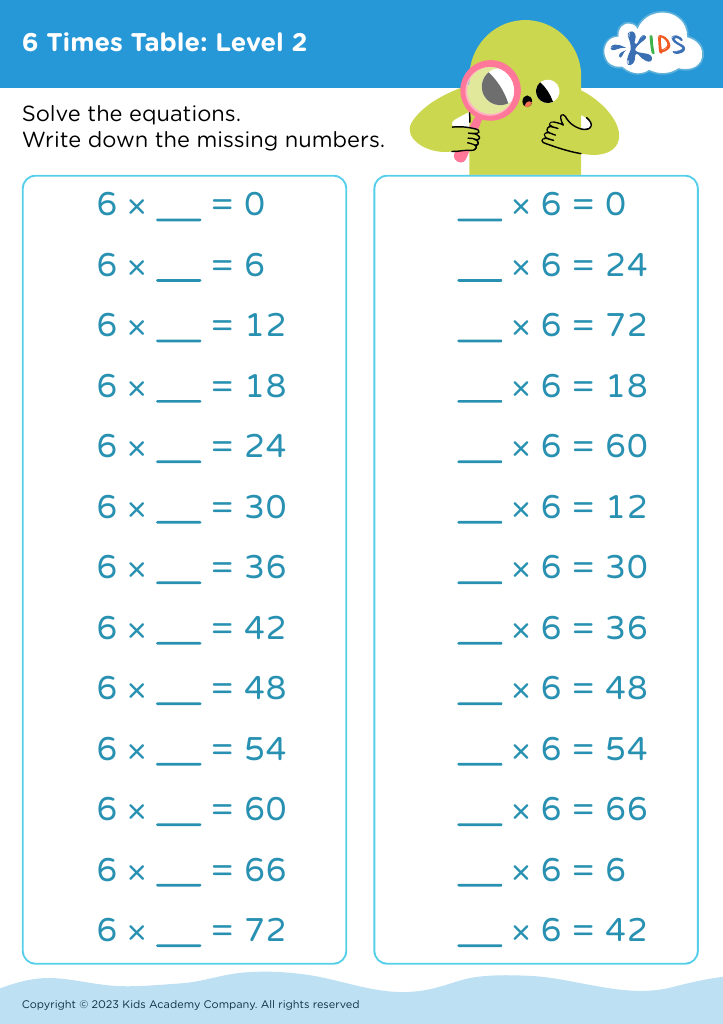
Introduce your little learners to the world of multiplication with our engaging "Learning Times Tables Worksheets for Ages 3-8"! These printable worksheets are designed to make learning fun and effective for young minds. With colorful visuals and relatable themes, children will develop a solid grasp of times tables through a variety of activities—perfect for reinforcing math skills at home or in the classroom. Our worksheets cater to various learning styles, offering exercises that enhance number recognition, counting, and problem-solving. Ignite a passion for math and pave the way for future success with our thoughtfully crafted resources tailored for preschoolers and early elementary students!






.jpg)
Learning times tables at an early age, particularly for children aged 3 to 8, is crucial for several reasons. First, early familiarity with multiplication sets a strong foundation for more advanced math skills later on. Understanding times tables helps children grasp the concept of repeated addition and enhances their number sense, making them more confident in handling mathematical operations.
Times tables encourage cognitive development. They stimulate brain functions related to memory, problem-solving, and logical reasoning. By engaging with these mathematical concepts, children develop resilience and a growth mindset, important traits for tackling challenges in academic and everyday situations.
Additionally, mastering times tables can alleviate math anxiety. Children who confidently recall multiplication facts are often more prepared for tests and real-world applications, such as sharing equally or calculating prices. Learning them through fun, interactive methods, such as games or songs, turns a potentially daunting task into an enjoyable adventure, fostering intrinsic motivation.
Finally, the skills associated with learning times tables promote communication abilities. Talking about mathematics, whether explaining a concept or solving a problem with peers and adults, enhances verbal skills. Involving parents and teachers in the learning process also creates a supportive environment and reinforces the importance of education in a child’s life.








