Math fact fluency Worksheets for Ages 3-8
3 filtered results
-
From - To
Boost your child's math skills with our engaging Math Fact Fluency Worksheets, specially designed for ages 3-8! Our colorful and interactive worksheets provide essential practice in addition, subtraction, and early problem-solving, helping your little learners develop confidence and mastery in basic math concepts. Each worksheet encourages hands-on learning through fun activities and challenges tailored to young minds. With a focus on building fluency and speed, these resources nurture a love for math while reinforcing essential skills. Perfect for home or classroom use, our Math Fact Fluency Worksheets make learning enjoyable, ensuring your child’s educational journey is both fun and effective!
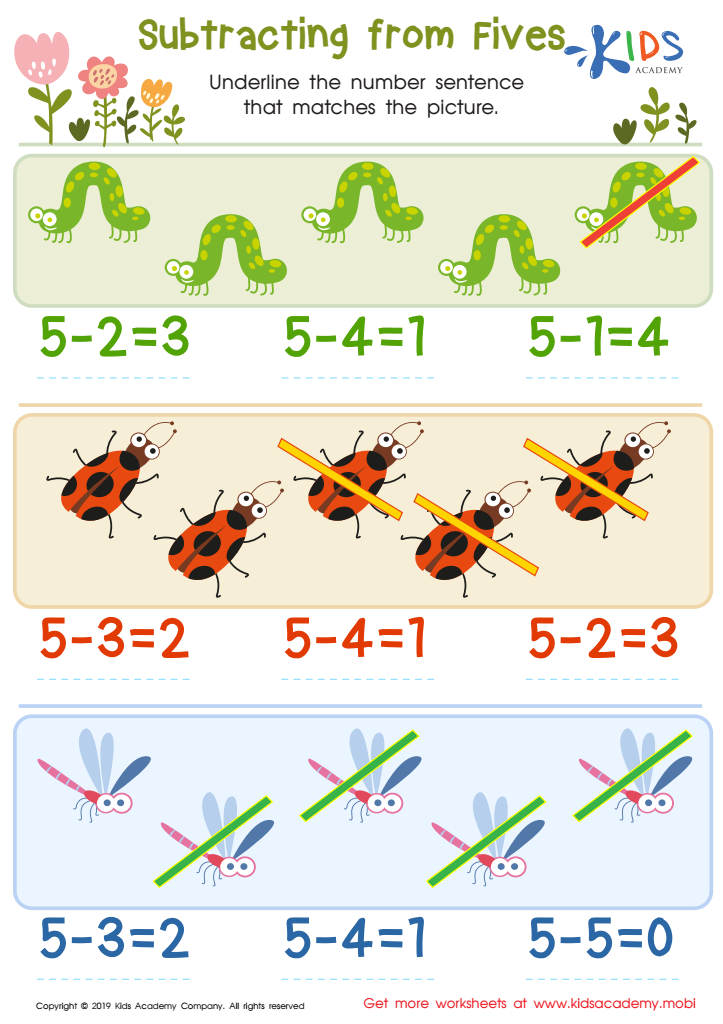
Subtracting From Fives Worksheet
 Assign to My Students
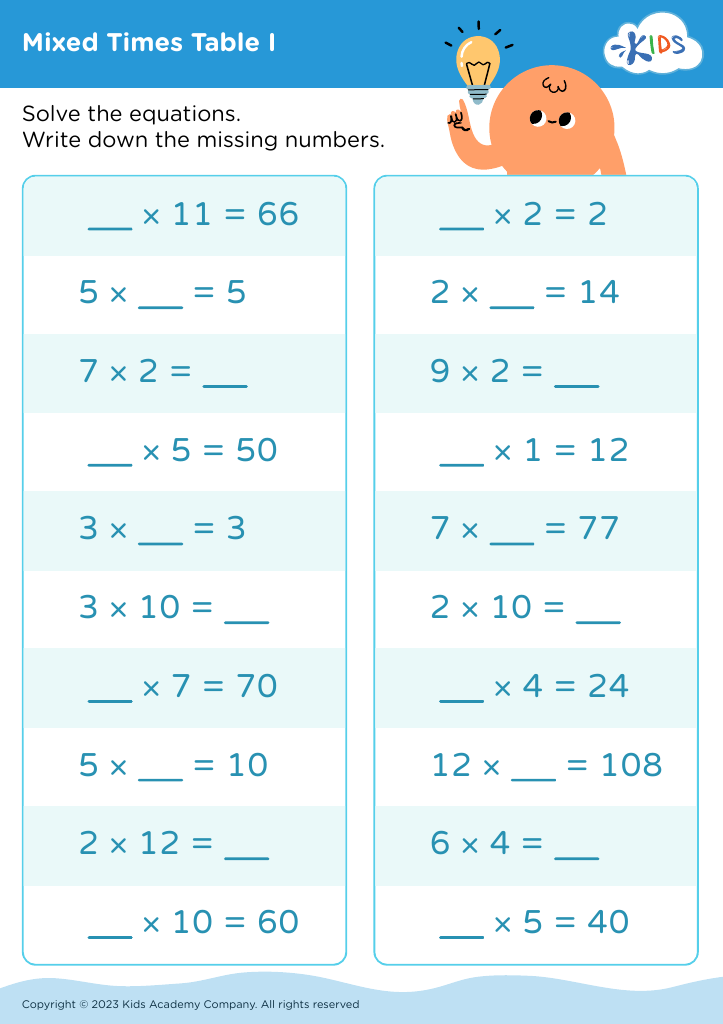
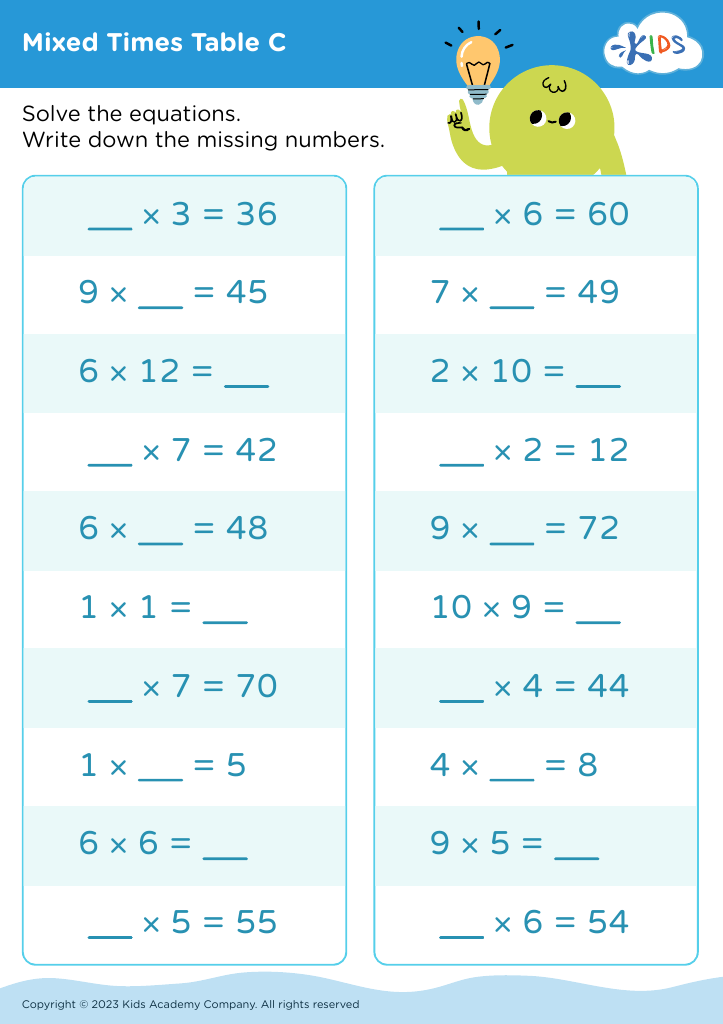








Math fact fluency is crucial for children aged 3-8 as it serves as the foundational building block for more advanced mathematical concepts. During these formative years, children explore the basic operations of addition, subtraction, multiplication, and division. Developing fluency in these math facts enables them to perform calculations quickly and accurately, which is essential not only for academic success but also for fostering confidence in their abilities.
Parents and teachers should care about math fact fluency because it nurtures a positive attitude towards learning math, reduces anxiety, and encourages perseverance when faced with challenging problems. Children who achieve fluency can focus on problem-solving strategies rather than struggling with basic computations, allowing for deeper mathematical understanding and application.
Moreover, fluency in math facts contributes to a child's cognitive development. It enhances their ability to recognize patterns, make connections, and apply math in real-world contexts, such as measuring ingredients in cooking or planning a budget. By prioritizing math fact fluency through engaging activities and consistent practice, parents and teachers set the stage for lifelong mathematical skills, ensuring children are well-prepared for future academic endeavors. This investment in early math education ultimately benefits the child’s overall intellectual growth and self-esteem.








