Number ordering Worksheets for Ages 3-8
3 filtered results
-
From - To
Discover our engaging number ordering worksheets designed specifically for children aged 3-8! These resources help young learners strengthen their understanding of numerical sequences, improve critical thinking, and boost their confidence in math. Featuring colorful illustrations and a variety of activities, our worksheets make learning fun and interactive. With easy-to-follow instructions, kids will practice skills such as ordering numbers, identifying patterns, and developing problem-solving abilities. Perfect for home or classroom use, our number ordering worksheets cater to different learning styles to ensure every child enjoys their journey with numbers. Download now and watch your child thrive in their mathematical skills!
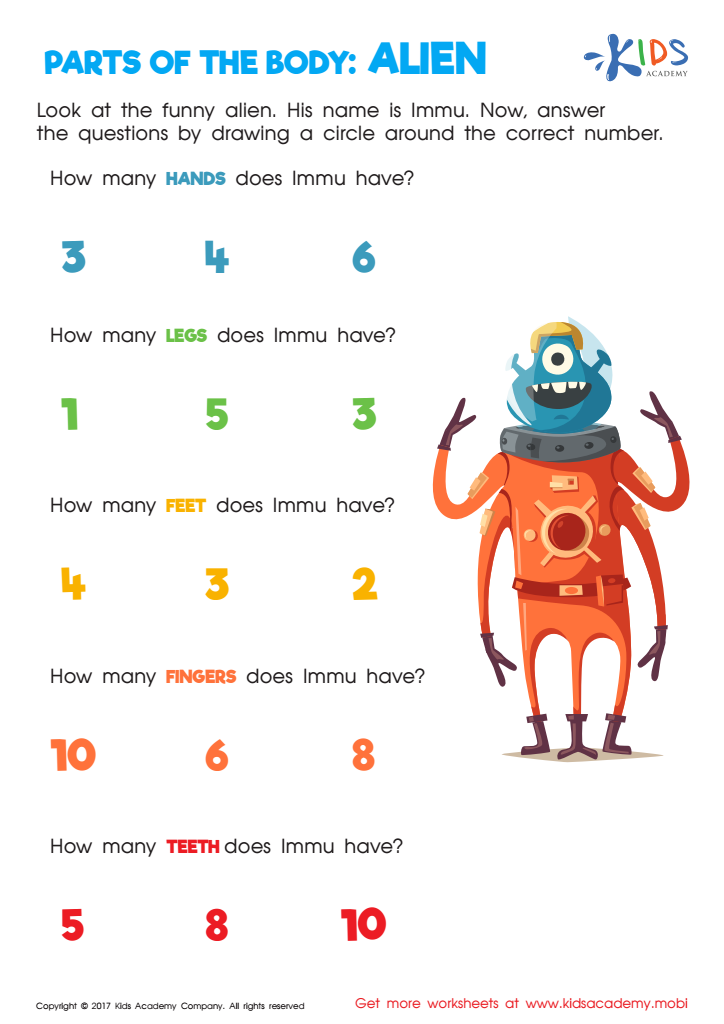
Alien Worksheet
 Assign to My Students







Number ordering is a foundational skill that plays a critical role in early math development for children aged 3-8. Understanding the sequence of numbers not only enhances a child's ability to count accurately but also prepares them for more complex mathematical concepts in the future, such as addition, subtraction, and place value.
For parents and teachers, nurturing number ordering skills fosters cognitive development. It encourages logical thinking and problem-solving abilities, essential skills in a child's overall academic growth. When children learn to order numbers, they gain a deeper understanding of their relative values, which aids in estimation and comparisons—a skill relevant to everyday decision-making.
Moreover, number ordering activities can be engaging and fun, making learning a positive and enjoyable experience. When children actively engage with numbers through games or structured activities, they are more likely to retain information and develop a stronger interest in mathematics.
Furthermore, mastering number ordering provides children with a sense of accomplishment and confidence. As they achieve milestones in this area, it lays the groundwork for a positive attitude towards math in later years, reinforcing the importance for educators and parents to prioritize this essential skill in their teaching and parenting approaches.








