Numerical reasoning Worksheets for Ages 3-8
5 filtered results
-
From - To
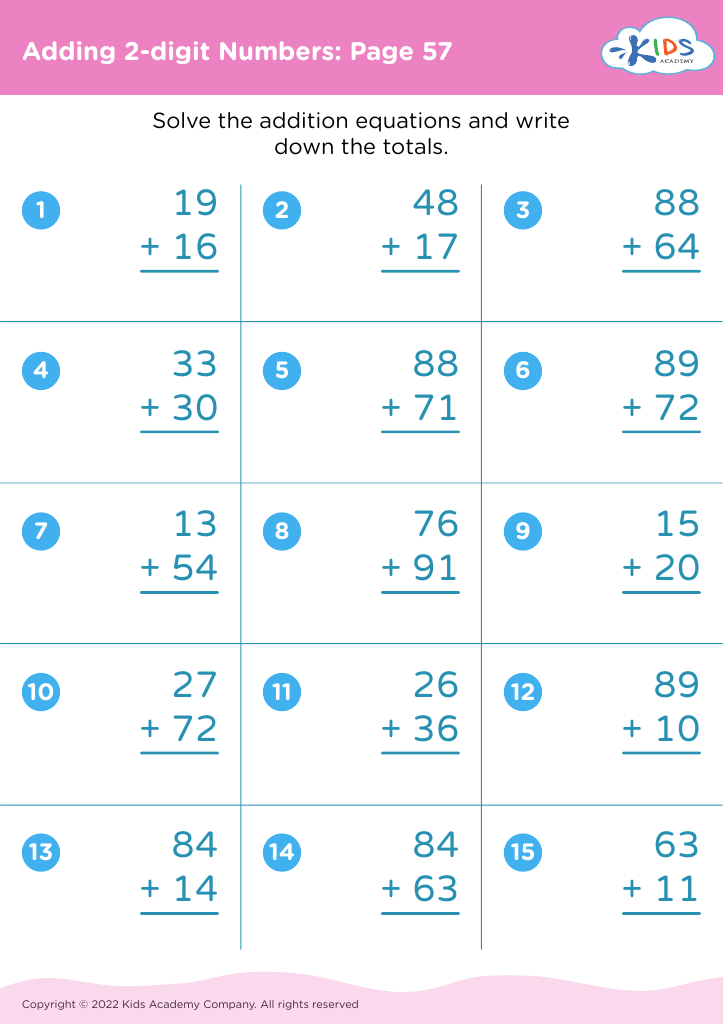
Unlock your child's potential with our Numerical Reasoning Worksheets for ages 3-8! These engaging, expert-designed resources are tailored to enhance early mathematical skills, including counting, addition, subtraction, and number recognition. Each worksheet offers fun, interactive activities that make learning a delightful experience. Perfect for both classroom use and homeschool sessions, our worksheets aim to build a strong numerical foundation, boosting problem-solving abilities and confidence. With colorful designs and varied exercises, Kids Academy ensures every young learner enjoys the journey of discovering numbers. Prepare your child for future academic success with our comprehensive numerical reasoning worksheets!
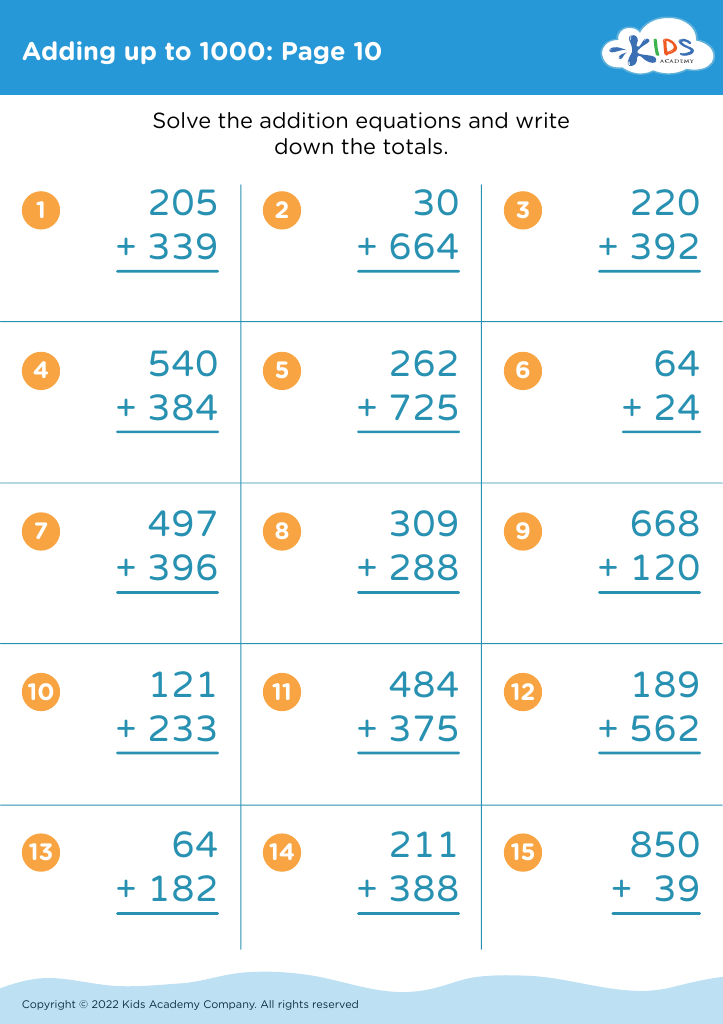
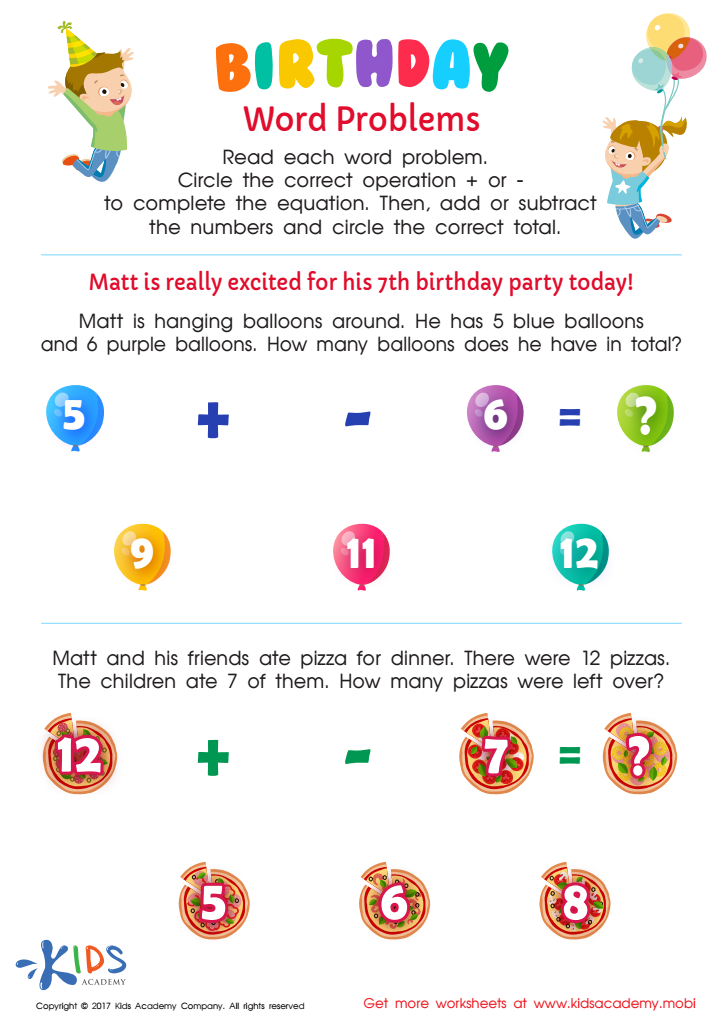
Birthday Word Problems Substraction Worksheet
 Assign to My Students





.jpg)


Numerical reasoning skills are fundamental for children aged 3-8, forming the cornerstone of their mathematical proficiency and overall cognitive development. During these early years, children's brains are highly adaptable and receptive, making it the ideal time to introduce and nurture these skills.
-
Foundational Understanding: Early numeracy forms the basis for more complex mathematical concepts. Understanding numbers, relationships between them, and basic arithmetic supports future learning in more advanced areas.
-
Critical Thinking: Numerical reasoning encourages logical thinking and problem-solving, as children learn to identify patterns, make connections, and develop strategies to find answers.
-
Educational Success: Strong numerical skills are linked to academic achievement not only in mathematics but across the curriculum. They help children perform better in subjects like science and technology, where quantitative analysis is crucial.
-
Everyday Life Skills: Practical numeracy skills are essential. Kids use math in everyday activities, from counting their toys to understanding concepts of time and money. Early familiarity with these ideas fosters independence and confidence.
-
Early Intervention: Identifying and addressing difficulties with numerical reasoning early on allows for timely support, ensuring all children have the opportunity to excel.
Teachers and parents play a pivotal role by providing engaging, playful, and age-appropriate activities that make learning numbers fun, thereby setting the stage for a lifelong positive relationship with mathematics.








