
Numerical recognition Worksheets for Ages 3-8
3 filtered results
Difficulty Level
Grade
Age
-
From - To
Subject
Activity
Standards
Explore our engaging Numerical Recognition Worksheets designed for children ages 3-8! Perfect for early learners, these worksheets help develop foundational math skills through fun activities that reinforce number recognition, counting, and number formation. Each worksheet is tailored to different age groups, ensuring that children can learn at their own pace while enjoying interactive exercises. Our user-friendly format allows for easy printing and use at home or in the classroom. Foster a love for math and boost your child’s confidence as they explore numbers through colorful illustrations and simple tasks. Start your child's numerical journey today with our rich collection of resources!
Favorites
With answer key
Interactive
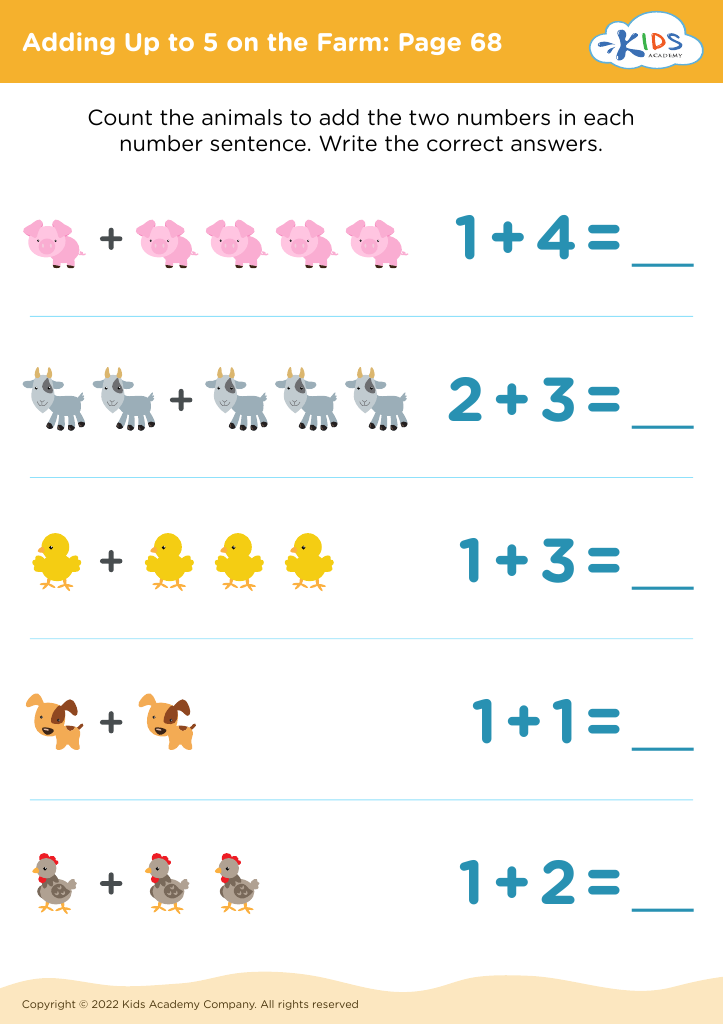
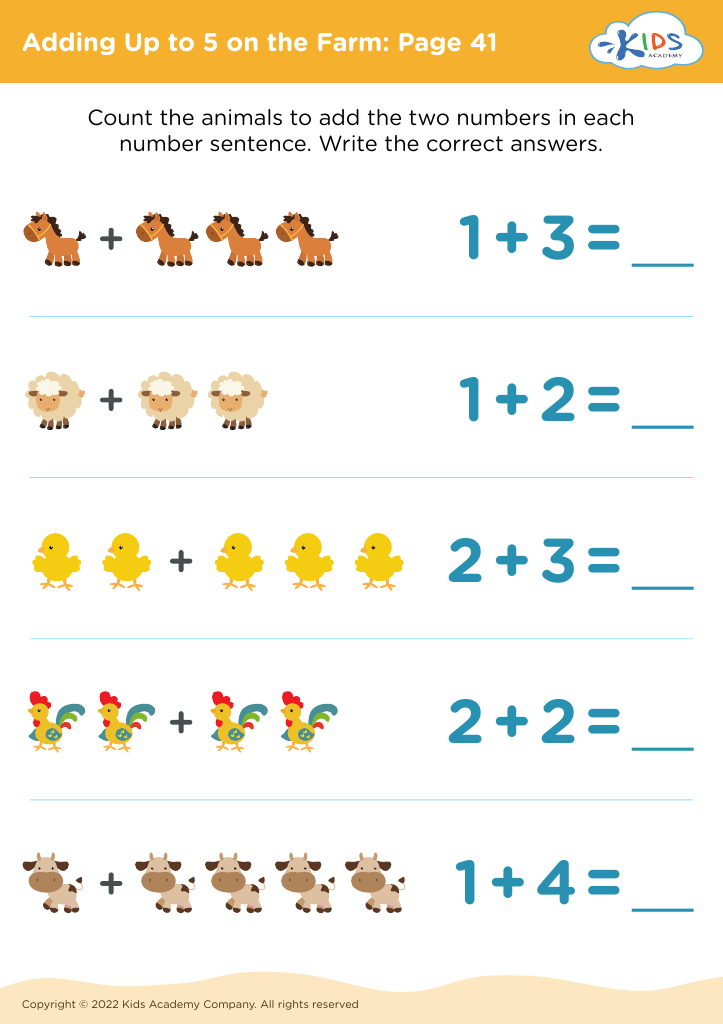
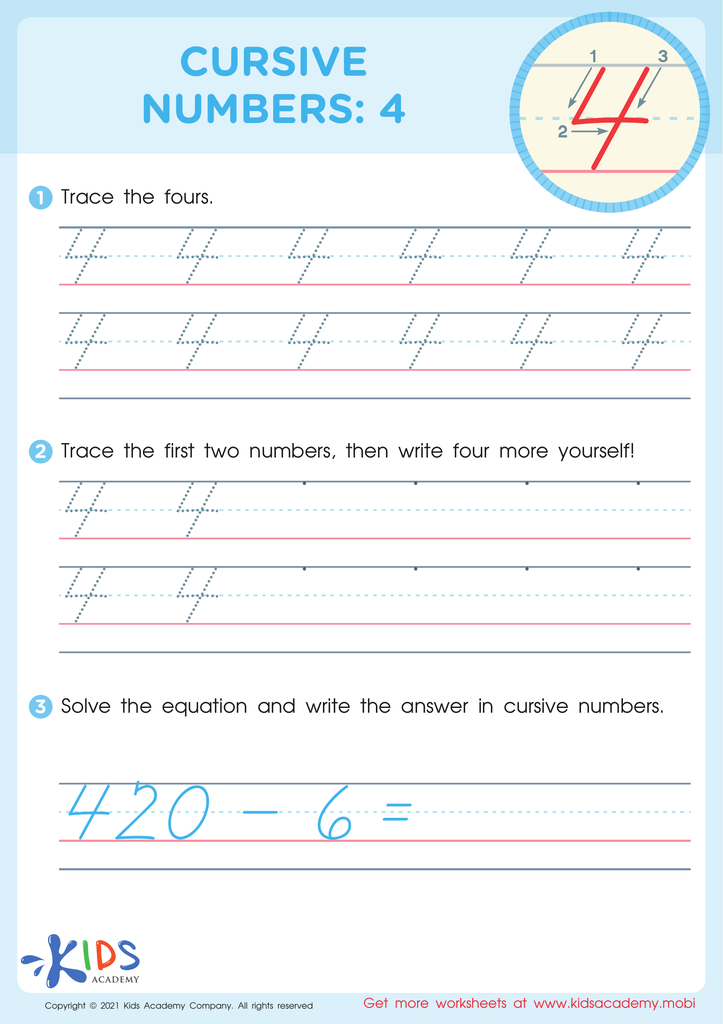
Cursive Numbers: 4 Worksheet
Math is challenging, and teaching cursive alongside it can be overwhelming. Make lessons enjoyable and your child will be more likely to stay engaged. Utilize worksheets to practice tracing the number 4 in cursive. With regular practice, your child can learn to write the number on their own.
Cursive Numbers: 4 Worksheet
Worksheet
Join Kids Academy for Free
Who is primarily going to use this learning content?








Numerical recognition is a foundational skill that is crucial for young learners aged 3-8 as it lays the groundwork for future mathematical understanding and overall cognitive development. At this early stage, children are naturally curious and eager to explore their environment; recognizing numbers enables them to make sense of the world around them. It helps in developing critical thinking skills as they learn to compare, classify, and analyze numerical information.
Moreover, numerical recognition fosters essential pre-mathematical skills that lead to more complex problem-solving abilities later on. Through recognizing numbers, children can begin to grasp concepts of quantity, ordering, and basic arithmetic, providing them with tools they will use throughout their academic lives. Engaging in activities that promote numerical recognition also enhances fine motor skills and promotes language development, as children learn to verbalize numbers and associated quantities.
Technological advances, societal demands, and educational standards increasingly emphasize numeracy. Parents and teachers should prioritize numerical recognition to equip children with skills that not only support their academic achievements but also prepare them for real-world applications, ultimately influencing their self-confidence and societal participation in an increasingly quantitative world. Investing in early numerical recognition benefits both the child and the broader community.








