
Practical application of fractions Worksheets for Ages 3-8
3 filtered results
Difficulty Level
Grade
Age
-
From - To
Subject
Activity
Standards
Explore our engaging "Practical Application of Fractions" worksheets designed for children ages 3 to 8. These hands-on activities help young learners grasp the foundational concepts of fractions in a fun and interactive way. Through colorful visuals and relatable scenarios, kids will practice identifying and using fractions in everyday situations, enhancing their understanding and confidence. The worksheets are aligned with early learning standards, making them an ideal resource for teachers and parents alike. Foster critical thinking and problem-solving skills in your child as they learn to apply fractions practically. Visit us today and watch their mathematical skills flourish!
Favorites
With answer key
Interactive
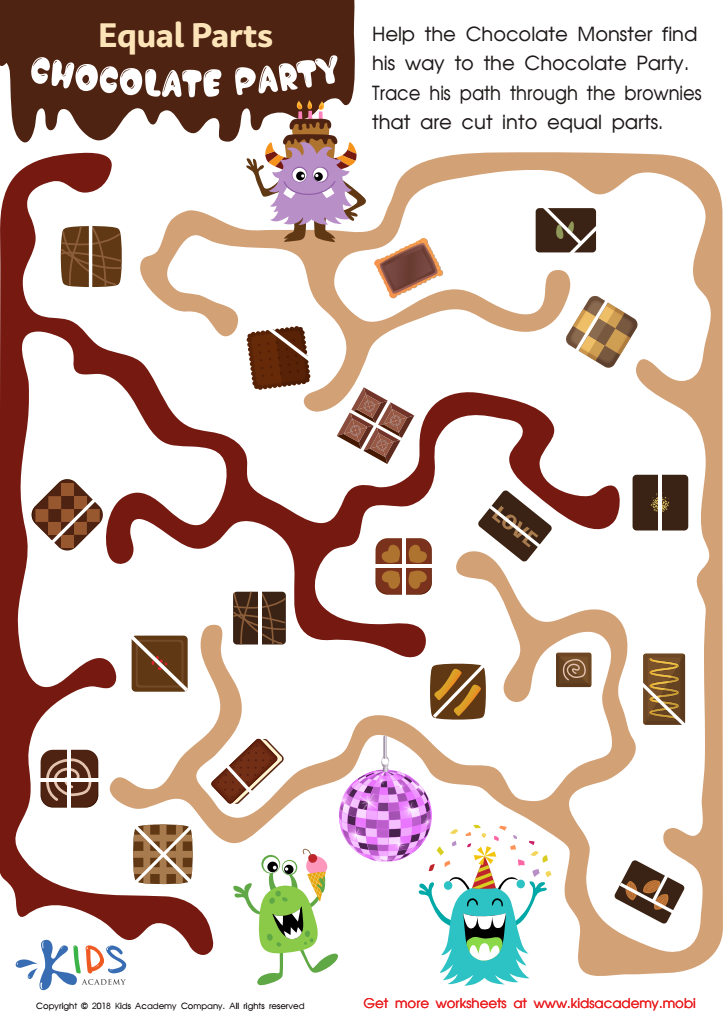
Equal Parts: Chocolate Party Worksheet
Mention "chocolate" and watch your kids' excitement soar! Learning can go hand-in-hand with that sugary treat. This worksheet helps kids guide the Chocolate Monster to the Chocolate Party, following a trail of brownie halves. It's an easy, tasty way to have fun!
 Assign to My Students
Equal Parts: Chocolate Party Worksheet
Worksheet
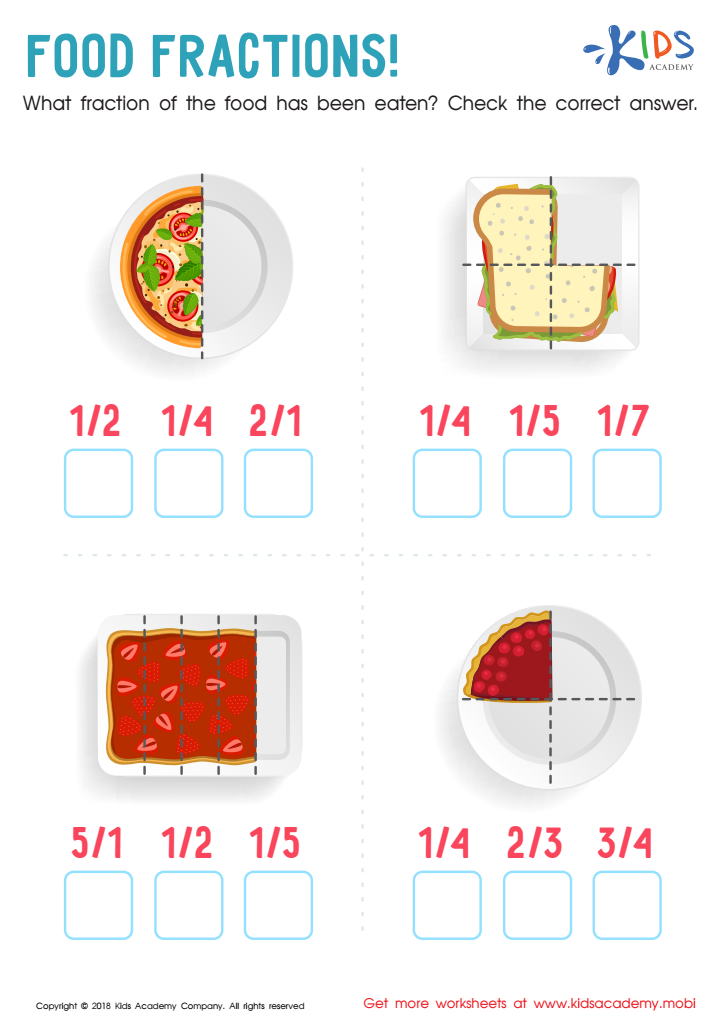
Food Fractions Worksheet
Test your child's understanding of fractions with this Food Fractions worksheet. Ask them to identify what fraction of the food in the four pictures has been eaten and select the correct answer from the options provided. See how well they understand your lessons!
Food Fractions Worksheet
Worksheet
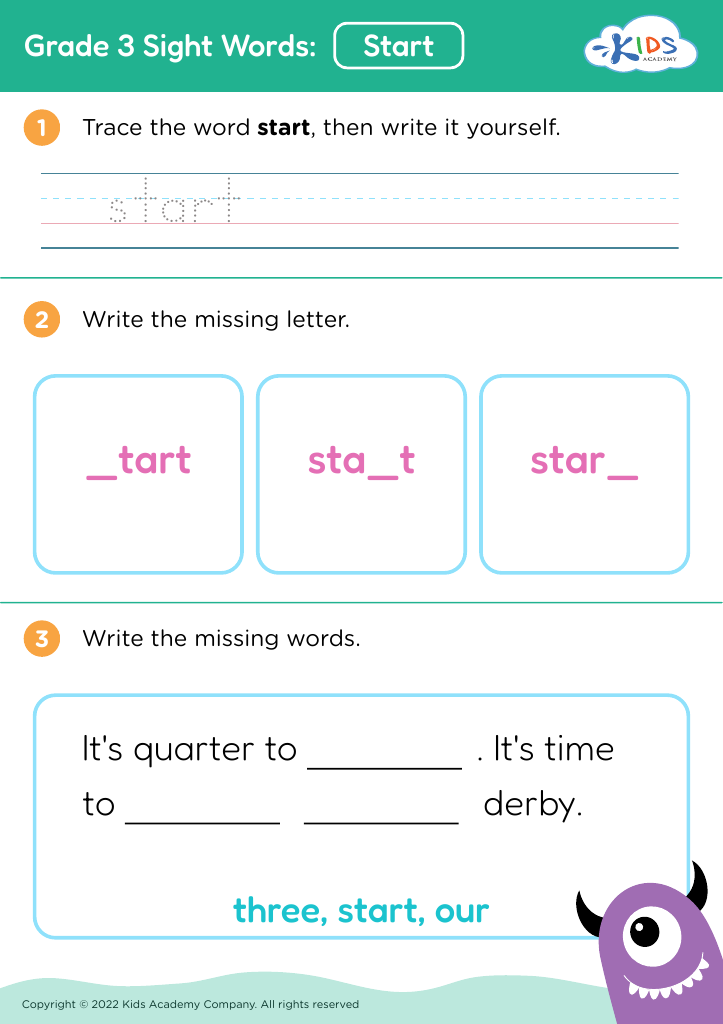
Join Kids Academy for Free
Who is primarily going to use this learning content?





Understanding the practical application of fractions is vital for children aged 3-8, as it lays the foundation for their mathematical development and everyday problem-solving skills. At this young age, children are naturally curious and highly receptive to learning concepts through hands-on experiences. By engaging them in activities involving fractions, such as cooking, sharing food, or measuring ingredients, parents and teachers can make learning fun and relatable.
Incorporating fractions into daily activities helps reinforce essential skills such as counting, sorting, and measuring. It also fosters critical thinking and boosts children's confidence in their own abilities. When children see how fractions work in real life—like dividing a pizza or sharing toys—they are more likely to grasp the abstract concepts later in their education.
Additionally, these early experiences with fractions promote collaborative skills as children learn to share, negotiate, and understand fairness. Recognizing the importance of practical applications fuels a love for mathematics and encourages lifelong learning. Ultimately, caring about how fractions are taught and applied equips children with crucial skills that enhance academic success and everyday function, setting them on a path to brighter futures.








