Problem solving enhancement Worksheets for Ages 3-8
3 filtered results
-
From - To
Discover our engaging Problem Solving Enhancement Worksheets, designed specifically for children ages 3-8! These interactive resources promote critical thinking and foster creativity while making learning fun. Each worksheet features age-appropriate challenges that encourage young learners to develop essential problem-solving skills in various contexts, from puzzles to real-world scenarios. Whether at home or in a classroom setting, our worksheets help children enhance their reasoning abilities and boost their confidence. Perfect for parents and educators alike, our Problem Solving Enhancement Worksheets aim to build a strong foundation for future academic success. Explore our collection today and inspire the little minds in your life!
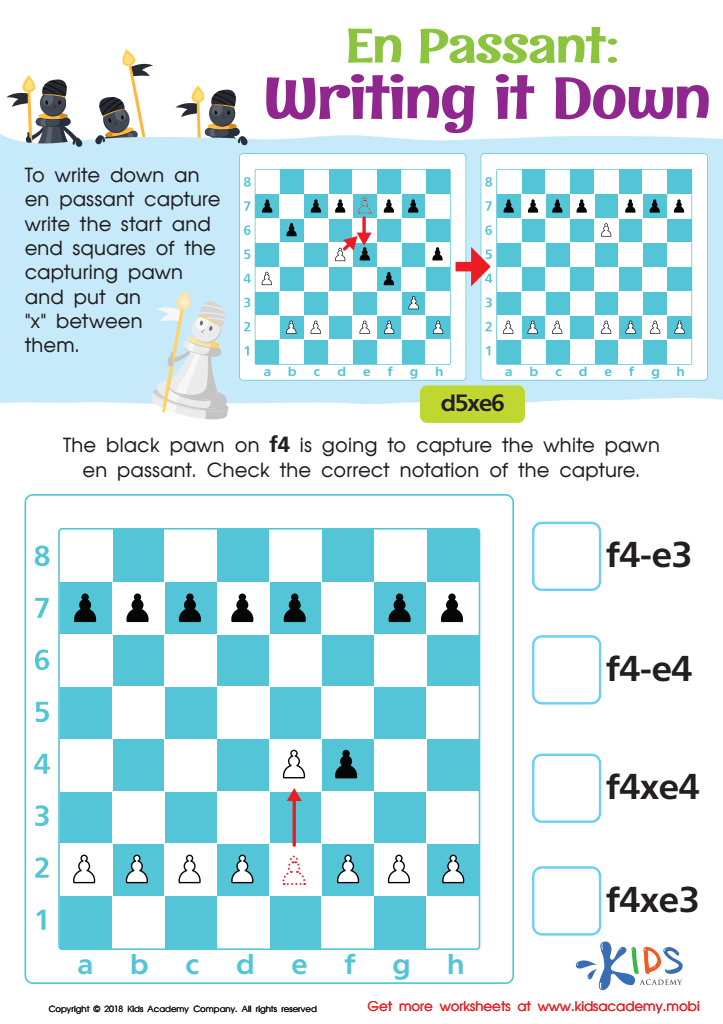
En Passant: Writing it Down Worksheet
 Assign to My Students
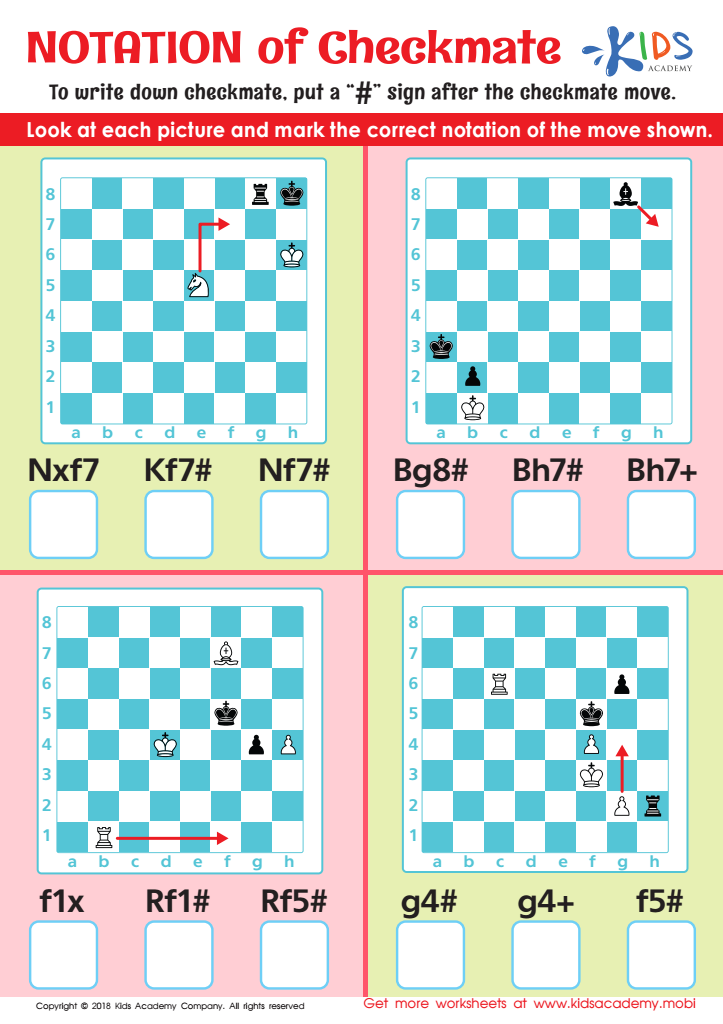
Notation of Checkmate Worksheet



.jpg)




Enhancing problem-solving skills in children aged 3-8 is crucial for their cognitive and social development. During these formative years, children are naturally curious and eager to explore their environment. Problem-solving activities foster critical thinking, creativity, and resilience, empowering children to approach challenges with confidence.
Engaging in problem-solving helps young learners develop essential skills, such as reasoning, analyzing, and synthesizing information. These abilities lay the foundation for later academic success, as children learn to navigate complex concepts and work through difficulties in subjects like math and science.
Moreover, problem-solving promotes collaboration and communication when children work together to find solutions. This cultivates social skills, teaching them to listen, negotiate, and appreciate diverse perspectives. Additionally, it encourages a growth mindset, helping children understand that failure is a stepping stone to achievement, which is vital for lifelong learning.
Parents and teachers play a pivotal role in supporting problem-solving enhancement through purposeful play, interactive discussions, and hands-on activities, ensuring that children develop into adept thinkers and problem solvers. Investing in these skills early on ensures that children are better equipped to face life's challenges, both academically and personally, as they grow.








