
Punctuation understanding Worksheets for Ages 3-8
6 filtered results
Difficulty Level
Grade
Age
-
From - To
Subject
Activity
Standards
Enhance your child's literacy skills with our Punctuation Understanding Worksheets, designed specifically for ages 3-8. These engaging and interactive worksheets make learning about punctuation fun and accessible. From recognizing periods and commas to exploring exclamation and question marks, children will develop a strong foundation in punctuation that is essential for effective writing and communication. Each worksheet features vibrant illustrations and age-appropriate activities that capture young learners' attention while promoting cognitive development. Perfect for at-home learning or classroom use, our resources will empower your child to express themselves clearly and confidently in their written work! Start your punctuation journey today!
Favorites
With answer key
Interactive
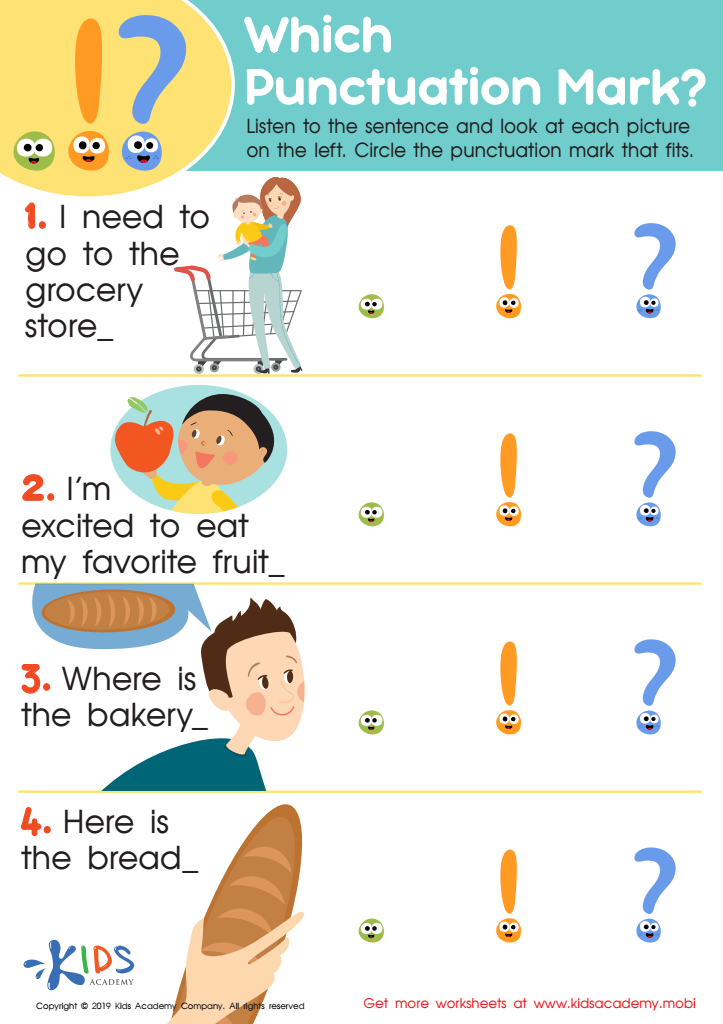
Which Punctuation Mark Worksheet
Punctuation marks are essential for expressing what we say. This worksheet asks your kindergarten student to circle the correct punctuation mark for each sentence. Read each sentence aloud and help them identify the expression needed. A picture accompanies each sentence. Enjoy! (79 words)
 Assign to My Students
Which Punctuation Mark Worksheet
Worksheet
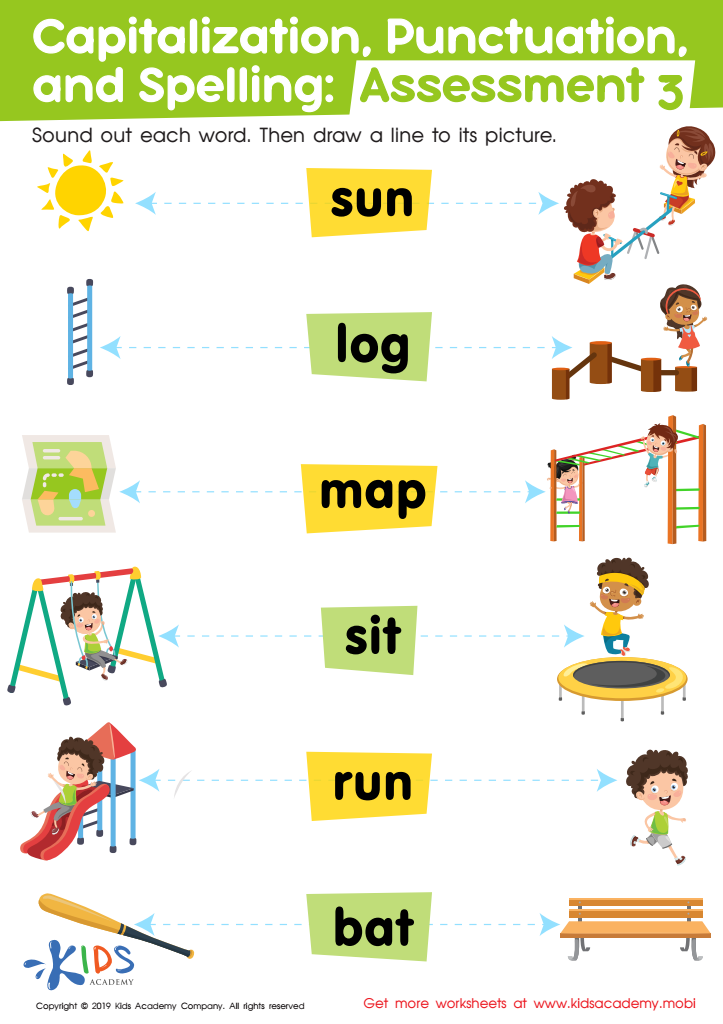
Capitalization. Punctuation. Spelling. Assessment 3 Worksheet
Before starting this worksheet, have your kids spell some simple words. Correct if wrong and show the right spellings. Then, ask them to link the pictures to the words you read out. Spelling is key for a good writer, and kids need to know how to spell to read texts easily.
Capitalization. Punctuation. Spelling. Assessment 3 Worksheet
Worksheet
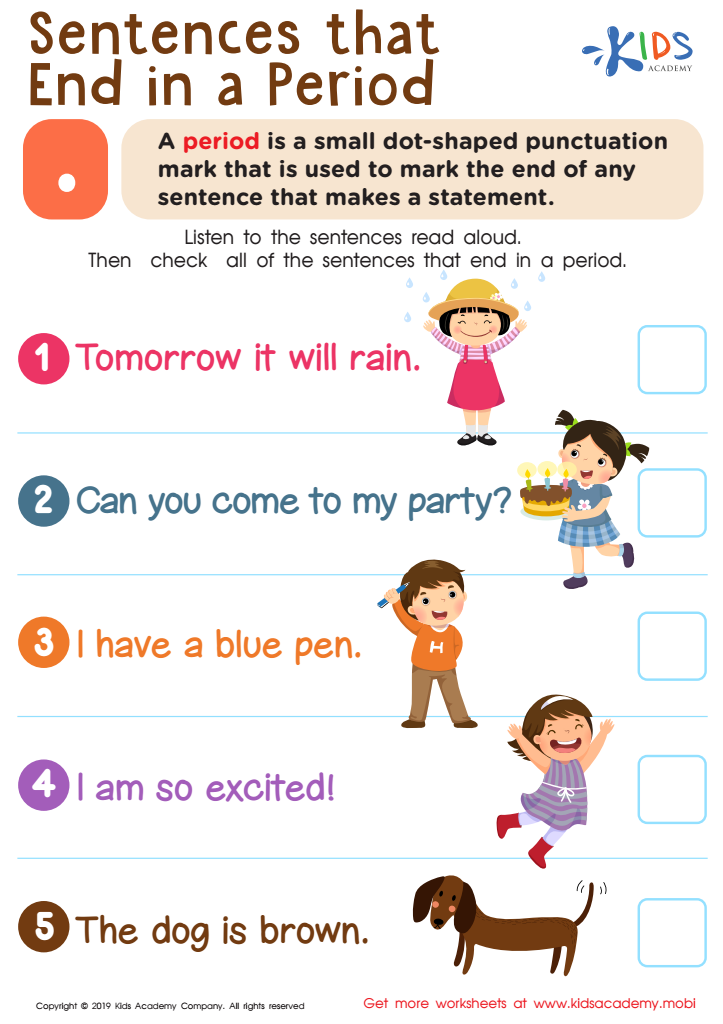
Sentences That End in a Period Worksheet
Before beginning, ask your kids if they know what punctuation marks are and can name a few. Common examples are the period (a small dot-shaped mark at the end of sentences), comma, question mark, and exclamation mark. Help practice their use with questions in the worksheet.
Sentences That End in a Period Worksheet
Worksheet
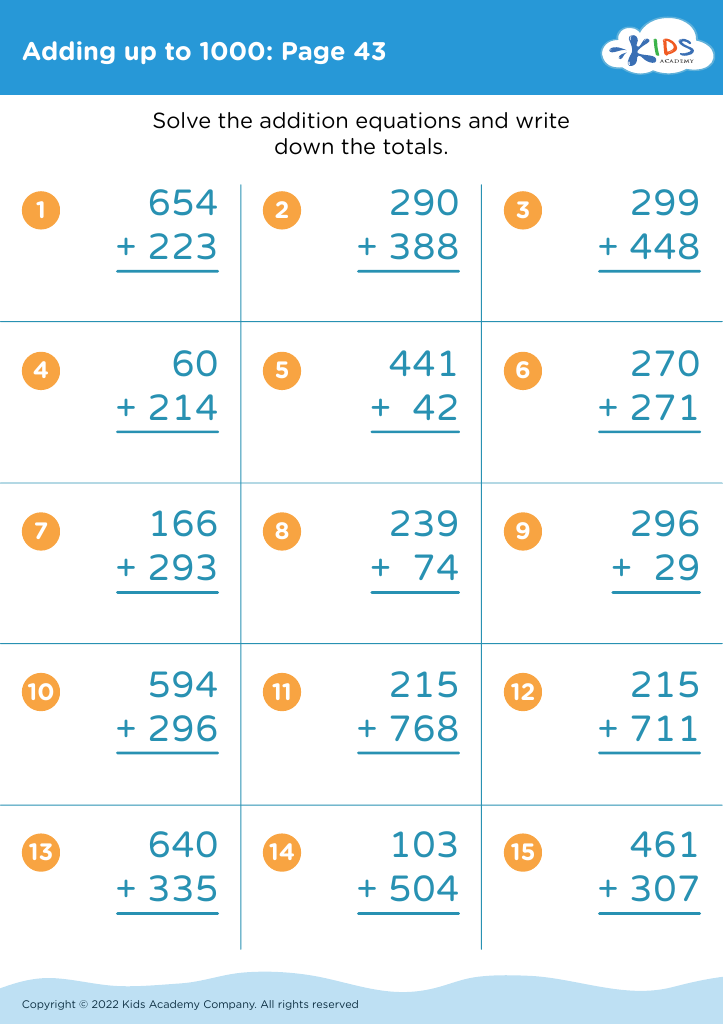
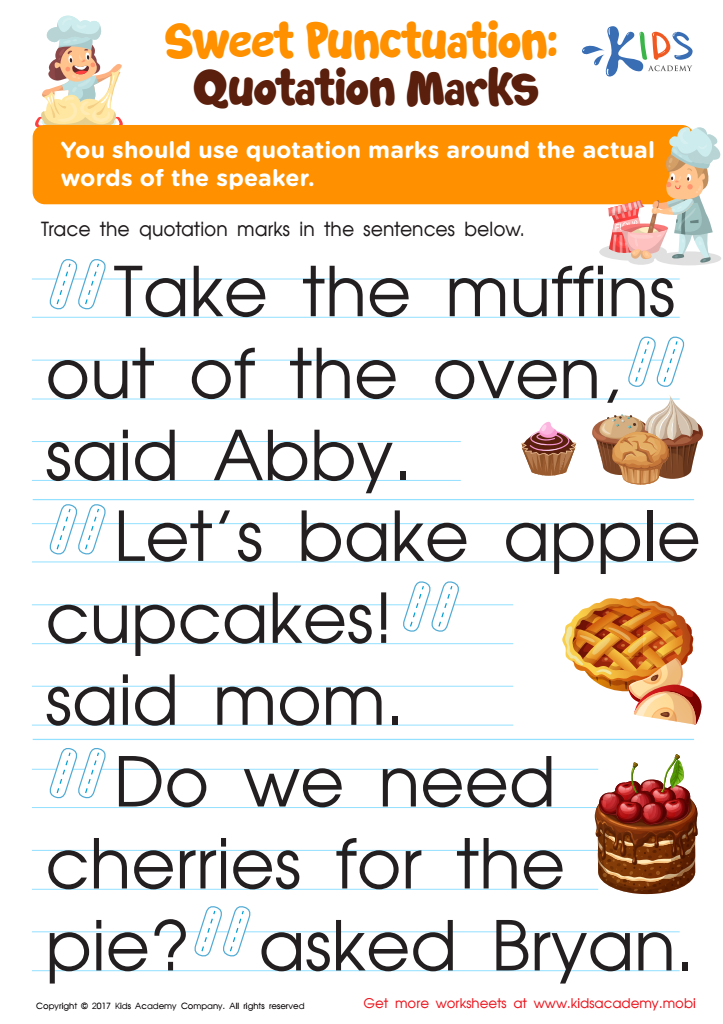
Commas and Quotation Marks Worksheet
This 3rd grade quotation marks worksheet introduces kids to using quotation marks in dialogue. Kids trace the quotation marks around each character's dialogue, learning to punctuate dialogue accurately.
Commas and Quotation Marks Worksheet
Worksheet
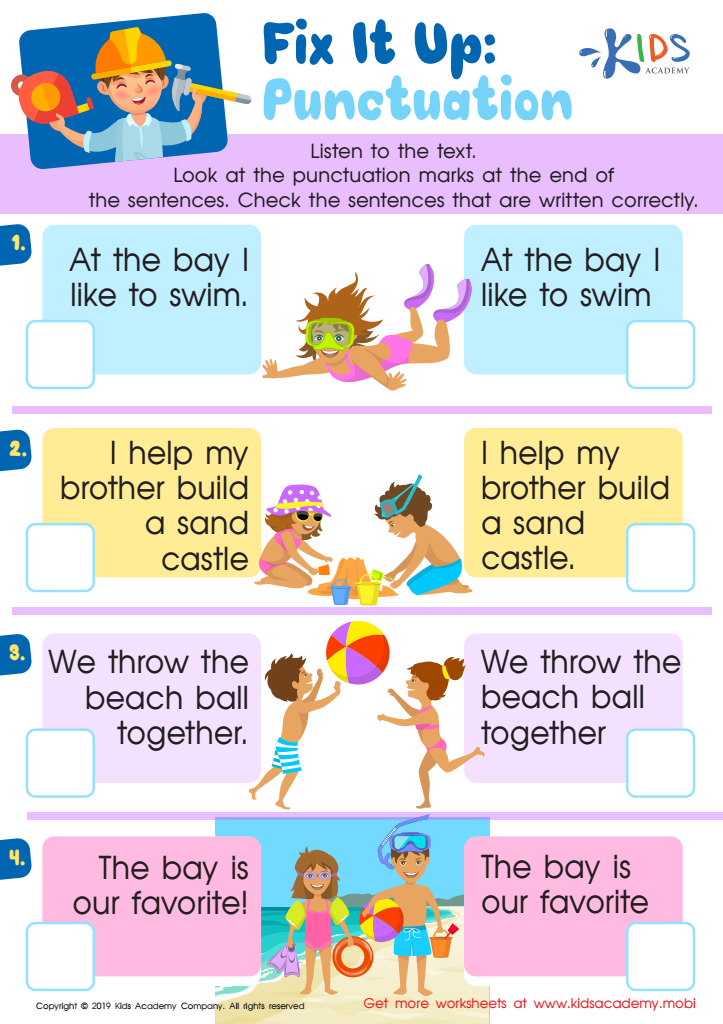
Fix Punctuation Worksheet
Have your kids tell you which punctuation marks they know before using this colorful worksheet. Read the sentences together and ask them to identify which are correctly punctuated. Guide them to check their answers. This simple activity helps teach kids to use punctuation correctly.
Fix Punctuation Worksheet
Worksheet
Join Kids Academy for Free
Who is primarily going to use this learning content?







Punctuation is a crucial component of written language that greatly enhances communication, comprehension, and self-expression among children aged 3-8. At this formative stage, understanding punctuation helps young learners grasp the structure of sentences, recognize the difference between questions and statements, and develop skills to interpret meaning accurately.
Teachers and parents should care about punctuation for several reasons. First, it aids in reading fluency—proper punctuation assists children in pausing and inflecting their voices at the right moments, which enriches their storytelling and comprehension. Secondly, it fosters early writing skills; kids learn to express thoughts clearly through the appropriate use of commas, periods, and question marks, leading to more sophisticated writing as they progress.
Moreover, early punctuation education lays the groundwork for stronger linguistic skills essential in today's information-driven world. Understanding nuances in writing helps children navigate diverse texts, fostering critical thinking and interpretative skills vital for academic success. In summary, nurturing punctuation understanding cultivates early literacy, enhances communication skills, and prepares children for future learning endeavors, making it an essential focus for both educators and parents.








