Recognizing number patterns Worksheets for Ages 3-8
5 filtered results
-
From - To
Unlock your child's mathematical potential with our "Recognizing Number Patterns Worksheets for Ages 3-8." These engaging resources, designed for young learners, help kids identify and understand number sequences through fun activities and exercises. Perfect for building foundational skills in pattern recognition, our worksheets foster critical thinking and problem-solving abilities. Tailored for preschool to early elementary grades, each worksheet progressively challenges children, keeping them captivated and eager to learn. Ideal for parents and teachers alike, these activities ensure a solid groundwork for future mathematical success, all while promoting a love for numbers. Explore the magic of patterns today!
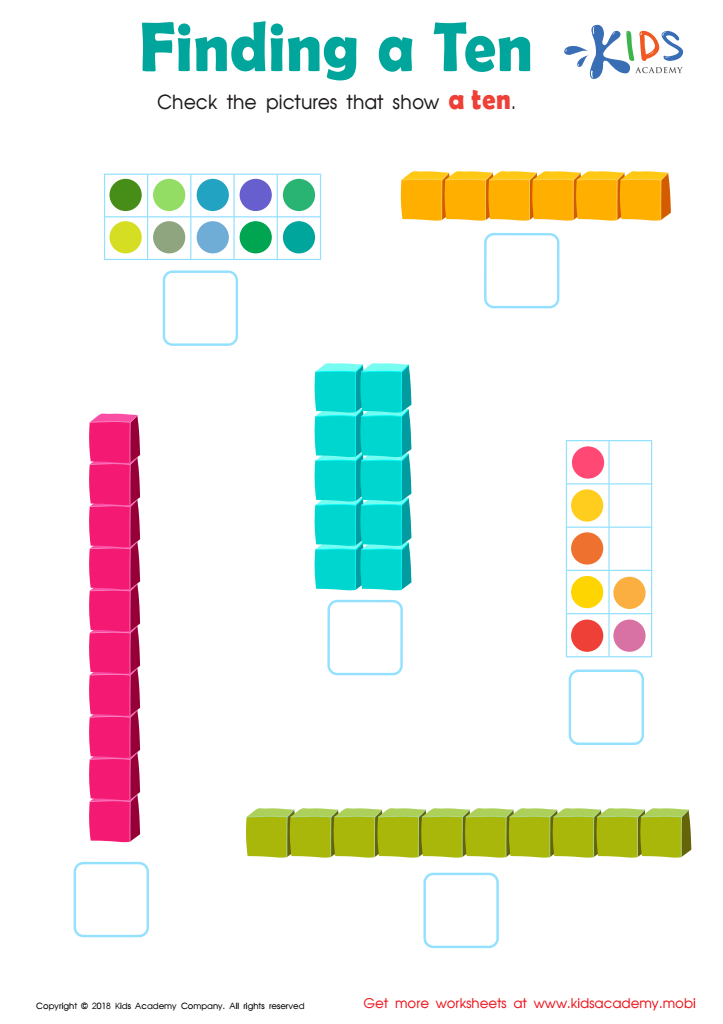
Finding a Ten Worksheet
 Assign to My Students
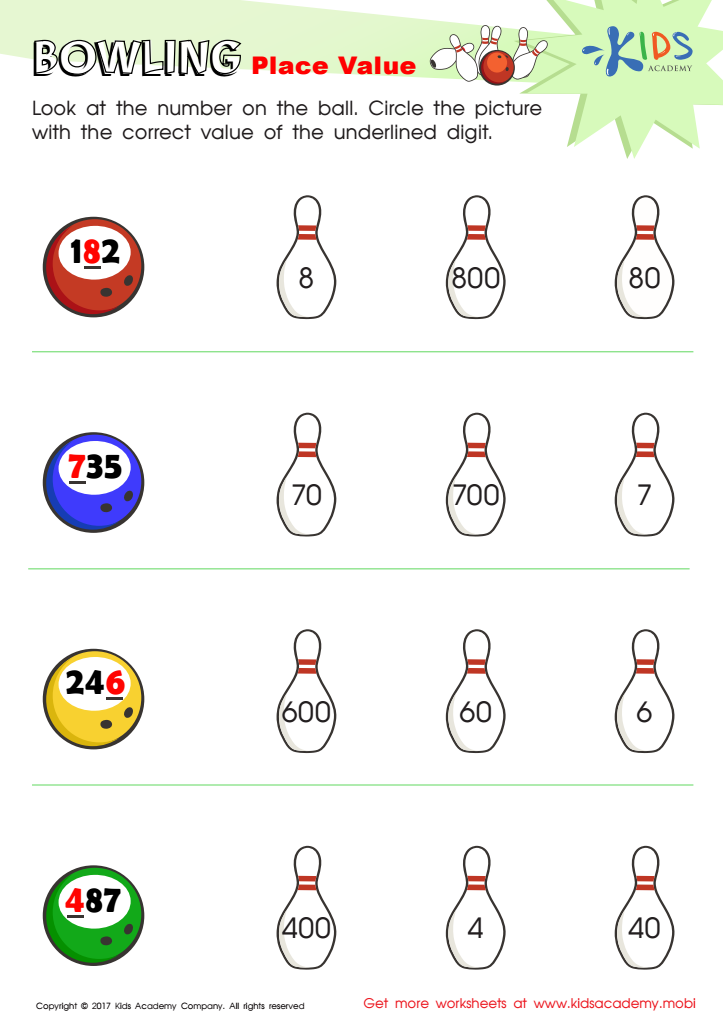
Place Value Worksheet
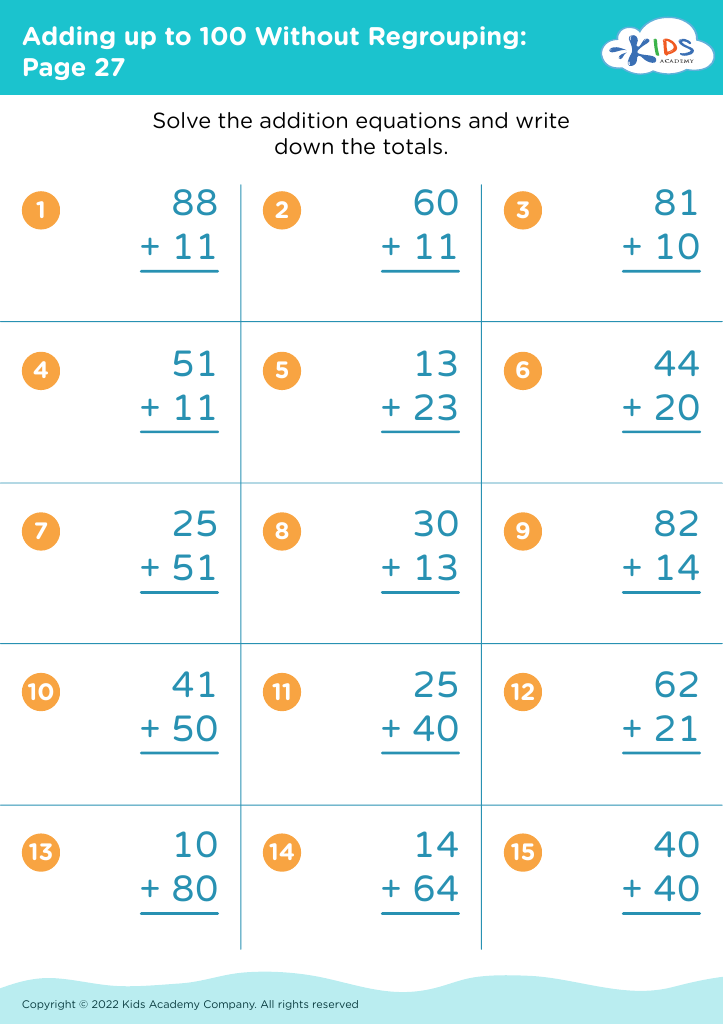
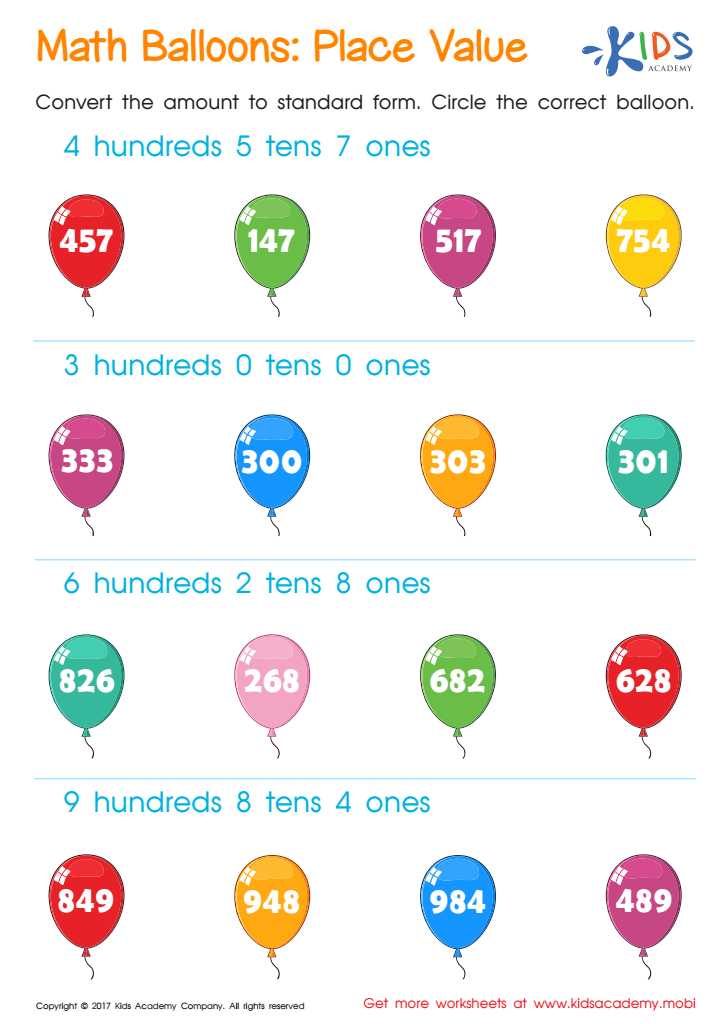
Place Value Printable Worksheet
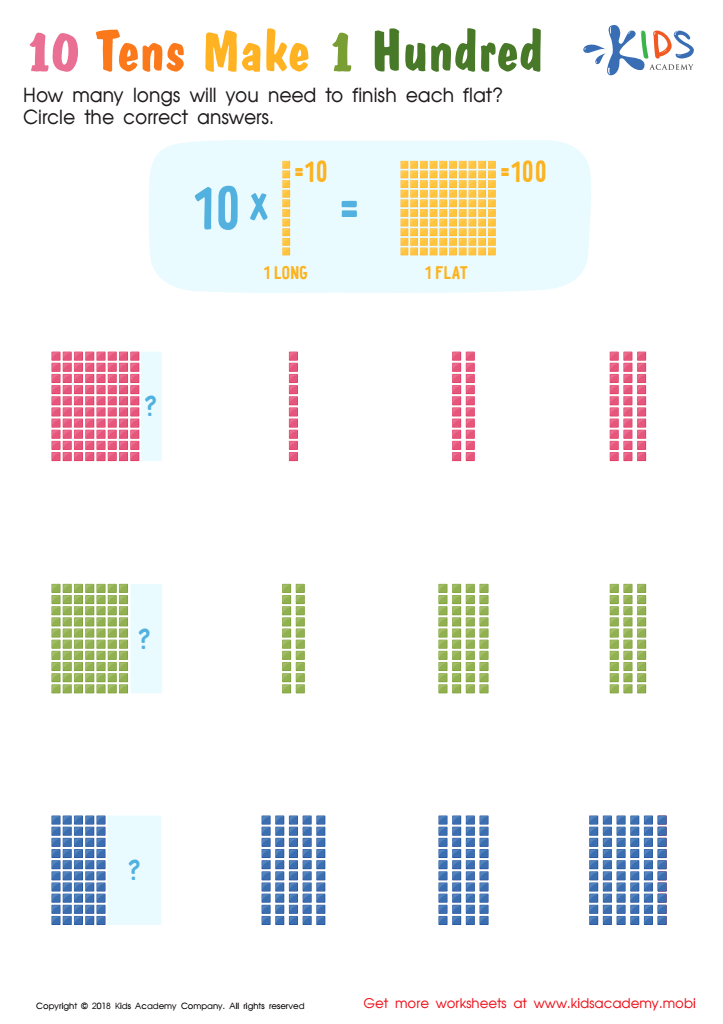
10 Tens Make 1 Hundred Worksheet








Recognizing number patterns for children aged 3-8 is a fundamental skill that parents and teachers should prioritize. Early exposure to number patterns aids in the development of critical mathematical understanding and cognitive skills. Patterns are the basis of algebraic thinking; by identifying and predicting sequences, children learn how to anticipate and make educated guesses, enhancing their problem-solving abilities.
When children grasp simple patterns, like counting by twos or recognizing alternating colors, they gain confidence in handling more complex mathematical concepts later. This foundational skill fosters logical thinking, as children learn to recognize repetition and order.
Moreover, engaging with number patterns supports language development. Concepts such as "before" and "after" or "more" and "less" often surface during pattern activities, expanding their vocabulary and comprehension.
Recognition and enjoyment of patterns also make mathematics more engaging and accessible. When a child realizes they can find relationships between numbers, mathematics transforms from abstract and intimidating into a puzzle waiting to be solved. This positive experience can lead to a lifelong interest in the subject, fostering a growth mindset.
Overall, focusing on number patterns for kids aged 3-8 lays down a strong mathematical foundation, supports cognitive and language development, and nurtures a positive and curious attitude towards learning.








