Science vocabulary enhancement Worksheets for Ages 3-8
3 filtered results
-
From - To
Boost your child's understanding of the natural world with our Science Vocabulary Enhancement Worksheets, designed specifically for ages 3-8. These engaging and colorful worksheets introduce essential science terms through fun activities that promote exploration and curiosity. Children will learn vocabulary related to animals, plants, and the environment, fostering a lifelong love for science. Each worksheet combines interactive tasks with captivating visuals, making it easier for young learners to grasp complex concepts. Perfect for classroom use or at-home learning, our worksheets are a great tool to enhance language skills while instilling scientific knowledge. Start your child's science journey today!
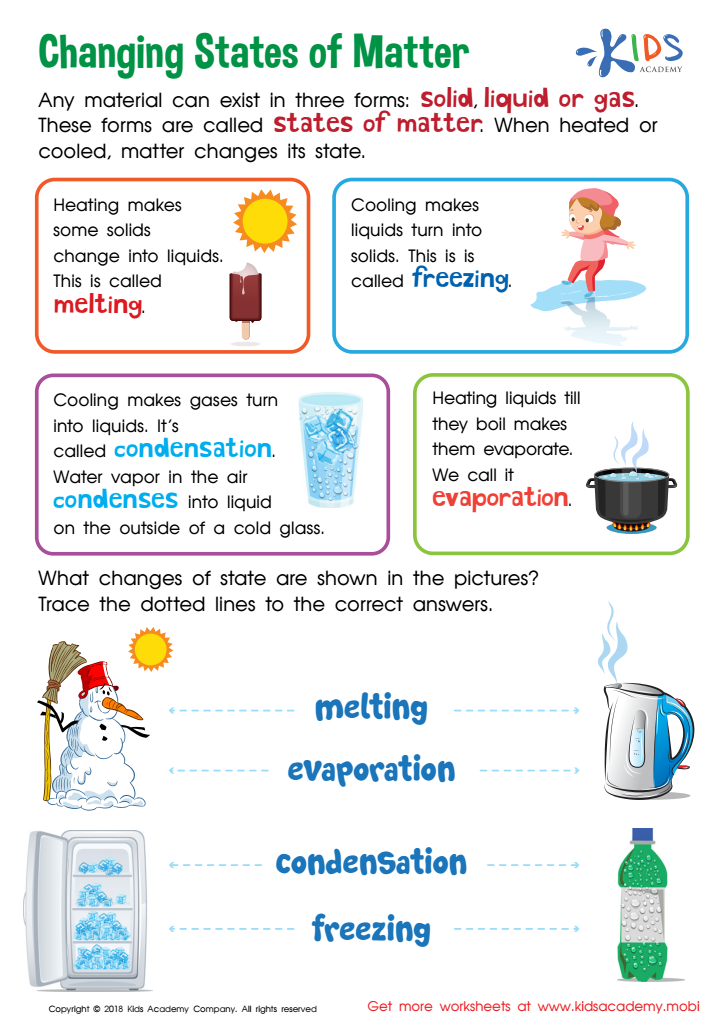
States of Matter Worksheet
 Assign to My Students
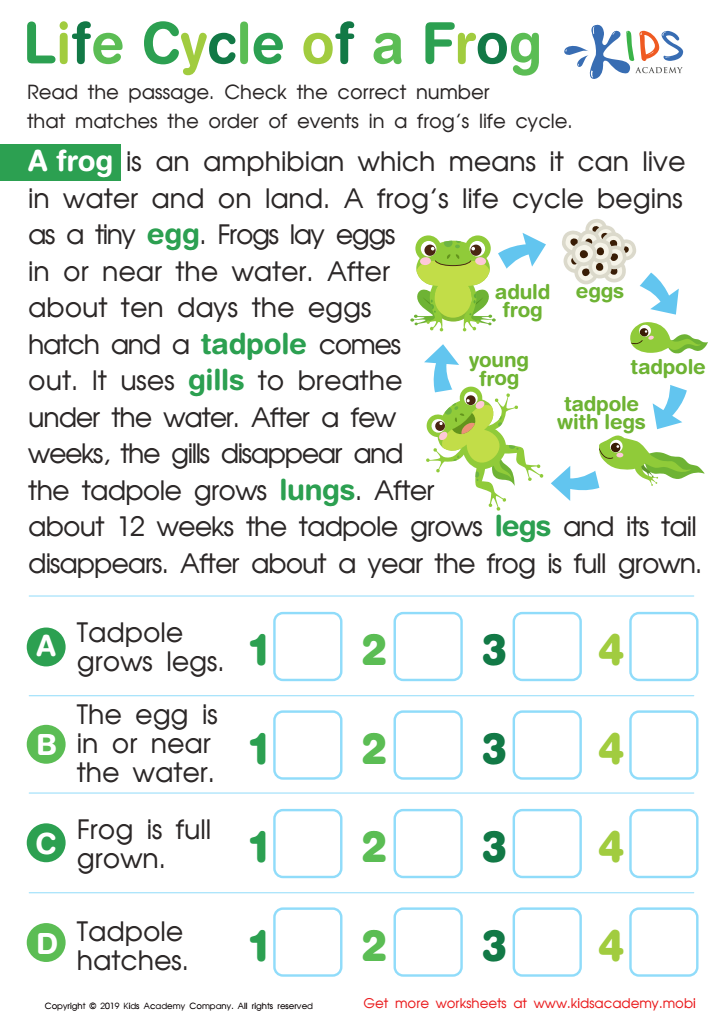
Life Cycle of a Frog Worksheet
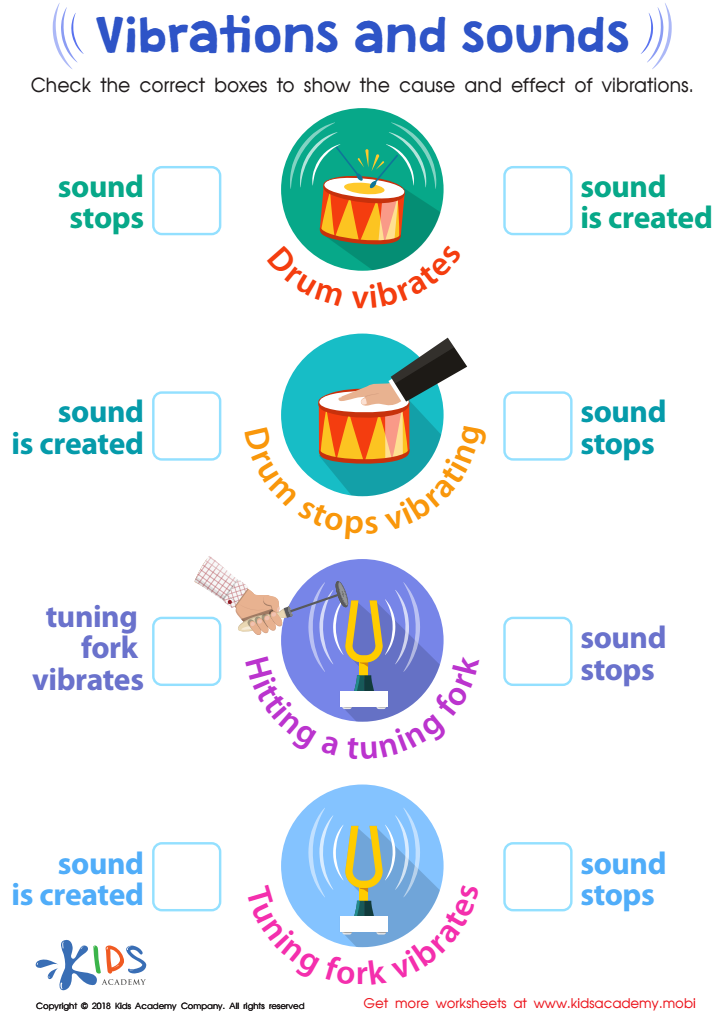
Vibrations and Sounds Worksheet








Enhancing science vocabulary for children aged 3-8 is essential for fostering a strong foundation in both language and scientific understanding. At this critical developmental stage, children are naturally curious about the world around them. Introducing them to scientific terms through engaging activities allows them to articulate their observations and questions, thereby deepening their cognitive and analytical skills.
Parents and teachers play a crucial role in this process. A rich science vocabulary not only promotes effective communication but also encourages critical thinking. When children can label and discuss concepts such as "gravity," "habitat," or "transpiration," they are more capable of grasping complex ideas later in life. It empowers them to engage in meaningful conversations about their environment, encouraging a love for learning that extends beyond the classroom.
Moreover, embedding science vocabulary into everyday interactions helps bridge the gap between abstract concepts and real-world experiences. Children who are proficient in science terminology will be better prepared for future academic success, particularly as they encounter STEM (Science, Technology, Engineering, and Mathematics) subjects in school. In essence, nurturing science vocabulary from an early age cultivates both language skills and a curiosity for exploration, setting the stage for lifelong learning.








