
Season identification Worksheets for Ages 3-8
3 filtered results
Difficulty Level
Grade
Age
-
From - To
Subject
Activity
Standards
Discover our engaging Season Identification Worksheets designed for children ages 3-8! These interactive resources help young learners explore the four seasons—spring, summer, fall, and winter—through fun activities and colorful illustrations. Each worksheet encourages kids to recognize seasonal changes, associate weather patterns, and identify seasonal plants and animals. Perfect for parents and educators alike, these printable materials support early childhood education by enhancing observational skills and boosting environmental awareness. Foster a love for nature while making learning enjoyable! Visit our page to access a variety of worksheets that will enrich your child's understanding of the world around them.
Favorites
With answer key
Interactive
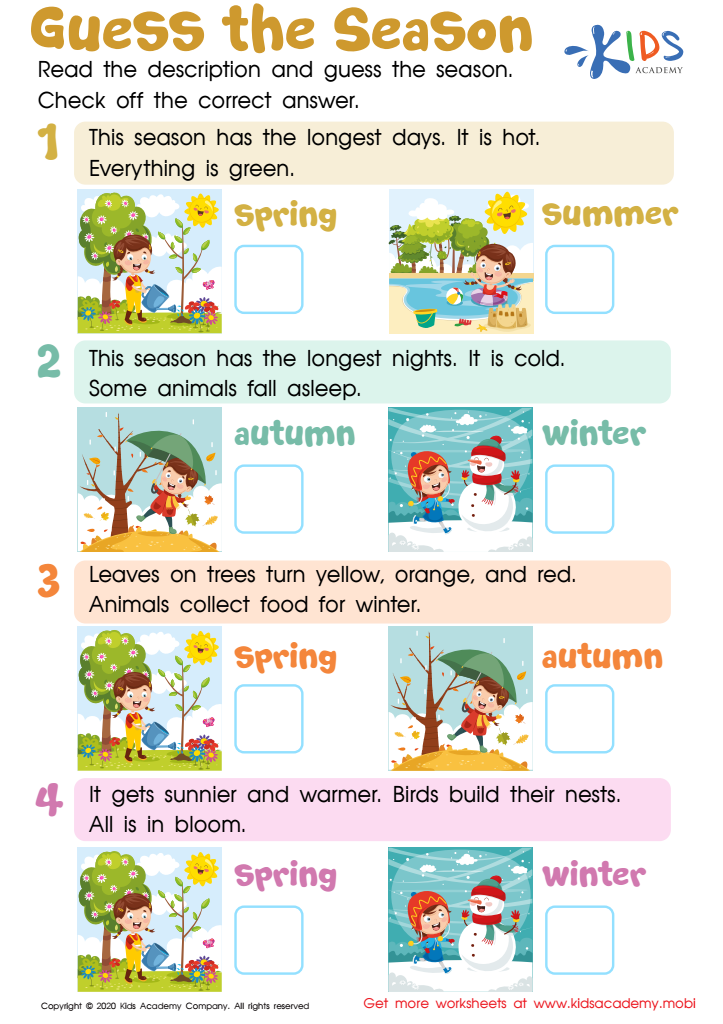
Guess the Season Worksheet
Winter and summer bring different weather! Help kids recognize the changes with this free Kids Academy PDF worksheet. Students read each description, look at the pictures, and check the box next to the season depicted. Make learning fun and easy with interactive activities.
Guess the Season Worksheet
Worksheet
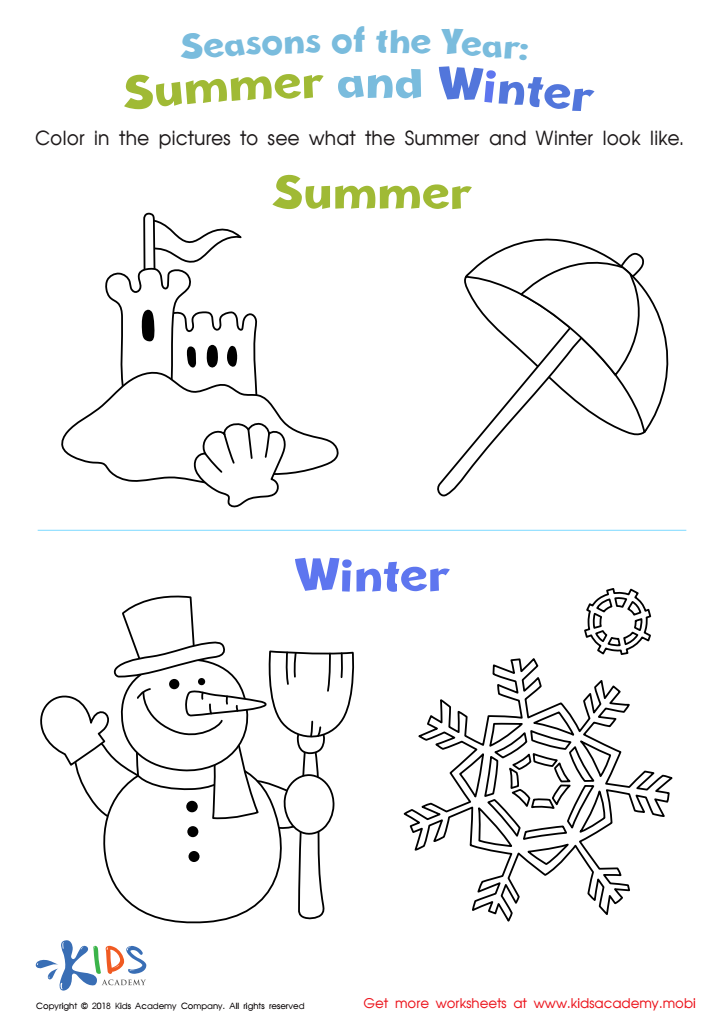
Summer and Winter Worksheet
Ask your child what they associate with winter and summer. What do they look forward to in winter? What colors do they see most? What do they love doing in summer? Help them color in the pictures of winter and summer in the worksheet, choosing the colors they think best represent each season.
Download (PDF)
 Assign to My Students
Assign to My Students
Summer and Winter Worksheet
Worksheet
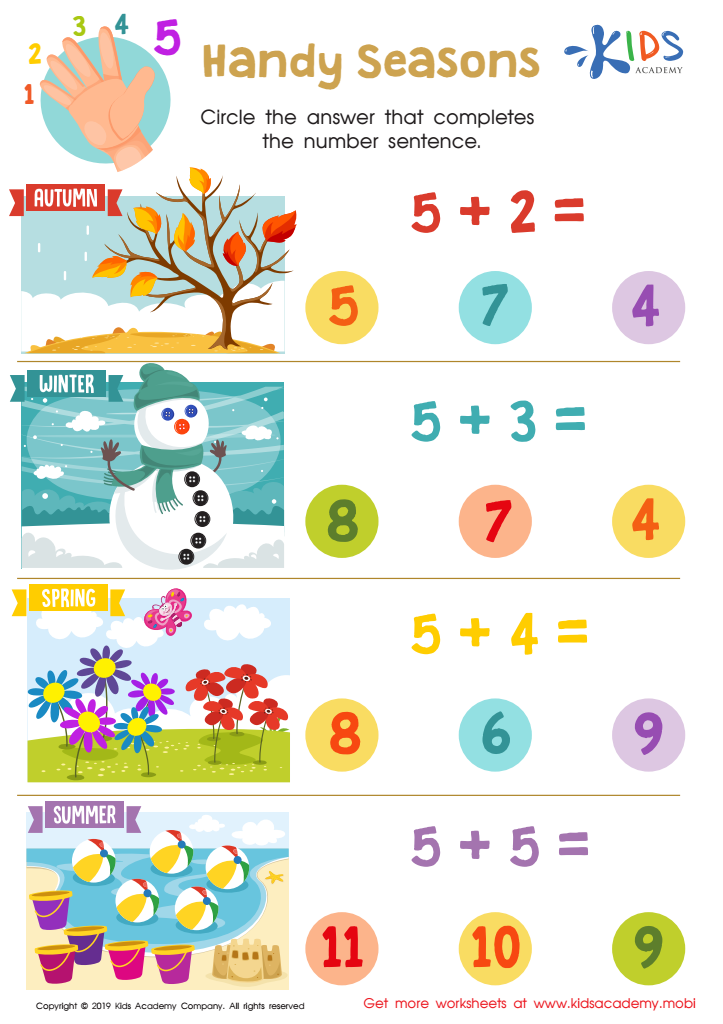
Handy Seasons Worksheet
Help your kids understand number sentences with this fun and colorful worksheet, featuring 4 pictures. Get them to identify each season, then circle the answer that completes the number sentence given. Make math exciting and get your kids excited to learn!
Handy Seasons Worksheet
Worksheet
Join Kids Academy for Free
Who is primarily going to use this learning content?





Season identification is crucial for children aged 3-8 as it lays the groundwork for a host of developmental skills. Firstly, understanding seasons enhances a child’s connection to nature and environment, fostering curiosity about the world around them. Recognizing that spring brings new blooms while winter unveils snow allows children to observe and anticipate changes in their surroundings, developing observational skills and critical thinking.
Additionally, seasonal identification is intertwined with language development. Engaging with seasonal themes through stories, songs, and crafts introduces children to new vocabulary and concepts. This enriches their language skills and stimulates conversations, aiding communication abilities.
Moreover, seasons often influence activities and cultural events that offer rich learning opportunities. Seasonal changes can prompt discussions about holidays and traditions, promoting social awareness and cultural understanding.
For teachers and parents, utilizing the seasons in educational contexts can make learning more engaging and relatable. It serves to connect various subjects like science (nature cycles), art (seasonal colors), and even math (patterns in seasons), reinforcing interdisciplinary learning.
Overall, teaching children about different seasons contributes to a broader understanding of their environment, enhances their language and social skills, and provides opportunities for practical learning experiences.








