
Sequencing skills improvement Worksheets for Ages 3-8
3 filtered results
Difficulty Level
Grade
Age
-
From - To
Subject
Activity
Standards
Enhance your child's sequencing skills with our engaging worksheets for ages 3-8! Designed to build critical thinking and problem-solving abilities, these fun activities help young learners understand the order of events and improve their cognitive development. Our worksheets feature a variety of themes and formats, ensuring that kids stay motivated and excited to learn. Perfect for home or classroom use, they support early literacy and comprehension, making learning enjoyable and effective. Start your child’s journey to mastering sequencing skills today and watch their confidence grow as they complete each activity. Explore our collection and witness the difference in their learning!
Favorites
With answer key
Interactive
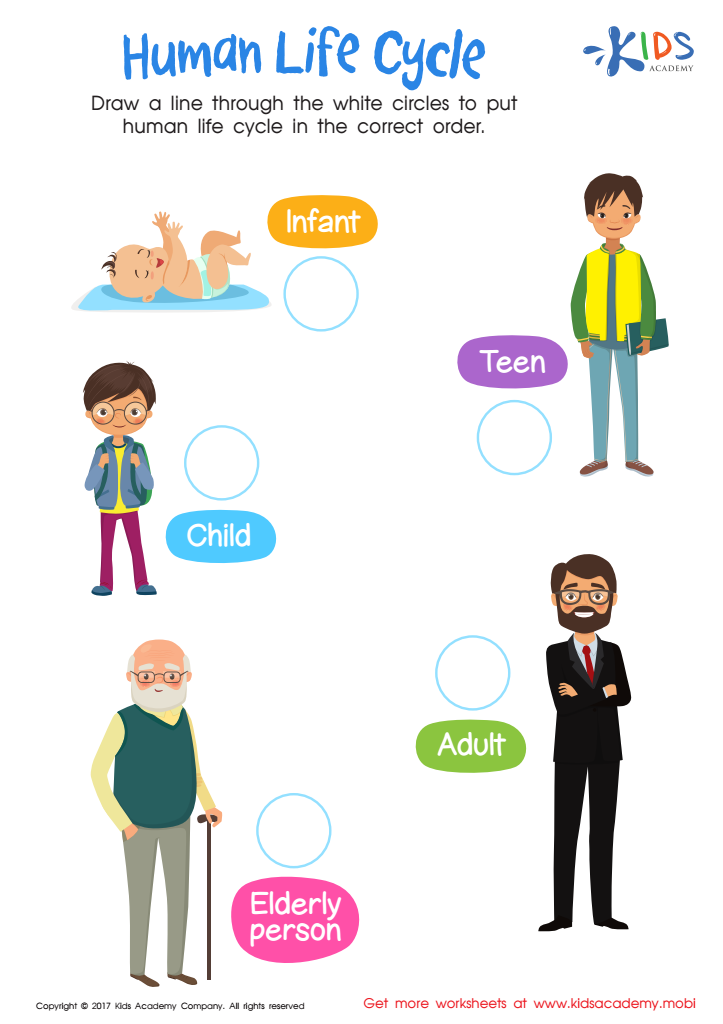
Human Life Cycle Worksheet
Kids can use this PDF to gain an understanding of their life cycle and important health concepts. It features colorful graphics to help solidify their learning.
 Assign to My Students
Human Life Cycle Worksheet
Worksheet
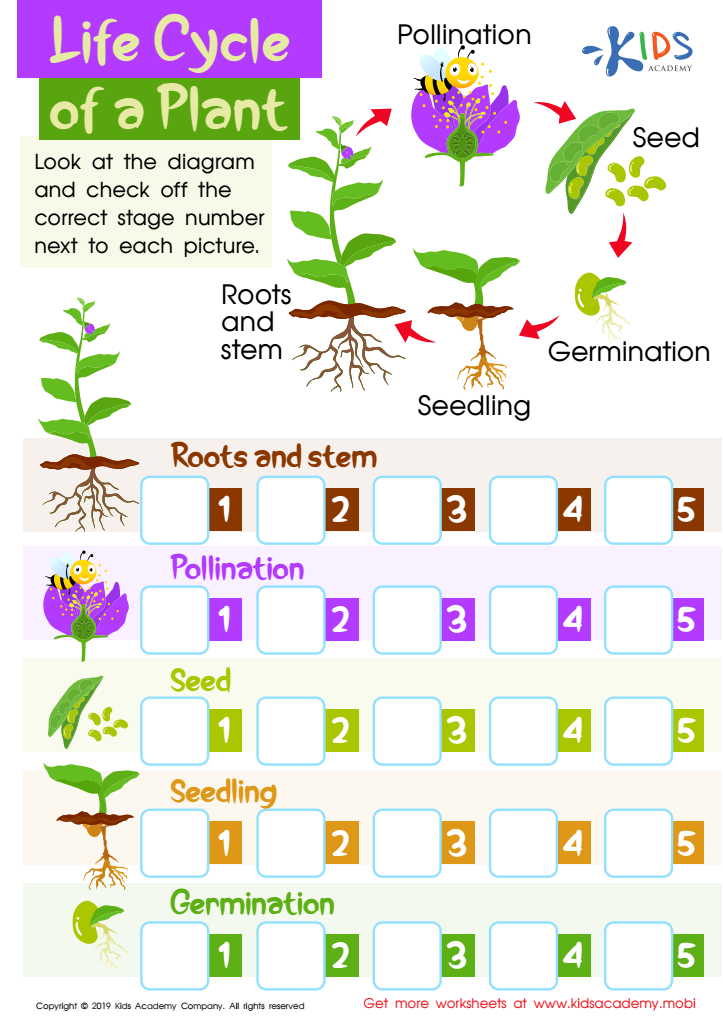
Life Cycle of a Plant Worksheet
This fun PDF worksheet lets young scientists explore the life cycle of plants. It features pictures to describe each stage: pollination, seed, germination, seedling, rooting and stems. They can check off each stage in the diagram, giving them a concrete understanding.
Life Cycle of a Plant Worksheet
Worksheet
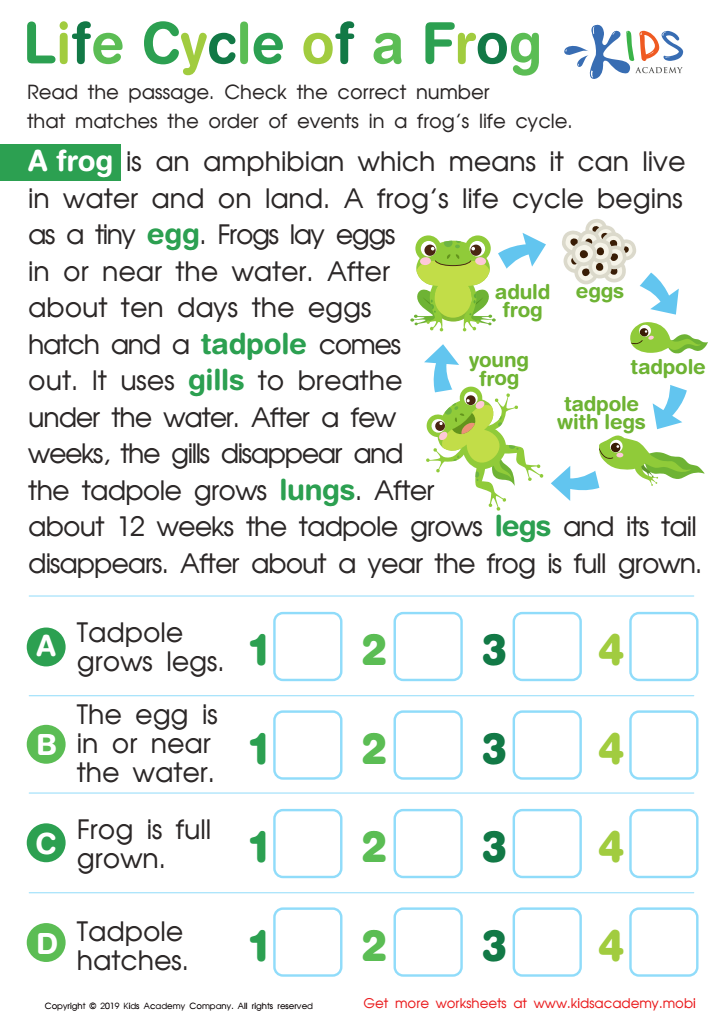
Life Cycle of a Frog Worksheet
Teach your kids to read and open their eyes to new knowledge. Frogs have fascinating life cycles. Show them the worksheet with pictures and guide them as they read the passage about it. Encourage them to check the number that matches the frog's life cycle order.
Life Cycle of a Frog Worksheet
Worksheet
Join Kids Academy for Free
Who is primarily going to use this learning content?





.jpg)

Sequencing skills are fundamental in a child's early development, particularly for ages 3 to 8, as they lay the groundwork for critical thinking and problem-solving abilities. Understanding sequences aids children in organizing thoughts, events, and actions logically, which is essential for everyday tasks, storytelling, and eventually more complex academic subjects. This developmental skill supports reading comprehension, as children learn to make predictions and connections between ideas in a narrative.
For parents and teachers, fostering sequencing skills can significantly influence a child’s learning trajectory. It enhances their memory and encourages them to follow directions accurately, which is essential in classroom settings and at home. Children with strong sequencing skills often excel in areas like mathematics, language arts, and science, benefiting their overall academic success.
Moreover, developing these skills encourages independence and resilience. As children practice sequencing through play, storytelling, and problem-solving activities, they learn to overcome challenges and understand the cause-and-effect relationships in daily life. Ultimately, prioritizing sequencing skill improvement not only enriches academic learning but also enhances social skills and emotional regulation, thereby leading to well-rounded growth. Parents and teachers, therefore, play a crucial role in nurturing these skills, shaping confident and capable learners.








