Time calculation skills Worksheets for Ages 3-8
3 filtered results
-
From - To
Explore our engaging Time Calculation Skills Worksheets for ages 3-8, designed to enhance your child's understanding of time concepts and improve their ability to perform time-related calculations. Our comprehensive collection features fun and colorful activities that make learning about clocks, hours, and minutes enjoyable and accessible. These worksheets promote critical thinking and problem-solving skills while laying a solid foundation for time management. Perfect for both home and classroom use, our resources support early math education by igniting curiosity and making learning interactive. Help your little ones become time-savvy with our delightful and age-appropriate worksheets, ensuring they have a solid grasp of essential time skills!
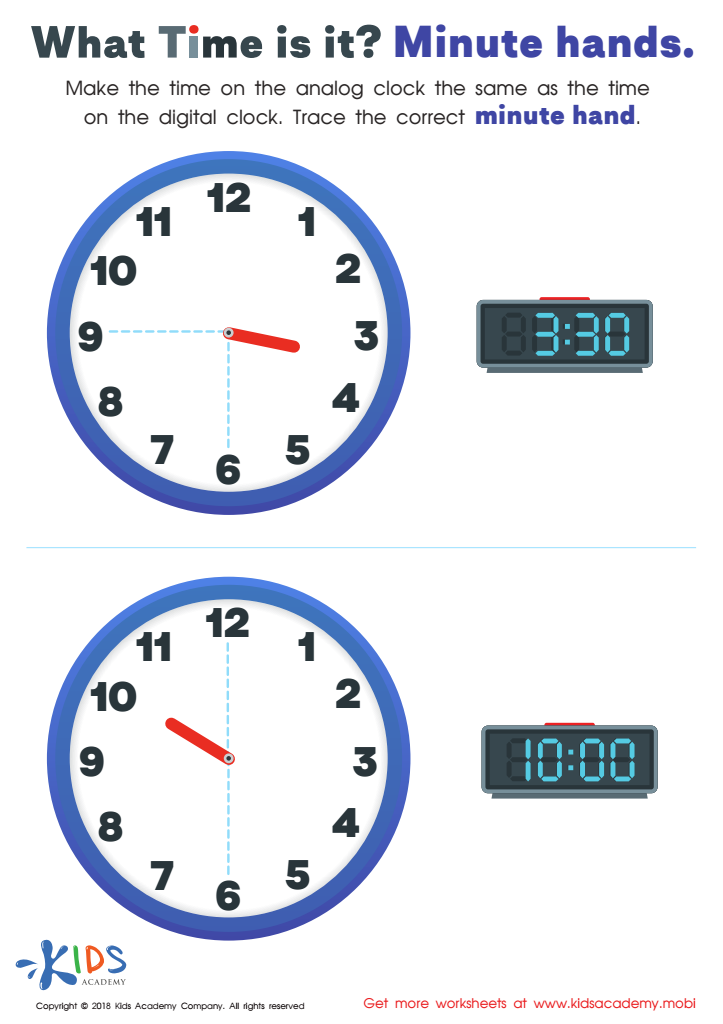
What Time Is it? Minute Hands Worksheet
 Assign to My Students
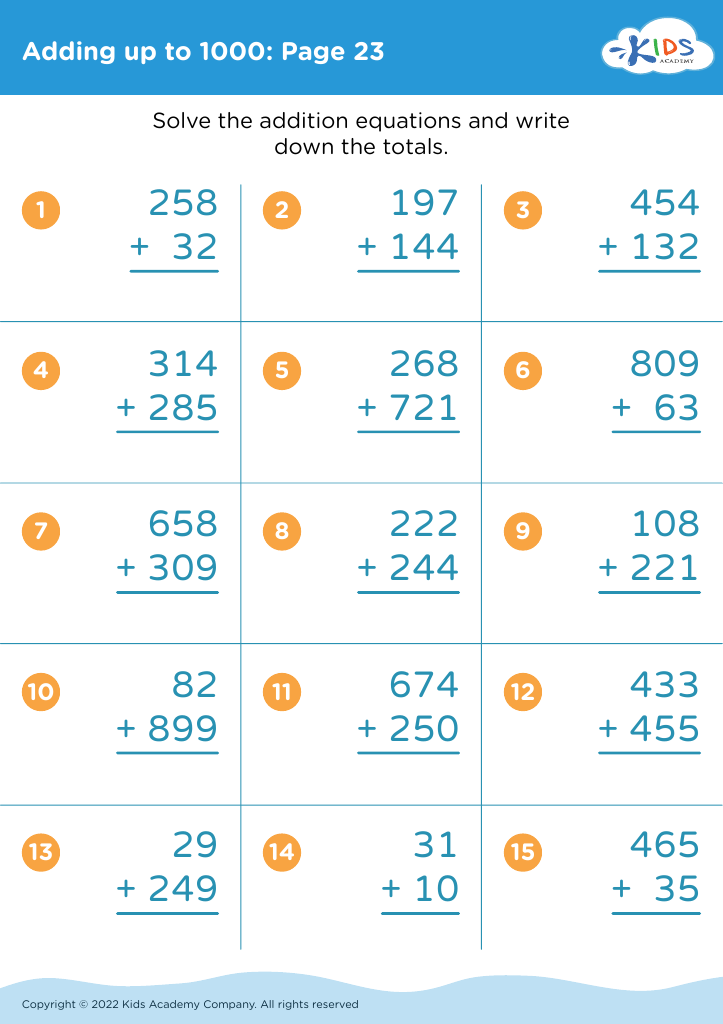
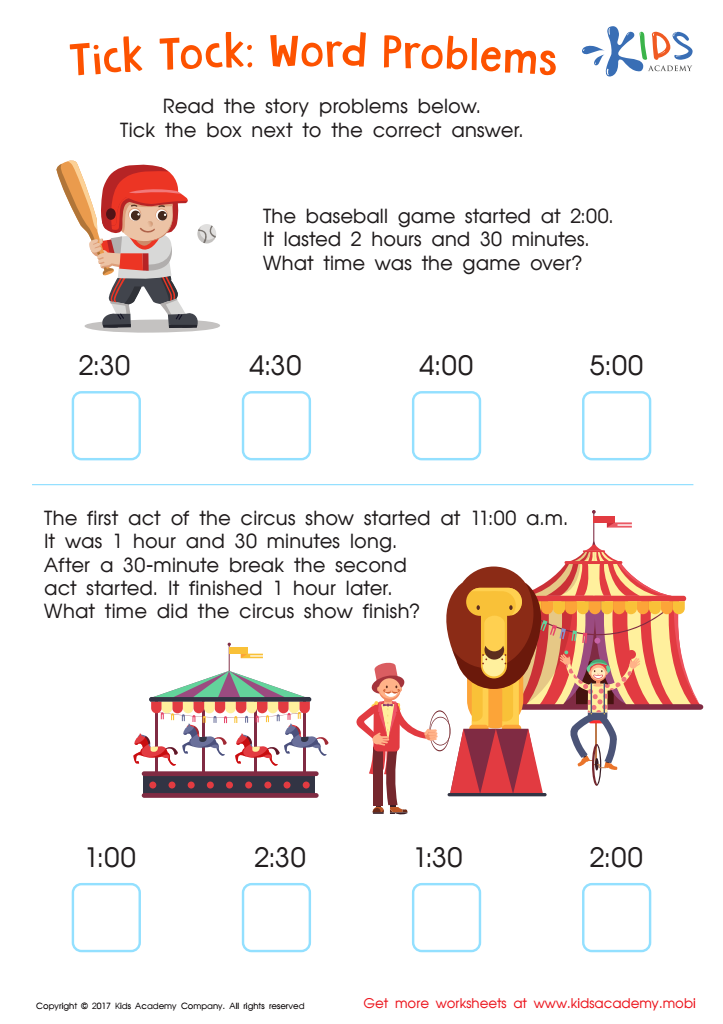
Tick Tock Word Problems Time Worksheet








Time calculation skills are essential for children aged 3-8 as they lay the foundation for understanding daily routines, schedules, and the concept of time management. At this crucial developmental stage, children begin to comprehend the structure of their day—recognizing when it's time for meals, play, and rest. By instilling time-related skills early on, parents and teachers help children develop a sense of responsibility and independence.
Moreover, time calculation skills enhance cognitive development. Children learn to sequence events, which improves their problem-solving capabilities and critical thinking skills. Bathing in experiences that involve time, such as countdowns, timers, and calendars, allows for practical play-based learning. These activities can be both fun and educational, promoting engagement and retention.
Additionally, time awareness is integral to social interactions; it helps children understand waiting for turns or scheduling playdates. Including time-focused learning in early education not only cultivates mathematical skills but also equips children with essential life skills for the future.
In summary, fostering time calculation skills in young children promotes not just academic readiness but also emotional and social growth, making it crucial for parents and teachers to prioritize these skills.








