Understanding communities Worksheets for Ages 3-8
6 filtered results
-
From - To
Explore our "Understanding Communities Worksheets" designed specifically for children ages 3-8! These engaging and interactive printable worksheets help young learners recognize and appreciate the various roles within their neighborhoods and the wider world. Through fun activities, kids will identify community helpers, explore local places, and understand the importance of working together. Our resources support foundational skills, including reading, writing, and critical thinking, making them perfect for home or classroom use. Foster curiosity and a sense of belonging in your little ones as they discover the vibrant tapestry of their communities. Download today and watch them learn while having fun!
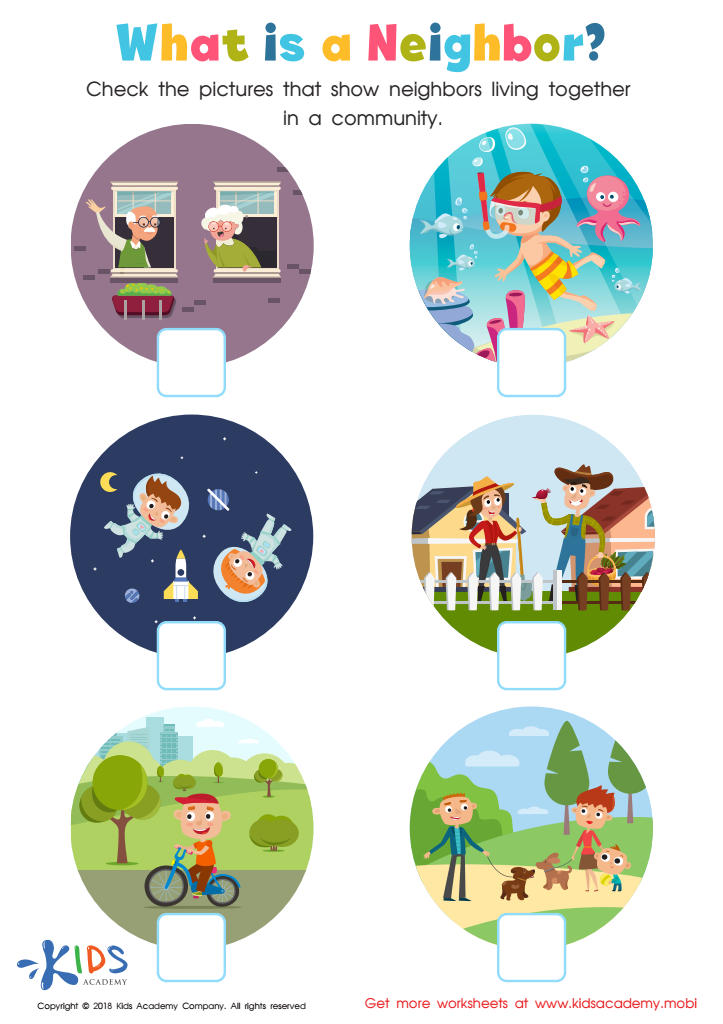
What is a neighbor Worksheet
 Assign to My Students
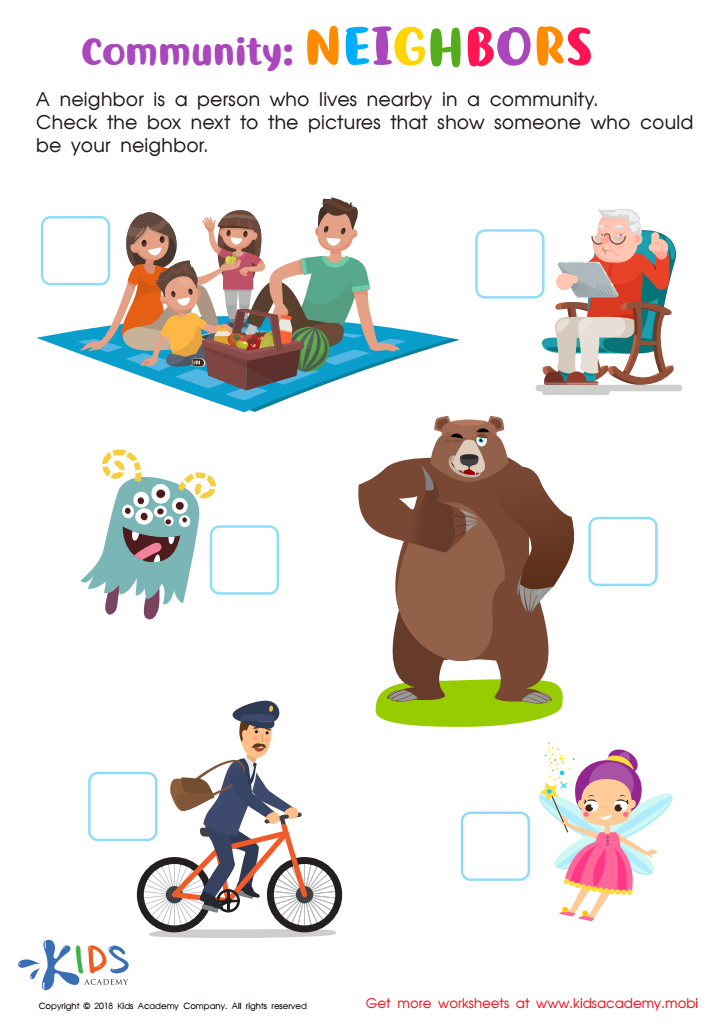
Community: Neighbors Worksheet
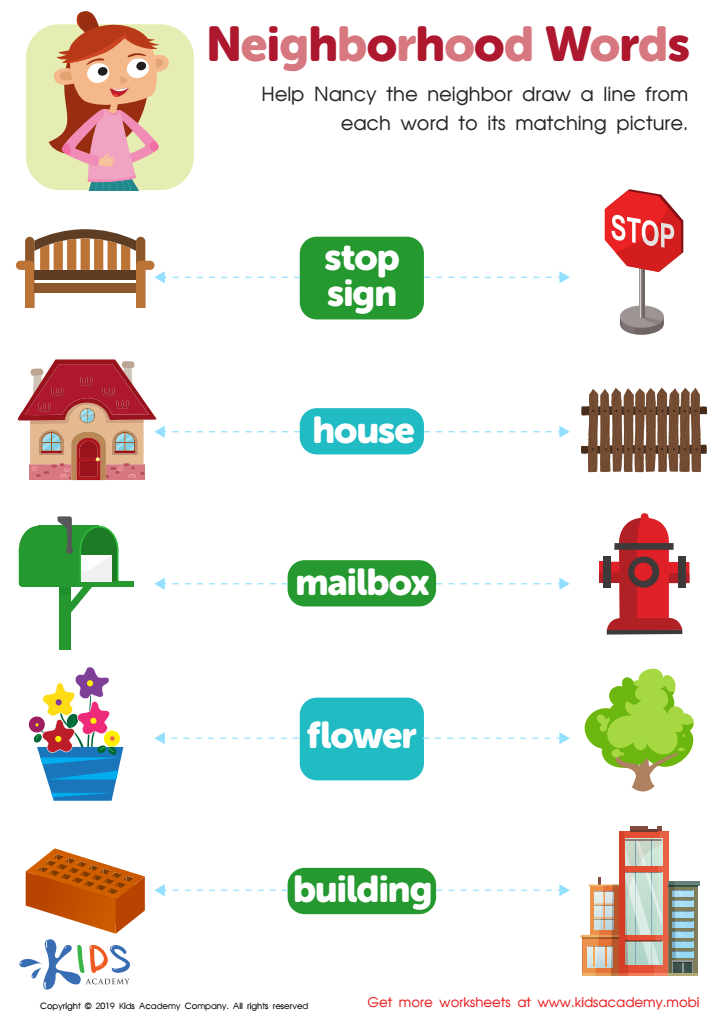
Neighborhood Words Worksheet
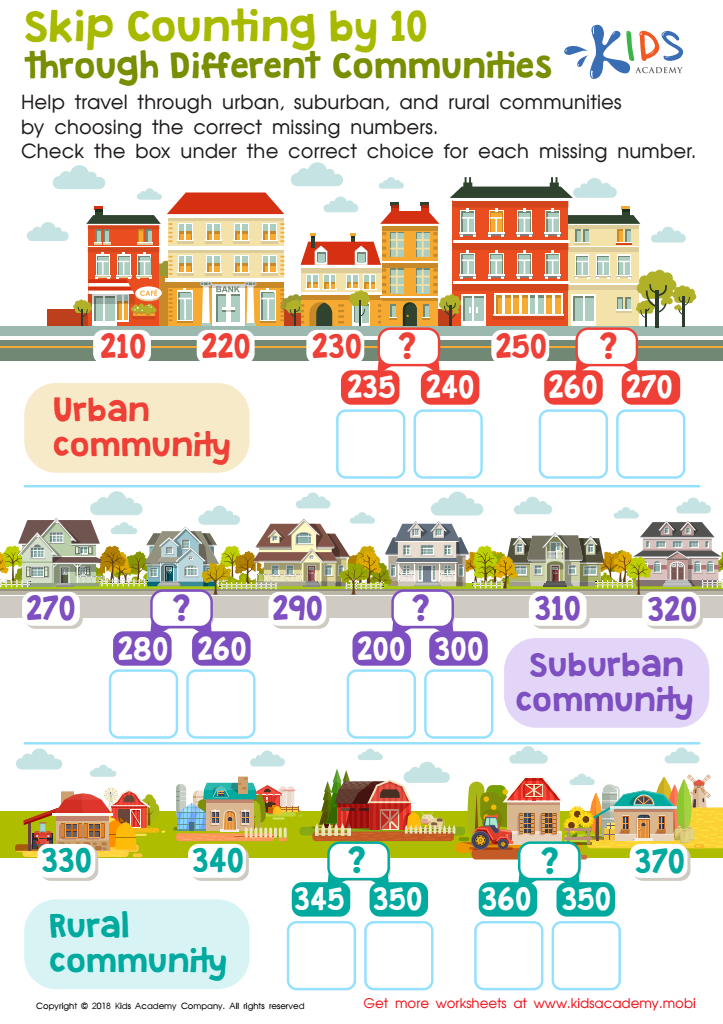
Skip Counting by 10 through Different Communities Worksheet
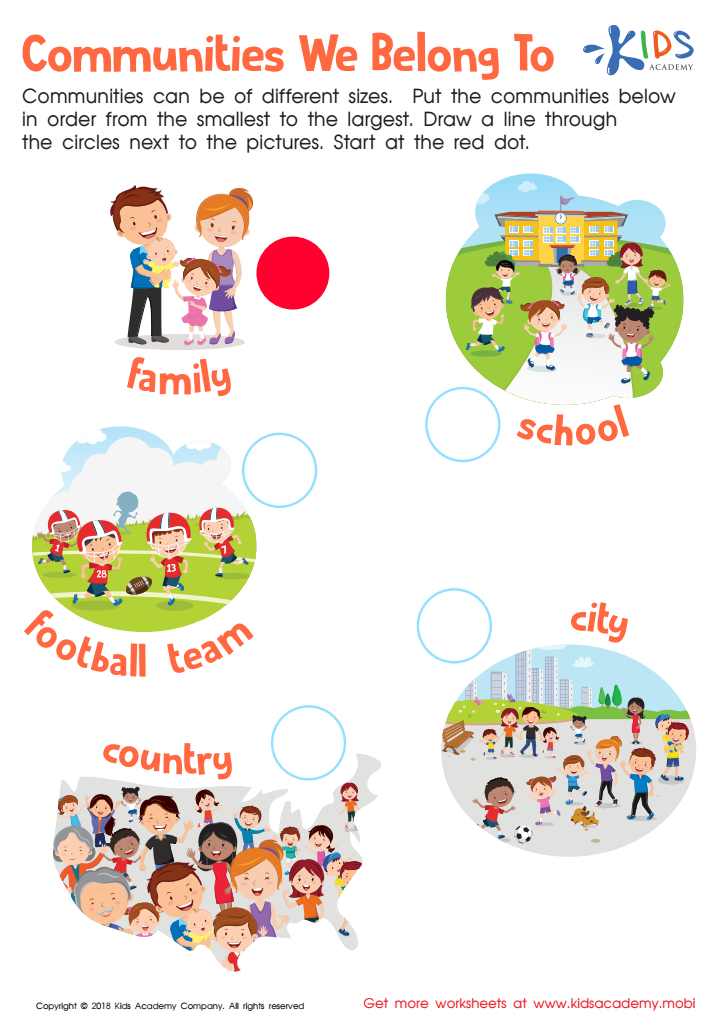
Communities We Belong to Worksheet
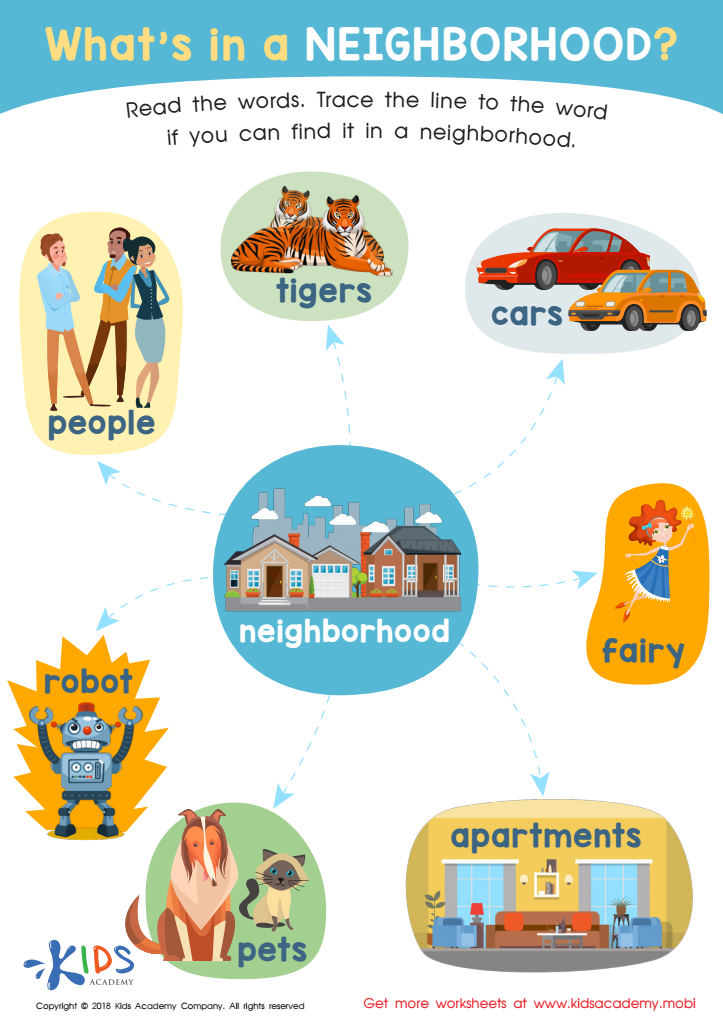
What's in a Neighborhood? Worksheet



.jpg)


Understanding communities is crucial for children aged 3-8, as it forms the foundation for their social skills, empathy, and sense of identity. During these formative years, children are naturally curious about the world around them. By exploring their local communities, they learn about diversity, cultures, and different ways of living, which fosters respect and appreciation for others. This understanding not only enhances their social-emotional development but also helps them建立初步对社区责任的认识.
For parents and teachers, encouraging an awareness of communities can lead to improved communication skills and confidence in children. As they engage with family members, neighbors, and local resources, children develop a sense of belonging and security. This can translate to better academic performance, as socially and emotionally secure children are more ready to learn.
Moreover, involving children in community activities—such as local events, volunteer work, and field trips—often results in lifelong lessons about cooperation, shared values, and problem-solving. By nurturing an understanding of their communities early on, parents and teachers equip children with what they need to become informed, engaged, and compassionate citizens as they grow. Supporting this awareness cultivates a better future for both the children and their communities.








