Understanding comparisons Worksheets for Ages 3-8
6 filtered results
-
From - To
Explore our engaging "Understanding Comparisons Worksheets" designed for children ages 3-8. These printable resources help young learners grasp essential concepts such as bigger vs. smaller, taller vs. shorter, and more vs. less. With stimulating activities that encourage critical thinking and visual recognition, kids will enhance their understanding of comparisons in a fun and interactive way. Ideal for both home and classroom settings, these worksheets support early childhood development, making learning enjoyable through colorful illustrations and relatable examples. Empower your child’s educational journey with our thoughtfully crafted materials that foster foundational skills in comparison recognition! Download today and watch learning come alive!
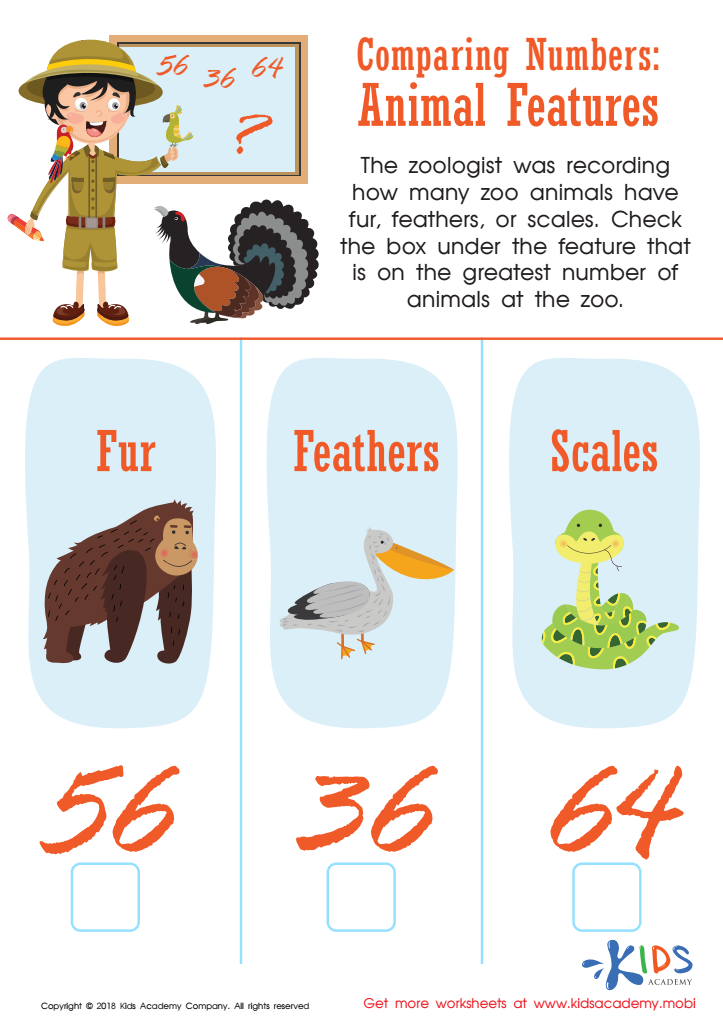
Animal Features Worksheet
 Assign to My Students
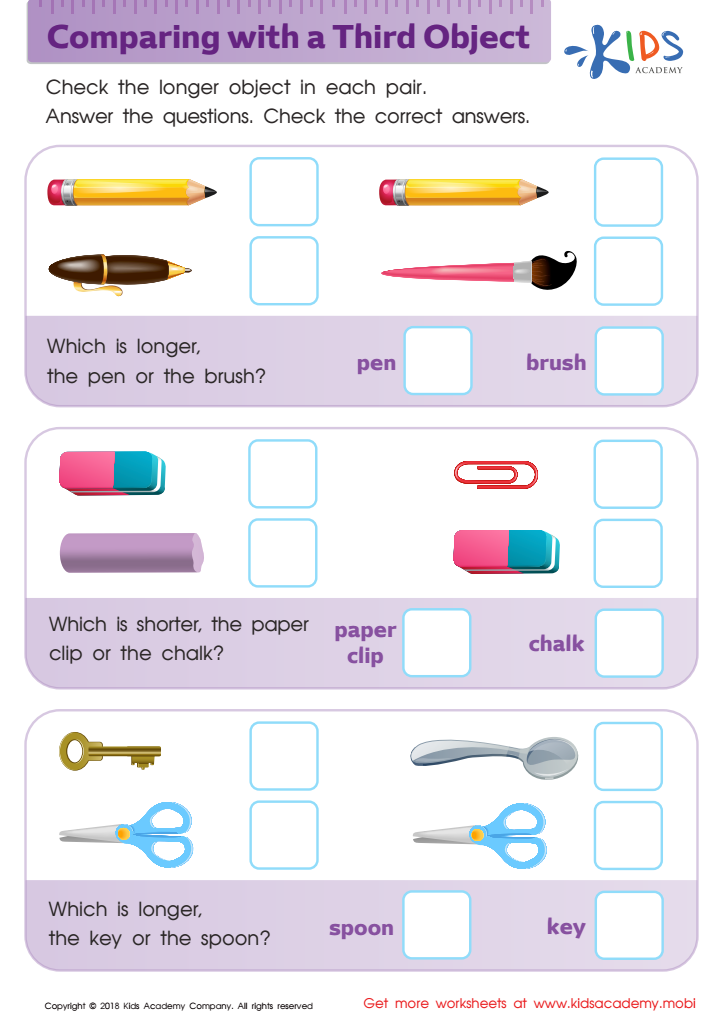
Comparing with a Third Object Worksheet
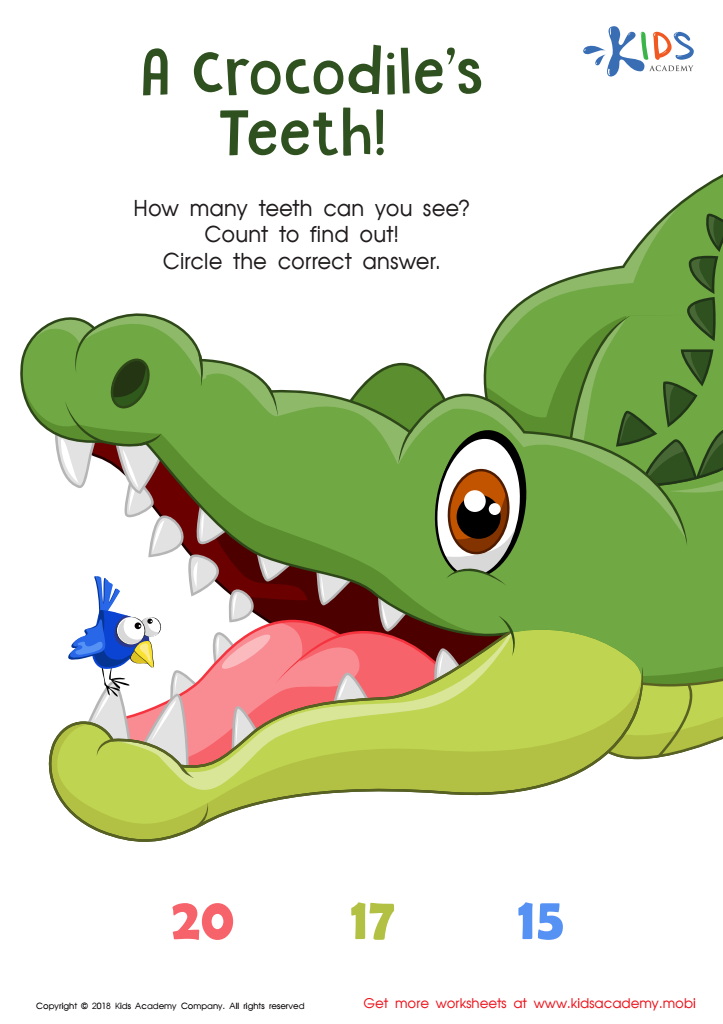
A Crocodile's Teeth Worksheet
Matching: Classifying Toys by Size Worksheet
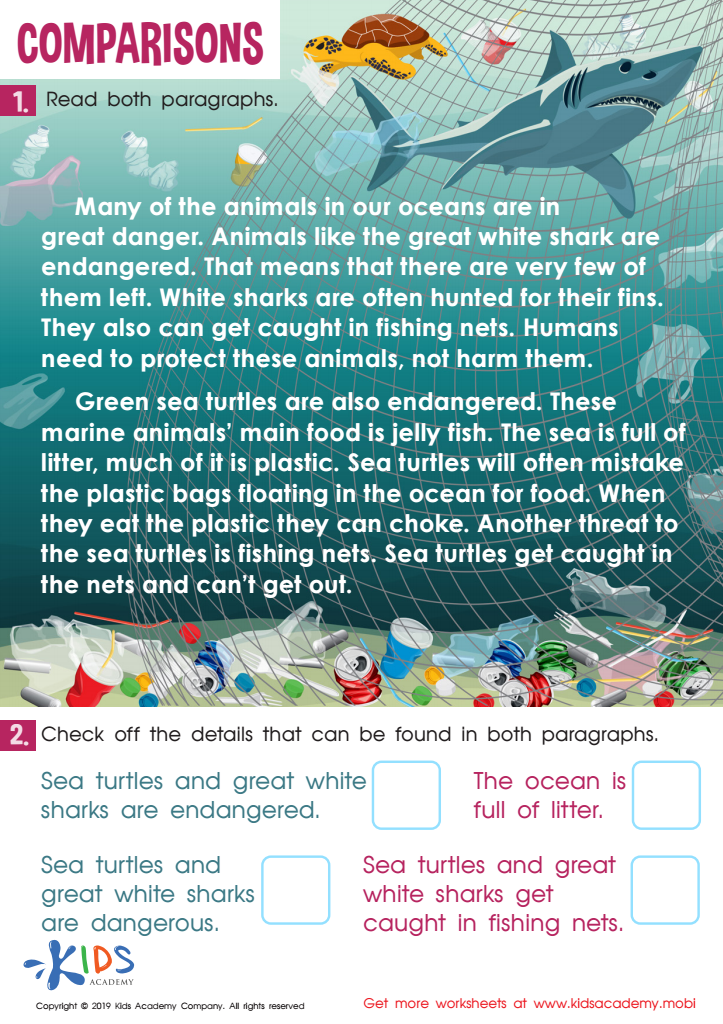
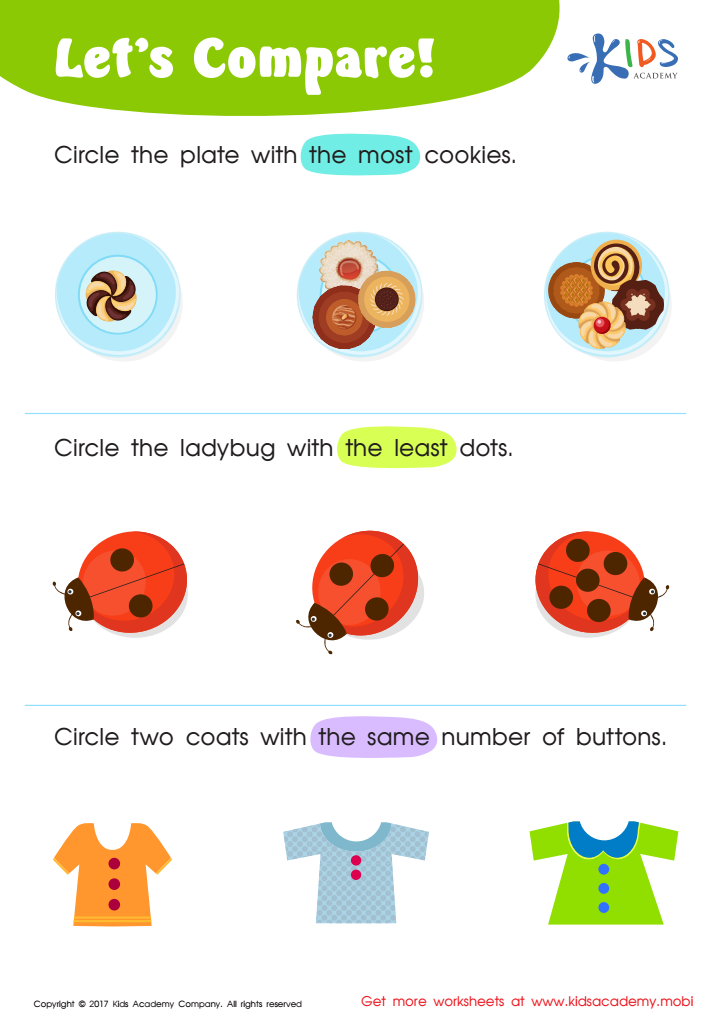
Comparisons Worksheet
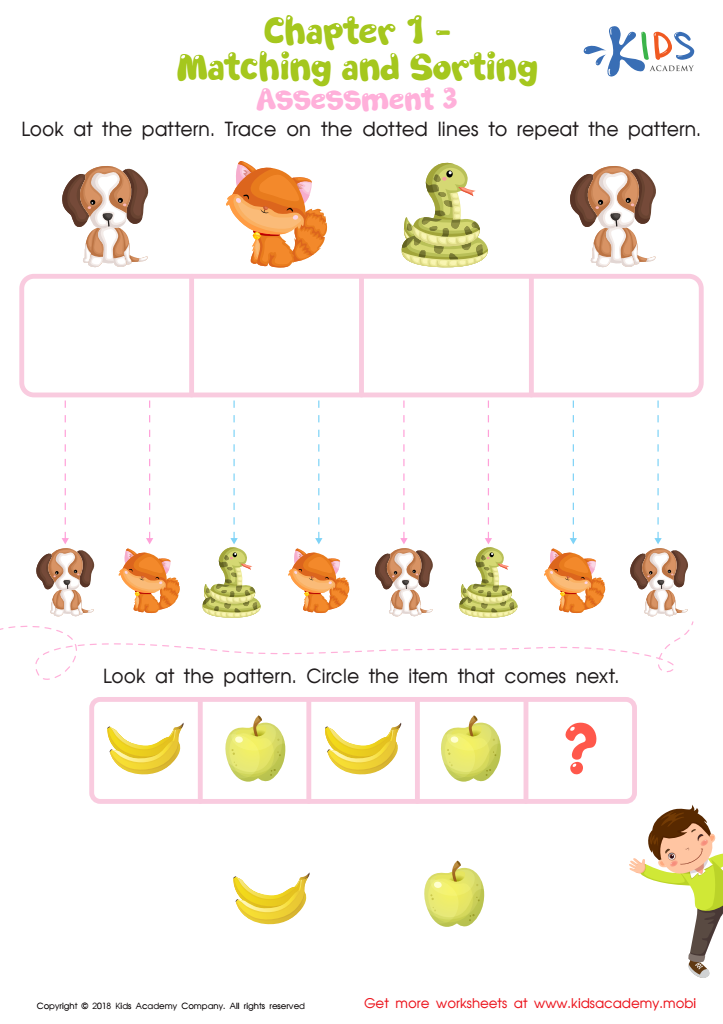
Matching and Sorting for Preschool: Assessment 3 Worksheet




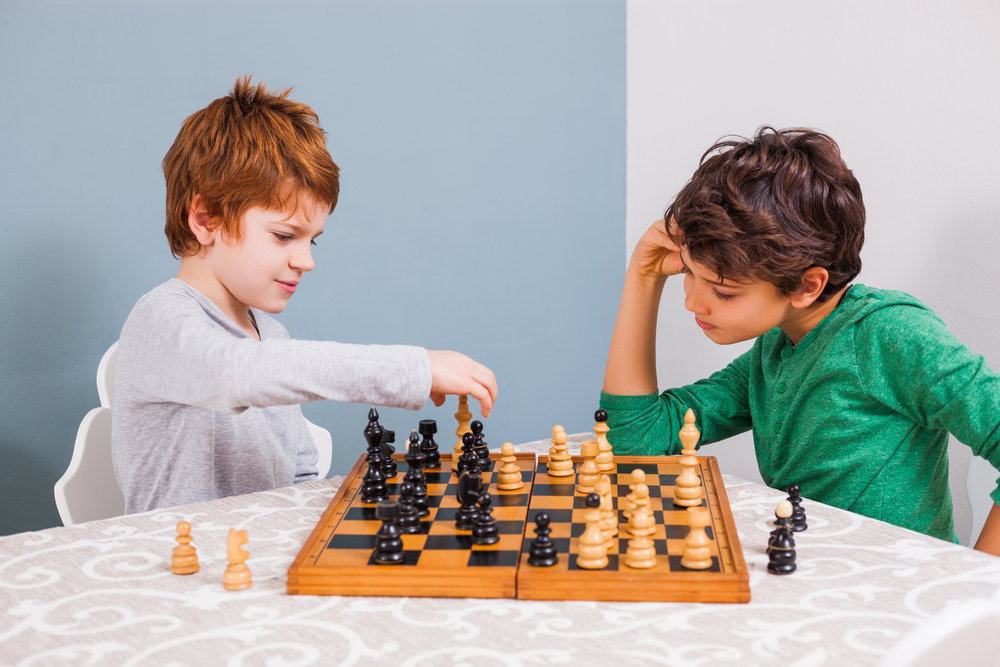



Understanding comparisons is crucial for children aged 3-8 as it lays the foundation for essential mathematical skills and critical thinking. At this early age, children are naturally curious and eager to explore their surroundings. By learning to compare sizes, quantities, and qualities, they enhance their ability to categorize and make sense of the world around them. Such skills are not only vital in math but also in language development, allowing children to articulate differences and similarities more effectively.
Furthermore, exploring comparisons fosters problem-solving abilities and promotes logical reasoning. When children engage in comparing objects—whether it's taller or shorter, heavier or lighter, or more and less—they are exercising their cognitive capacities, which drives deeper understanding in various subjects. This foundational skill also enhances their social interactions, as it helps them navigate friendships and group dynamics through understanding differences in feelings, preferences, and opinions.
For parents and teachers, nurturing an understanding of comparisons in young children creates a richer educational experience and builds a strong framework for lifelong learning. Promoting this skill early on ensures that children are equipped with the tools they need to thrive academically and socially, paving the way for future success in more complex concepts down the line.








