Understanding democracy Worksheets for Ages 3-8
3 filtered results
-
From - To
Explore our engaging "Understanding Democracy Worksheets" designed specifically for children ages 3-8. These worksheets introduce young learners to the fundamental concepts of democracy in a fun and interactive way. Through colorful activities, children will discover the significance of voting, fairness, and community participation. Our resources encourage critical thinking and spark curiosity about how decisions are made in a democratic society. Perfect for early educators and parents, these worksheets provide a solid foundation for understanding civic values while promoting creativity and independent learning. Start your child's journey to becoming an informed citizen today!
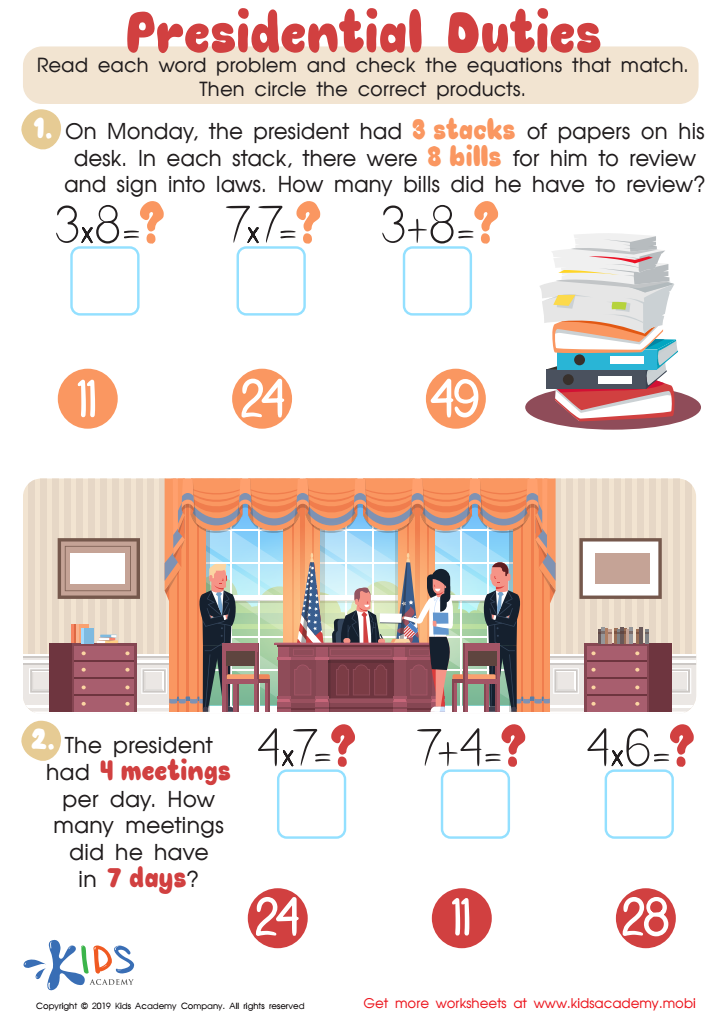
Presidential Duties Worksheet
 Assign to My Students
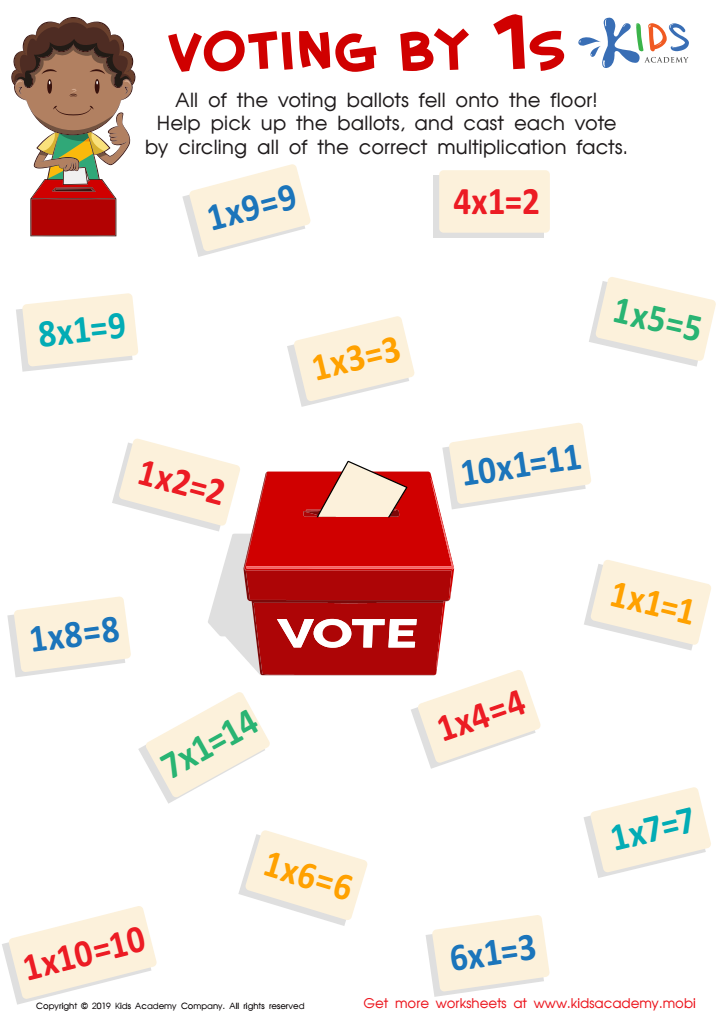
Voting by 1s Worksheet
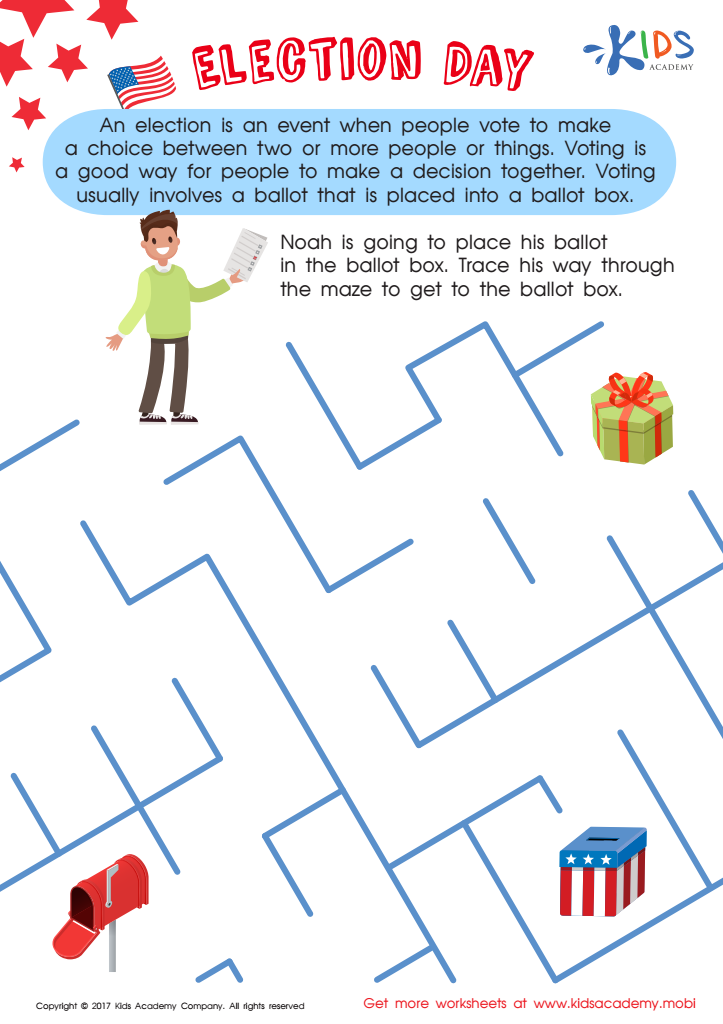
Election Day Worksheet








Understanding democracy is essential for children aged 3-8 as it lays the foundation for their future as informed, engaged citizens. During these formative years, children are naturally curious and begin to develop critical thinking and social skills. Teaching them about democracy fosters values such as respect, fairness, and participation.
When parents and teachers explain the importance of democratic principles, such as voting, equality, and the importance of listening to others’ opinions, children learn to appreciate diverse perspectives. This understanding nurtures empathy and promotes healthy relationships with peers, fostering a sense of community.
Moreover, early exposure to democratic concepts empowers children to voice their thoughts and feelings in a constructive way. They learn that their opinions matter and can contribute to collective decision-making, both at home and in school.
Additionally, by encouraging discussions about rules, leadership, and conflict resolution in a democratic context, adults can help children recognize their role within a larger society. This foundational knowledge equips them with essential life skills, prepares them for active citizenship, and encourages lifelong engagement in democracy, helping to build a more informed and participatory society for the future. Investing in this understanding now is crucial for nurturing future leaders.








