Understanding force Worksheets for Ages 3-8
3 filtered results
-
From - To
Welcome to our "Understanding Force Worksheets" section, designed specifically for kids aged 3-8! These engaging printable worksheets help young learners explore the basic concepts of force through fun activities tailored to their developmental needs. From recognizing pushing and pulling actions to learning about gravity and movement, our worksheets promote hands-on learning. Ideal for both classroom and home use, these resources encourage creativity and critical thinking while introducing essential scientific principles. Watch your child's curiosity grow as they discover the fascinating world of force with our thoughtfully designed worksheets. Dive in and let the learning adventure begin!
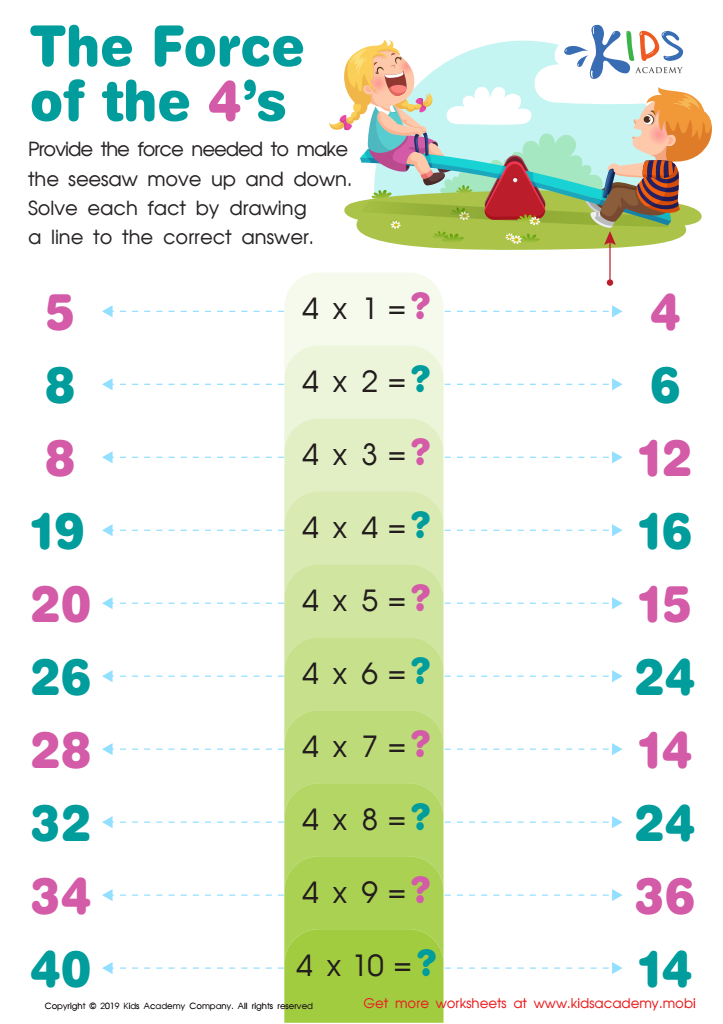
The Force of the 4's Worksheet
 Assign to My Students
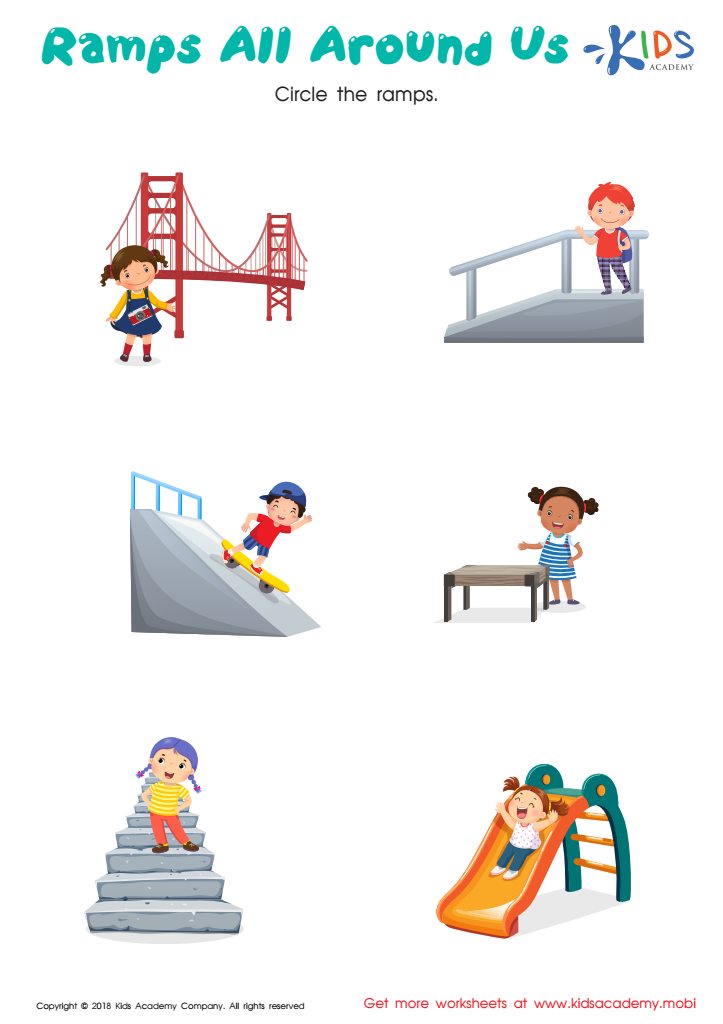
Ramps All Around us Worksheet
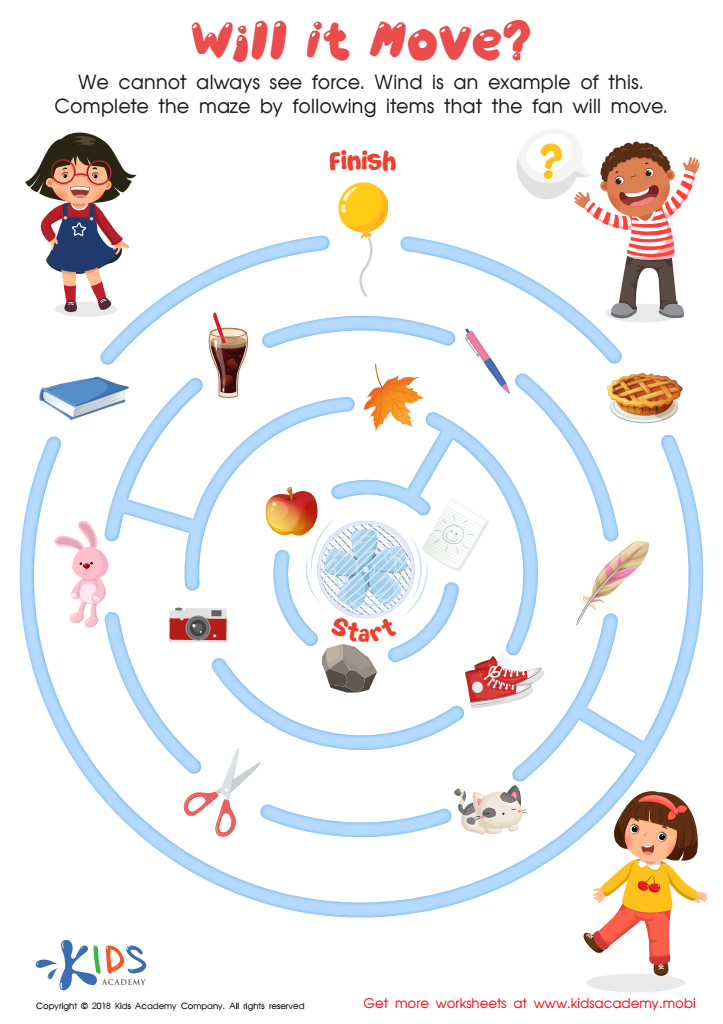
Will it Move? Worksheet







Understanding the concept of force is crucial for children aged 3-8 as it lays the groundwork for essential scientific thinking and reasoning. At this early age, children are naturally curious about the world around them. By introducing them to the idea of force through play and hands-on activities, parents and teachers can foster a sense of discovery that enhances their cognitive development.
Engaging with the concept of force helps children grasp how things move and interact in the environment. For instance, simple activities like pushing, pulling, or rolling various objects can illustrate how different forces affect motion. This understanding not only promotes curiosity in physics but also strengthens problem-solving skills as children experiment with different actions to observe outcomes.
Moreover, understanding force is foundational to later learning in science, physics, and engineering. Early exposure can inspire a lifelong interest in these subjects and encourage children to ask questions and seek answers, promoting critical thinking. Additionally, integrating concepts of force into everyday scenarios enhances children's ability to connect theory to real-world situations, making learning meaningful and relevant. Hence, both parents and teachers play a crucial role in nurturing this vital understanding in young learners.








