Understanding Math Concepts Worksheets for Ages 3-8
3 filtered results
-
From - To
Dive into the world of numbers with "Understanding Math Concepts Worksheets for Ages 3-8". Our engaging and educational worksheets are designed to make learning math fun and effective for young children. Covering fundamental concepts like counting, addition, subtraction, and more, these worksheets are tailored to various skill levels, ensuring every child can progress at their own pace. With vibrant illustrations and interactive activities, children will develop a love for math while building a strong foundation for future learning. Perfect for parents, teachers, and tutors seeking resources that inspire and educate. Explore our collection today at Kids Academy!
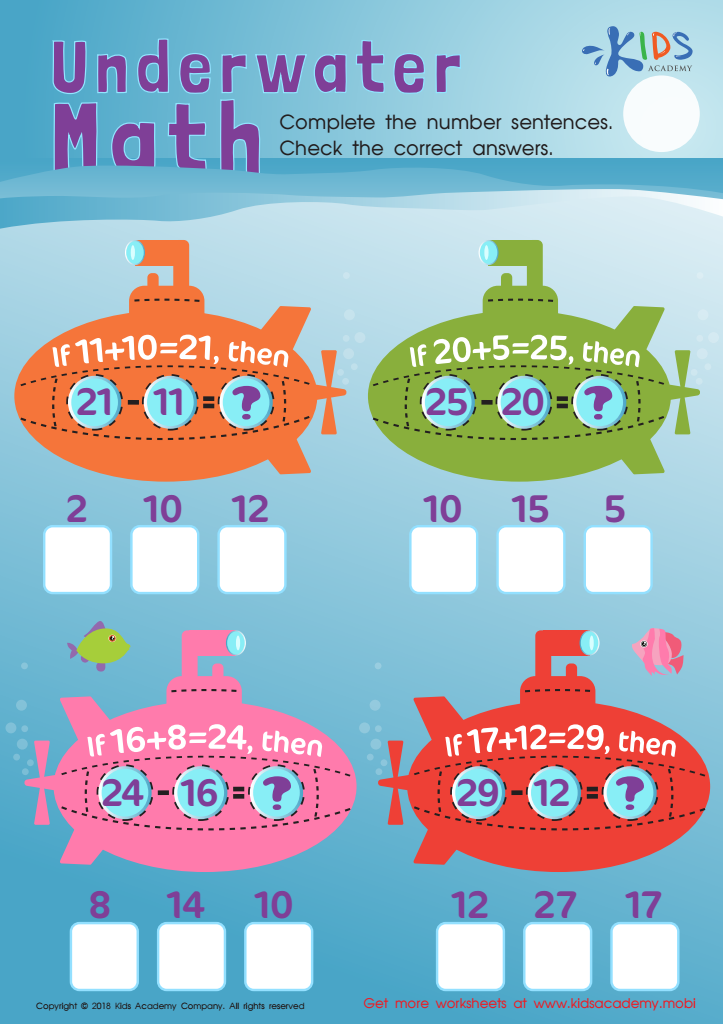
Addition and Subtraction: Underwater Math Worksheet
 Assign to My Students








Understanding math concepts at an early age is crucial for children's cognitive and academic development. For children between the ages of 3 to 8, foundational math skills lay the groundwork for more complex problem-solving abilities in later years. Early exposure to math helps stimulate curiosity and encourages logical thinking, pattern recognition, and spatial awareness, all of which are essential cognitive skills beyond math itself.
Parents and teachers play a pivotal role in nurturing these competencies. By integrating math into everyday activities such as sorting toys by shape or counting steps while walking, adults can make learning engaging and meaningful. This early engagement helps children develop confidence and a positive attitude towards math, dispelling any potential fears or anxieties.
Moreover, basic math concepts are interwoven with other critical areas of early childhood education, such as literacy. For instance, recognizing patterns enhances the understanding of sequences and predictions in storytelling. Socially, early math skills promote cooperative play with tasks involving sharing and turn-taking.
Effective support from parents and teachers strengthens the child's academic foundation, preparing them for future challenges across all subjects. Being adept at math not only fosters academic success but also develops useful life skills, such as critical thinking and problem-solving, vital for everyday decision-making and building future career opportunities.








